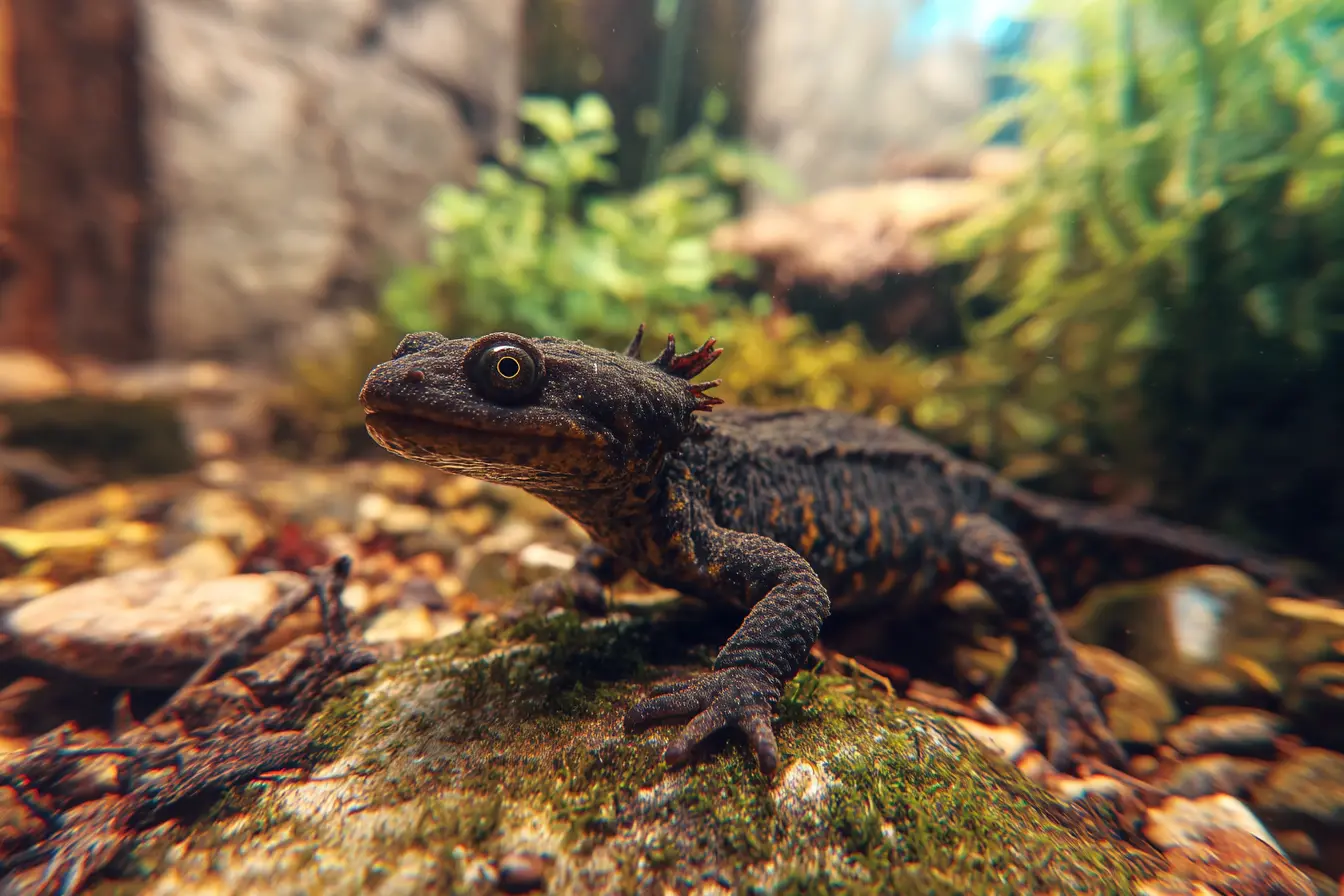
The Italian crested newt (Triturus carnifex) is a large, striking amphibian native to southern Europe. Known for its dark, marbled appearance and the spectacular jagged crest displayed by males during the breeding season, this species is both fascinating to observe and rewarding to keep. Although less common in the pet trade than other newts, the Italian crested newt’s hardy nature and engaging behaviour make it an excellent choice for experienced amphibian keepers or those interested in European species conservation.
This comprehensive guide covers everything you need to know about the Italian crested newt, from habitat and diet to breeding, handling, and legal considerations.
Physical Characteristics
Size
Adults typically measure 12–18 cm (4.7–7 inches) in length.
Males and females are similar in size, though males appear larger during breeding season due to their raised dorsal crest.
Lifespan
With proper care, Italian crested newts can live up to 15–20 years in captivity.
Colouration and Skin Texture
The dorsal side is dark brown to black, often with lighter marbling or mottling.
The ventral (belly) area is bright orange or yellow with irregular black spots.
Their skin has a slightly rough, granular texture, especially on land.
Males develop a high, saw-edged crest running from the back of the head to the tail tip during the breeding season, which later recedes.
Sexual Dimorphism
Males have a tall, serrated dorsal crest and a smoother, brighter tail during the breeding phase.
Females are bulkier and crestless, with rounder bellies, especially when gravid.
Legal and Ethical Considerations
The Italian crested newt is protected under European law (Annex II and IV of the EU Habitats Directive) due to habitat loss and population decline. It is illegal to collect wild specimens in most countries.
Always obtain individuals from licensed captive breeders who can provide proof of legal origin. Captive-bred newts adapt better to terrarium life and reduce pressure on wild populations.
Housing and Enclosure Setup
Italian crested newts have a semi-aquatic lifestyle, requiring both water and land areas. Their habitat should replicate cool, temperate European ponds and damp woodlands.
Enclosure Type
A paludarium (part-water, part-land tank) is ideal.
For one or two adults, use a 60–80 litre (15–20 gallon) setup.
Provide 50–70% water area and a terrestrial section with moss and soil.
Aquatic Section
Water depth: 20–25 cm (8–10 inches).
Use smooth river gravel or large pebbles as substrate.
Include aquatic plants such as elodea, hornwort, or java moss for cover.
A gentle filtration system maintains water quality without strong currents.
Perform partial water changes (20–30%) weekly.
Terrestrial Section
Substrate: damp coconut fibre, organic soil, or a moss-soil mix.
Provide hides made from cork bark, rocks, or logs.
Maintain high humidity (70–90%) and mist daily.
Offer a shallow ramp for easy movement between land and water.
Temperature and Lighting
Temperature: 15–20°C (59–68°F). Avoid temperatures above 24°C (75°F), which can cause stress or death.
Lighting: Low-level UVB lighting (2–5%) can be beneficial, though not essential if diet is supplemented correctly.
Provide a natural light cycle of 10–12 hours per day.
Diet and Feeding
Italian crested newts are carnivorous and feed on a range of small invertebrates both in water and on land.
Suitable Food Items
Bloodworms, blackworms, and tubifex
Earthworms and chopped nightcrawlers
Daphnia and brine shrimp
Small crickets or soft-bodied insects
Frozen or live aquatic invertebrates
Occasional waxworms (treat only due to fat content)
Feeding Schedule
Juveniles: Feed daily with smaller prey.
Adults: Feed 3–4 times per week.
Remove uneaten food to maintain water quality.
Supplementation
Dust land-based insects with calcium and vitamin D3 powder weekly.
A multivitamin supplement every 2–3 weeks supports long-term health.
Behaviour and Handling
General Behaviour
Mostly nocturnal and secretive.
Males display vivid crests and perform elaborate courtship dances underwater in spring.
Outside the breeding season, they spend more time on land or hiding under logs and moss.
Peaceful but should not be housed with other species.
Handling
Avoid direct handling, as their skin is sensitive and easily damaged.
If necessary, use wet, gloved hands or a soft net.
Observe rather than handle; stress can lead to health issues.
Health and Common Problems
Italian crested newts are robust when properly cared for, but environmental imbalances can cause health issues.
Common Health Issues
Chytridiomycosis - a fungal disease affecting amphibian skin; avoid mixing with wild or unquarantined specimens.
Bacterial infections from poor water quality.
Temperature stress due to overheating.
Parasites from live food if not properly sourced.
Preventative Care
Maintain clean water and stable humidity.
Avoid sudden temperature changes.
Quarantine new animals for at least 30 days.
Regularly inspect for lesions, bloating, or lethargy.
Breeding the Italian Crested Newt
Breeding in captivity is possible and rewarding but requires simulating seasonal cycles.
Breeding Triggers
Cooling period: Reduce temperature to 10–12°C (50–54°F) for 6–8 weeks to mimic winter dormancy.
Gradually warm up and increase daylight in spring.
Males will develop crests and begin courtship behaviour.
Reproduction
Courtship involves tail-fanning and pheromone release by the male.
Females lay 200–400 eggs, attaching them individually to aquatic plant leaves.
Eggs hatch in 10–20 days, depending on temperature.
Larval Care
Larvae are fully aquatic.
Feed on infusoria, daphnia, and baby brine shrimp.
Metamorphosis occurs after 2–3 months.
Move juveniles to damp terrestrial setups until fully grown.
Conservation Notes
The Italian crested newt is a species of conservation concern across Europe due to habitat fragmentation, pollution, and competition from invasive species such as the alpine newt.
Captive breeding and responsible ownership help support education and conservation programs. Always ensure your animals are captive-bred and ethically sourced.
Conclusion
The Italian crested newt is a magnificent, long-lived amphibian that rewards careful keepers with fascinating displays of behaviour and seasonal transformation.
Its semi-aquatic nature makes it a unique addition to any amphibian collection, though its legal protections demand responsible, well-informed care.
By providing a cool, clean paludarium, a varied diet, and respect for its natural rhythms, you can ensure your Italian crested newt thrives for years to come as a living link to Europe’s rich amphibian heritage.
Quick questions
- What should I know about italian crested newt?
- Learn about the Italian crested newt, a unique amphibian from southern Europe. This guide covers its appearance, habitat, diet, and breeding. Vet Verified can help you compare UK veterinary practices by location, species, services and opening hours before you call.
- When should I contact a vet about italian crested newt?
- Contact a veterinary practice if your pet seems unwell, symptoms are getting worse, you are unsure what to do, or the situation may be urgent. Vet Verified helps you compare practice details, but a vet should advise on your pet's current care.
- Can Vet Verified help me find exotic vets?
- Yes. Use Vet Verified to compare exotic vets across the UK, then check practice profiles and call directly to confirm current availability.
Find a vet
Find a veterinary practice
Compare UK veterinary practices related to this topic. Call the practice to confirm its current services and availability.