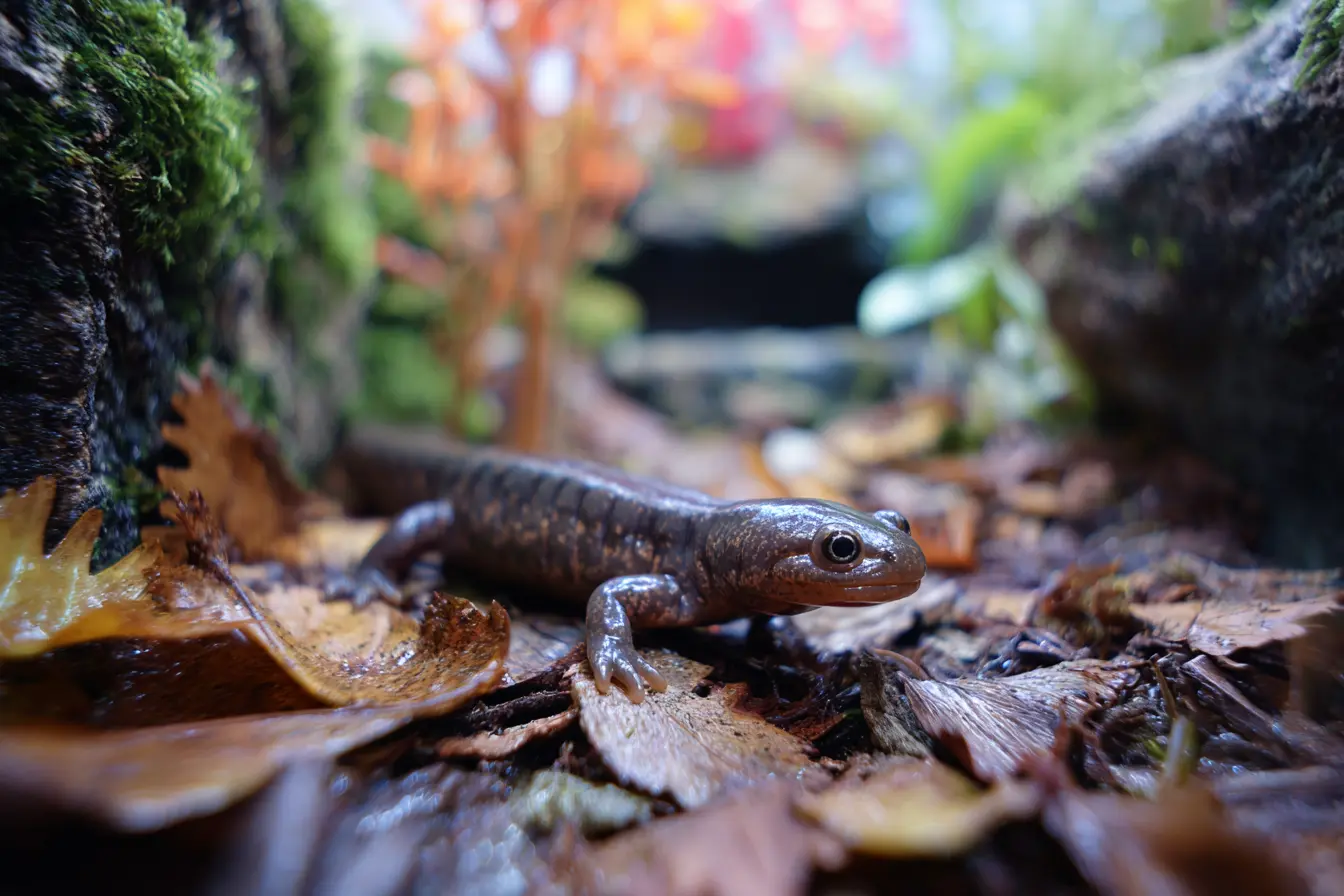
The Hokkaido salamander (Hynobius retardatus) is a hardy, cold-adapted amphibian native to the northernmost island of Japan, Hokkaido. Known for its resilience, fascinating life cycle, and tolerance of cooler temperatures, this species offers a glimpse into the amphibian world of northern climates. The Hokkaido salamander has drawn interest from scientists and amphibian keepers alike due to its adaptability and remarkable reproductive behaviour, including the ability of larvae to develop cannibalistic forms in high-density environments.
This guide provides an in-depth look at the care, biology, and conservation of the Hokkaido salamander, covering everything from enclosure setup to breeding.
Physical Characteristics
Size
Adult Hokkaido salamanders reach 10–18 cm (4–7 inches) in total length.
Males are generally smaller and slimmer than females.
Lifespan
In captivity, individuals can live for 10–15 years with appropriate care.
Lifespan may vary depending on temperature stability and diet.
Colouration and Skin Texture
The dorsal surface is typically dark brown, olive, or greyish-black, often with faint mottling.
The underside is lighter, sometimes with a pale yellow or pinkish tint.
The skin is smooth and moist, adapted for a cool and damp environment.
Juveniles are often lighter in colour and darken as they mature.
Sexual Dimorphism
Males develop swollen cloacal regions and slightly longer tails during the breeding season.
Females are larger and rounder-bodied, especially when carrying eggs.
Natural Range and Habitat
The Hokkaido salamander is endemic to Hokkaido, Japan, and inhabits a range of cool environments, including forests, mountain streams, ponds, and wetlands. It spends much of the year hidden under leaf litter, stones, or rotting logs, emerging in spring to breed in slow-moving or still water.
Unlike many amphibians, this species tolerates low temperatures extremely well, remaining active at temperatures that would be unsuitable for most other salamanders.
Legal and Ethical Considerations
The Hokkaido salamander is not commonly available in the pet trade and is sometimes protected under Japanese wildlife laws. Exportation and collection from the wild are restricted to preserve local populations.
If available through reputable breeders, always ensure the specimen is captive-bred. Captive-bred individuals adapt far better to terrarium life and help prevent depletion of natural populations.
Housing and Enclosure Setup
The Hokkaido salamander requires a cool, moist, and well-ventilated environment that simulates its natural habitat. It spends most of its life on land but requires an aquatic area for breeding and hydration.
Enclosure Type
A 60-litre (15-gallon) tank is suitable for a small group of adults.
A semi-aquatic setup, or a terrestrial tank with a large water dish, is ideal.
Provide multiple hiding spots to reduce stress.
Substrate
Use damp soil, coconut fibre, or a mix of leaf litter and moss.
Depth should be 5–10 cm to allow limited burrowing.
Keep the substrate moist but not waterlogged.
Hides and Decor
Add bark, rocks, or half-logs as hides.
Live or artificial moss maintains humidity and offers natural cover.
A shallow water area or dish should always be available with clean, dechlorinated water.
Temperature and Humidity
Temperature: 12–18°C (54–64°F) is ideal.
Avoid temperatures above 22°C (72°F), which can cause severe stress.
Humidity: Maintain around 70–90%, misting as needed to keep the environment damp but not dripping.
Lighting
No special UVB lighting is required, but a natural day–night light cycle is beneficial.
Low ambient light helps mimic natural forest conditions.
Diet and Feeding
The Hokkaido salamander is carnivorous, feeding primarily on small invertebrates both in water and on land.
Suitable Food Items
Earthworms and chopped nightcrawlers
Crickets and small roaches
Bloodworms and blackworms
Daphnia and small aquatic invertebrates
Occasional waxworms or mealworms (as treats only)
Feeding Schedule
Juveniles: Feed daily with small live foods.
Adults: Feed 3 times per week.
Remove uneaten prey promptly to prevent mould or water fouling.
Supplementation
Dust land-based insects with calcium powder weekly.
Offer a multivitamin supplement every two to three weeks.
Behaviour and Handling
General Behaviour
The Hokkaido salamander is shy and primarily nocturnal.
It spends daylight hours hidden in damp shelters and becomes active at night to hunt.
During the breeding season, it becomes fully aquatic, with males performing courtship displays.
In cool conditions, it remains active year-round; in warmer climates, it may enter a dormant phase.
Handling
Avoid handling whenever possible, as their skin is delicate and easily damaged.
If necessary, handle with wet, clean hands or gloves.
Observation is best done through the glass to reduce stress.
Health and Common Problems
Common Health Issues
Fungal and bacterial infections due to poor hygiene or stagnant water.
Overheating, which is a major risk in captivity.
Parasitic infestations from unclean live foods.
Stress from excessive handling or lack of hiding spots.
Preventative Care
Keep temperatures consistently cool.
Clean the enclosure regularly and replace water every few days.
Quarantine new animals for at least 30 days before introduction.
Monitor for changes in appetite, skin condition, or activity levels.
Breeding the Hokkaido Salamander
Breeding this species requires careful simulation of natural seasonal changes, including a cool overwintering period.
Breeding Triggers
Cooling phase: Maintain the salamanders at 5–8°C (41–46°F) for 8–10 weeks to mimic winter dormancy.
Gradually raise temperature to 12–15°C (54–59°F) in early spring and provide access to water.
Males will migrate to the aquatic area first and begin courtship.
Reproduction
Males deposit spermatophores (packets of sperm) that females pick up with their cloacas.
Females lay egg sacs in water, each containing 30–80 eggs.
Eggs hatch within 3–5 weeks, depending on water temperature.
Larval Care
Larvae are fully aquatic and should be kept in shallow, clean water.
Feed with daphnia, baby brine shrimp, and finely chopped bloodworms.
Larvae can display cannibalistic tendencies if crowded, so separate by size.
Metamorphosis occurs after 2–3 months, and juveniles should then be moved to a terrestrial setup.
Conservation Notes
The Hokkaido salamander is a species of ecological and scientific importance. It plays a role in freshwater ecosystems and has been the subject of studies on adaptation, cannibalism, and cold tolerance.
While not critically endangered, some local populations face threats from habitat loss, pollution, and introduced predators such as fish. Captive breeding and research have helped increase understanding of its biology and conservation needs.
Conclusion
The Hokkaido salamander is a remarkable amphibian from the cold forests of northern Japan. Its tolerance of cool conditions, simple diet, and fascinating behaviour make it an ideal species for dedicated keepers with a controlled environment.
By providing a cool, moist habitat, varied diet, and proper seasonal cues, the Hokkaido salamander can thrive in captivity for many years.
As both a hardy pet and a species of scientific interest, it stands as a testament to the adaptability and resilience of amphibians in some of Earth’s most challenging environments.
Quick questions
- What should I know about hokkaido salamander?
- The Hokkaido salamander, native to Hokkaido, Japan, is an amphibian known for its adaptation to cold climates and interesting reproductive behaviour. Vet Verified can help you compare UK veterinary practices by location, species, services and opening hours before you call.
- When should I contact a vet about hokkaido salamander?
- Contact a veterinary practice if your pet seems unwell, symptoms are getting worse, you are unsure what to do, or the situation may be urgent. Vet Verified helps you compare practice details, but a vet should advise on your pet's current care.
- Can Vet Verified help me find exotic vets?
- Yes. Use Vet Verified to compare exotic vets across the UK, then check practice profiles and call directly to confirm current availability.
Find a vet
Find a veterinary practice
Compare UK veterinary practices related to this topic. Call the practice to confirm its current services and availability.