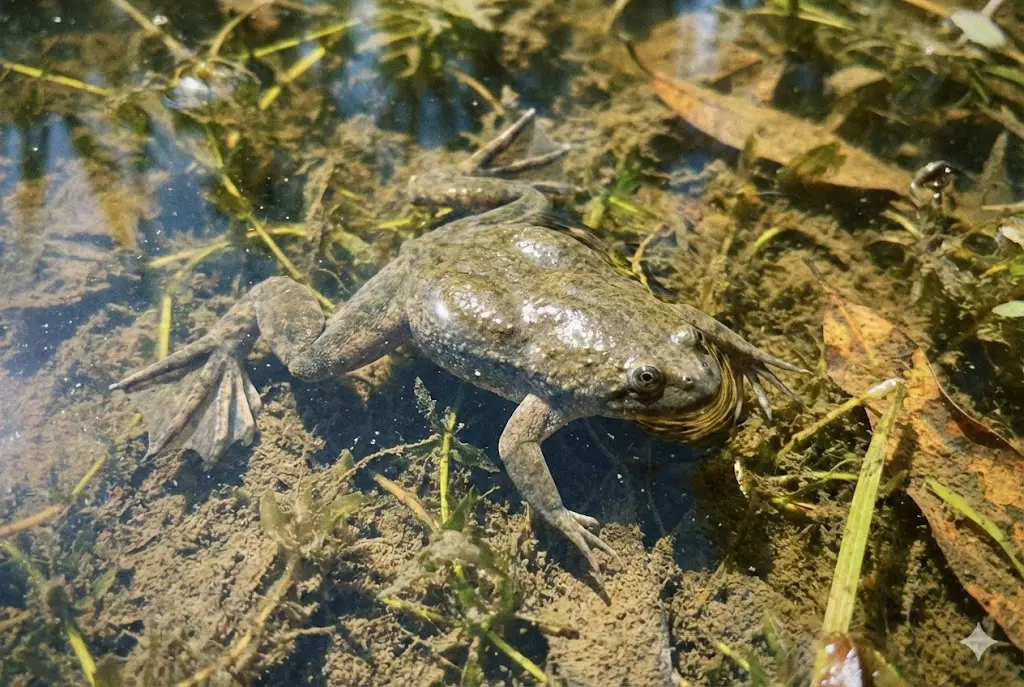
The African clawed frog (Xenopus laevis) is one of the most fascinating and widely kept amphibians in the world. Known for its fully aquatic lifestyle, muscular legs, and distinctive clawed toes, this species is both hardy and adaptable, making it an excellent choice for beginner and experienced amphibian keepers alike. Originating from sub-Saharan Africa, it thrives in a variety of freshwater habitats ranging from ponds to slow-moving streams.
Once used extensively in scientific research and even as an early pregnancy test animal, the African clawed frog has since become a popular pet due to its ease of care and intriguing behaviour.
This guide provides a complete overview of the African clawed frog’s care, biology, and breeding, helping you create the perfect setup for this remarkable amphibian.
Physical Characteristics
Size
Adult females reach 10–13 cm (4–5 inches) in body length.
Males are smaller, averaging 6–8 cm (2.5–3 inches).
The hind legs are long and powerful, ending in clawed toes used for digging and grasping prey.
Lifespan
With proper care, African clawed frogs can live 15–20 years in captivity, sometimes longer.
Colouration and Skin Texture
Typically greyish-green or olive with irregular darker spots.
Albino and leucistic morphs are common in captivity.
The skin is smooth and slippery, adapted for a fully aquatic life, and regularly shed in thin, transparent layers which the frog often eats.
Sexual Dimorphism
Females are larger and rounder, especially when gravid.
Males develop small black nuptial pads (rough patches) on their forearms during the breeding season.
Males also have slimmer bodies and are more vocal.
Natural Range and Habitat
The African clawed frog is native to southern and sub-Saharan Africa, inhabiting warm, stagnant, or slow-moving freshwater bodies such as ponds, lakes, and ditches. It is highly adaptable and can tolerate poor water quality and low oxygen levels by occasionally surfacing to gulp air.
In the wild, they are opportunistic feeders and will consume almost anything they can swallow, including insects, small fish, and even other amphibians.
Legal and Ethical Considerations
In some regions, African clawed frogs are considered invasive due to accidental or intentional release into non-native habitats, where they outcompete local species. For this reason, ownership or release is restricted in certain countries. Always check local regulations before acquiring one.
Purchase only captive-bred frogs from reputable sources. Never release unwanted pets into the wild.
Housing and Enclosure Setup
African clawed frogs are entirely aquatic and require a spacious, well-filtered aquarium. They rarely leave the water except under extreme conditions.
Tank Size
A single adult requires at least a 40-litre (10-gallon) tank.
A pair or small group should be housed in a 75 to 100-litre (20–25-gallon) aquarium.
These frogs are strong swimmers but do not need great depth. 25–30 cm (10–12 inches) of water is ideal.
Substrate
Smooth gravel or a bare-bottom tank works best.
Avoid small gravel that can be swallowed accidentally.
Filtration and Aeration
A gentle filter is essential to maintain water quality.
Avoid strong currents; these frogs prefer still or slow-moving water.
Regular partial water changes (25–30% weekly) are necessary.
Decorations and Hides
Provide hiding spots such as PVC tubes, smooth rocks, or aquatic plants.
Avoid sharp decor that can tear their delicate skin.
Floating plants or dim lighting help mimic their natural murky habitat.
Temperature and Lighting
Water temperature should be kept between 20–25°C (68–77°F).
Avoid temperatures above 27°C (80°F).
No UVB lighting is required, but a natural day–night cycle of 10–12 hours is beneficial.
Water Quality
pH should range between 6.5–8.0.
Dechlorinated water is essential; chlorine and chloramine are harmful.
Test water regularly for ammonia and nitrates.
Diet and Feeding
African clawed frogs are voracious carnivores and will eat almost any animal-based food that fits in their mouths. They are scavengers by nature and hunt using motion and scent rather than sight.
Suitable Food Items
Bloodworms, blackworms, and brine shrimp
Earthworms and chopped nightcrawlers
Small feeder fish (sparingly and only disease-free)
Commercial sinking frog or newt pellets
Frozen or thawed krill, shrimp, or small bits of fish
Occasional mealworms or waxworms (as treats)
Feeding Schedule
Juveniles: Feed daily with smaller portions.
Adults: Feed every 2–3 days.
Remove uneaten food to prevent fouling the water.
Supplementation
A varied diet generally meets nutritional needs.
Dust occasional prey with calcium powder if live insects are used frequently.
Behaviour and Handling
General Behaviour
Fully aquatic, spending their entire lives underwater except when surfacing to breathe.
Mostly nocturnal but may be active during the day in captivity.
Known for their “clawing” motion when scavenging and their unique underwater feeding dance.
Peaceful but opportunistic; smaller tankmates, including fish, may be eaten.
Handling
Avoid handling as much as possible. Their skin is sensitive and can absorb oils, soap, and chemicals.
If handling is necessary, use wet, clean hands or an aquarium net.
Always support the frog’s body and return it quickly to the water.
Health and Common Problems
African clawed frogs are hardy but can suffer from poor water conditions or improper diet.
Common Health Issues
Bacterial infections due to dirty water or stress.
Fungal infections, often appearing as cotton-like growths.
Dropsy (bloating) from internal infections or kidney problems.
Obesity from overfeeding.
Shedding issues if water quality is poor.
Preventative Care
Maintain clean, filtered water and stable temperature.
Avoid overfeeding.
Quarantine new frogs before introduction.
Observe regularly for signs of illness or abnormal behaviour.
Breeding the African Clawed Frog
Breeding is achievable with proper environmental cues and mature, healthy frogs.
Breeding Triggers
Simulate the rainy season by lowering water temperature to 18°C (64°F) for several weeks, then gradually raising it to 22–24°C (72–75°F).
Increase water level and perform frequent partial water changes to mimic rainfall.
Reproduction
Males call with a humming sound to attract females.
During amplexus, males clasp the female around the waist.
Females lay hundreds of eggs scattered throughout the tank.
Adults should be removed after spawning to prevent them from eating the eggs.
Tadpole Care
Eggs hatch within 2–3 days.
Tadpoles are filter-feeders and should be fed finely powdered spirulina, liquid fry food, or microscopic plankton.
After 6–8 weeks, they metamorphose into froglets.
Move froglets to shallow water and feed them live or frozen food suitable for their size.
Conservation Notes
Although not endangered, African clawed frogs have become invasive in many regions outside their native range due to accidental release from laboratories and aquariums. They can disrupt local ecosystems by preying on native species and spreading disease.
Responsible ownership and ethical breeding are essential to prevent ecological harm.
Conclusion
The African clawed frog is a hardy, engaging, and long-lived amphibian that thrives in a well-maintained aquatic setup. Its curious behaviour, adaptability, and low maintenance make it ideal for amphibian enthusiasts of all experience levels.
By providing clean, warm water, a balanced diet, and a calm environment, you can ensure that your African clawed frog remains healthy and active for many years. This remarkable species offers a unique opportunity to observe the life of a fully aquatic amphibian up close, combining scientific interest with the joy of keeping a truly distinctive pet.
Quick questions
- What should I know about african clawed frog?
- African clawed frogs are popular amphibians known for their aquatic lifestyle and unique behaviour. Vet Verified can help you compare UK veterinary practices by location, species, services and opening hours before you call.
- When should I contact a vet about african clawed frog?
- Contact a veterinary practice if your pet seems unwell, symptoms are getting worse, you are unsure what to do, or the situation may be urgent. Vet Verified helps you compare practice details, but a vet should advise on your pet's current care.
- Can Vet Verified help me find exotic vets?
- Yes. Use Vet Verified to compare exotic vets across the UK, then check practice profiles and call directly to confirm current availability.
Find a vet
Find a veterinary practice
Compare UK veterinary practices related to this topic. Call the practice to confirm its current services and availability.