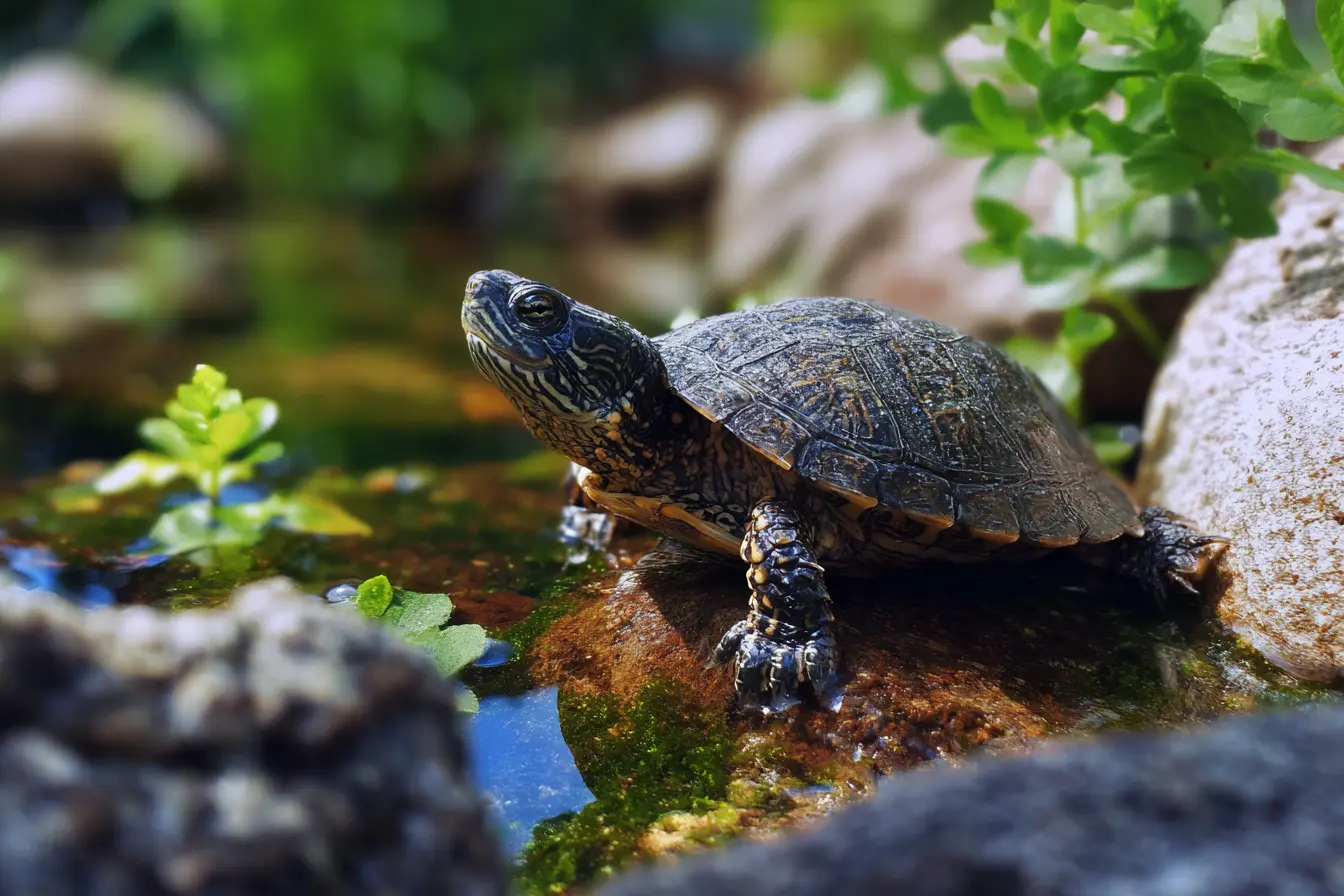
The Common Musk Turtle (Sternotherus odoratus), often affectionately known as the “stinkpot”, is one of the smallest and most characterful freshwater turtles available in captivity. Despite its modest size, this species is hardy, long-lived, and full of personality, making it a popular choice for keepers with limited space who still want an engaging aquatic reptile.
Native to North America, the Common Musk Turtle is primarily aquatic and spends much of its life underwater. While not a turtle that enjoys handling, it rewards attentive care with fascinating behaviour and surprising boldness.
Origins and Natural Habitat
Common Musk Turtles are widely distributed across eastern North America, from southern Canada through the eastern and central United States. They inhabit slow-moving rivers, ponds, lakes, swamps, and marshes with soft bottoms and abundant cover.
This species prefers shallow water rich in vegetation, submerged logs, and leaf litter. In the wild, musk turtles are often found walking along the bottom rather than swimming in open water, using their strong limbs to forage for food among debris.
Appearance and Temperament
Physical Traits
Size: 8–14 cm shell length
Shell: High-domed and narrow, often with a visible keel
Colouration: Brown, grey, or black carapace with a lighter underside
Head: Pointed snout with two pale stripes running from the nose to the neck
Skin: Grey or brown with fine speckling
Behaviour and Temperament
Common Musk Turtles are shy but curious. When threatened, they may release a strong musky odour from glands near the shell, the origin of their nickname. This is a defensive behaviour rather than aggression.
In captivity, they are primarily crepuscular or nocturnal and spend much of their time exploring the tank bottom. While they are not social with humans, they often become bold during feeding and will readily approach when food is offered.
Housing Requirements
This species does well in a moderately sized aquatic enclosure that prioritises water quality and bottom structure over height.
Enclosure Size
Single adult: Minimum 90 cm x 45 cm x 45 cm
Larger enclosures are always beneficial and improve water stability
Water Depth and Filtration
Water depth can be relatively shallow: 20–30 cm is usually sufficient
Provide strong filtration, as musk turtles produce a significant amount of waste
External canister filters or powerful internal filters are recommended.
Heating and Temperature
Water temperature: 22–26°C
Basking area: 28–30°C
Ambient air temperature: 24–26°C
Use a reliable aquarium heater with a protective guard.
Lighting and UVB
While musk turtles bask less frequently than many species, UVB lighting (5–7%) is still strongly recommended. Provide a low, easily accessible basking platform where the turtle can fully emerge if it chooses.
Maintain a 12-hour day/night cycle.
Substrate and Furnishings
Substrate: Fine sand or smooth gravel
Decor: Driftwood, rocks, caves, and leaf litter
Climbing aids: Sloped surfaces and branches to allow easy access to the surface
Avoid sharp materials that could injure the turtle’s skin or shell.
Diet and Feeding
Common Musk Turtles are primarily carnivorous, though they may consume some plant matter opportunistically.
Feeding Schedule
Juveniles: Daily
Adults: Every other day
Food Items
Aquatic snails (excellent natural food)
Earthworms
Bloodworms
Crickets and aquatic insects
Prawns and shrimp
High-quality carnivorous turtle pellets
Occasional plant matter such as duckweed may be consumed but should not form a major part of the diet.
Feeding Notes
Feed in water. Many keepers use feeding tongs to prevent nipping.
Handling and Interaction
Handling should be kept to a minimum.
If handling is necessary:
Support the shell firmly
Keep fingers away from the head
Expect defensive behaviour
This species is best enjoyed as an observation animal rather than a hands-on pet.
Common Health Concerns
Shell Rot
Usually caused by poor water quality. Maintain excellent filtration and regular water changes.
Metabolic Bone Disease (MBD)
Prevented with proper UVB exposure and a calcium-rich diet.
Obesity
Common if overfed. Stick to a controlled feeding schedule.
Stress
Caused by overcrowding or lack of hiding places.
Lifespan and Breeding
With good care, Common Musk Turtles regularly live 25–40 years in captivity.
Breeding is possible in captivity. Females lay small clutches of eggs in moist substrate or on land areas near water. Incubation typically lasts 60–90 days.
Observation and Enrichment
Common Musk Turtles are highly engaging when given a complex environment.
Enrichment ideas include:
Rearranging tank decor
Introducing live snails for natural foraging
Providing leaf litter and submerged hides
Their bottom-walking behaviour and inquisitive exploration make them enjoyable to observe.
Conclusion
The Common Musk Turtle is a compact, resilient, and deeply characterful freshwater turtle that proves size is no barrier to interest. While not suited to handling, it excels as a long-term aquatic companion for keepers willing to prioritise water quality and environmental complexity.
For those seeking a small turtle with a big personality, the Musk Turtle is a rewarding and enduring choice.
Quick questions
- What should I know about musk turtle?
- The Common Musk Turtle, also known as the "stinkpot", is a small, hardy freshwater turtle from North America. Vet Verified can help you compare UK veterinary practices by location, species, services and opening hours before you call.
- When should I contact a vet about musk turtle?
- Contact a veterinary practice if your pet seems unwell, symptoms are getting worse, you are unsure what to do, or the situation may be urgent. Vet Verified helps you compare practice details, but a vet should advise on your pet's current care.
- Can Vet Verified help me find exotic vets?
- Yes. Use Vet Verified to compare exotic vets across the UK, then check practice profiles and call directly to confirm current availability.
Find a vet
Find a veterinary practice
Compare UK veterinary practices related to this topic. Call the practice to confirm its current services and availability.