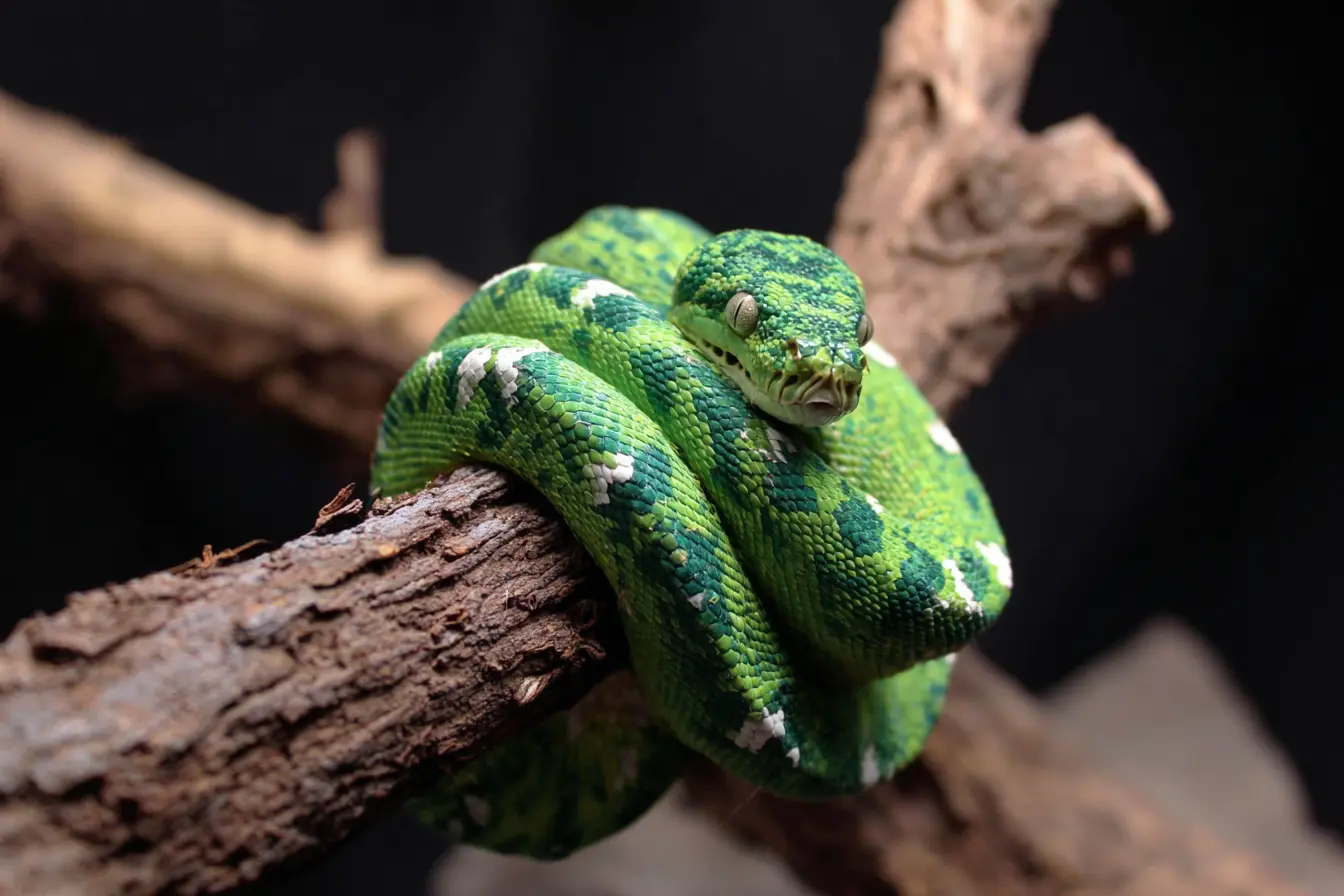
The Emerald tree boa (Corallus caninus) is one of the most breathtaking snakes in the world. With its vivid green body, striking white zigzag markings, and graceful arboreal posture, this species captures the imagination of reptile enthusiasts and wildlife photographers alike. Native to the rainforests of northern South America, this snake spends its life high in the trees, perfectly adapted to a life among the branches.
Although its beauty is unmatched, the Emerald tree boa requires specialised care and is best suited for experienced keepers who can meet its environmental and behavioural needs. In this post, we’ll explore everything you need to know about keeping an Emerald tree boa healthy and thriving in captivity.
Origins and Natural Habitat
The Emerald tree boa inhabits the humid tropical rainforests of the Amazon Basin, with populations found across Brazil, Guyana, Suriname, Venezuela, Colombia, and Peru. They spend almost their entire lives in trees, coiled gracefully over branches with their heads resting in the middle of their body loops, a distinctive behaviour shared with their close relative, the green tree python.
These snakes thrive in warm, humid conditions with dense foliage and consistent rainfall. In the wild, they rely on camouflage and stealth, waiting motionless for passing birds or mammals before striking with remarkable speed.
Appearance and Temperament
Physical Traits
Size: Adults typically reach 1.5–2 metres in length, with females larger and more robust than males
Colouration: Bright emerald green with white or yellow zigzag or lightning-shaped dorsal markings; juveniles are orange, red, or yellow before turning green as they mature
Build: Slender and muscular, with a prehensile tail for gripping branches
Head: Large, triangular, and distinct from the neck, with deep heat-sensing pits along the upper jaw for detecting warm-blooded prey
Behaviour and Temperament
Emerald tree boas are primarily nocturnal and highly arboreal. They are ambush predators, remaining motionless for hours before striking at prey. While they are calm when undisturbed, they can be defensive and prone to striking if handled incorrectly or too frequently.
They are best appreciated as display animals rather than for frequent handling, as they can become stressed easily when removed from their enclosure.
Housing Requirements
Replicating the warm, humid rainforest canopy is key to successfully keeping an Emerald tree boa. Their enclosure should provide both security and climbing opportunities, as well as stable environmental control.
Enclosure Size
Juveniles: 60 cm x 45 cm x 60 cm
Adults: Minimum 120 cm x 60 cm x 90 cm, though larger vertical enclosures are preferred
Tall, well-ventilated enclosures are essential, as these snakes spend most of their time perched on branches. Glass or PVC terrariums work well in maintaining visibility and humidity, but good ventilation is necessary to prevent stagnation.
Heating and Temperature Gradient
Basking area: 30–31°C
Ambient temperature: 26–28°C
Night-time drop: Around 24°C
Use a ceramic heat emitter or radiant heat panel to create gentle, even warmth. Avoid intense direct heating, as Emerald tree boas can easily overheat. A thermostat and digital thermometers should be used to monitor temperatures accurately.
Lighting and UVB
While primarily nocturnal, providing low-level UVB (2–5%) is beneficial for their overall health, aiding vitamin D3 synthesis and supporting natural circadian rhythms. Maintain a 12-hour day/night light cycle.
Dim lighting with shaded areas helps mimic the rainforest canopy and keeps the snake comfortable.
Humidity and Water
Maintain humidity levels between 75–90%. Use regular misting, a large water bowl, and moisture-retentive substrate to achieve this. High humidity should always be balanced with good airflow to prevent respiratory infections or mould growth.
Emerald tree boas often drink droplets of water from leaves, so misting foliage is particularly important.
Substrate and Furnishings
Substrate: Coconut fibre, cypress mulch, or a soil and moss mix to retain moisture
Branches: Provide multiple perches of varying thickness and height for climbing and resting
Hides: Include dense foliage and shaded areas for security
Decor: Artificial or live plants, cork bark, and vines create a realistic and comfortable habitat
Arrange branches horizontally, as this is how the species naturally coils when resting.
Diet and Feeding
Emerald tree boas are carnivorous constrictors, feeding primarily on small mammals and birds in the wild.
Feeding Schedule
Juveniles: Every 7–10 days
Adults: Every 2–3 weeks
Food Items
Feed appropriately sized frozen-thawed rodents or chicks. The prey should be no wider than the thickest part of the snake’s body. Hatchlings may begin with pinkie mice, progressing to adult mice or small rats as they grow.
Feeding should be done at night, when the snake is naturally active. Use feeding tongs to offer prey from a distance, as these snakes have fast, powerful strikes.
Feeding Tips
Avoid overfeeding, as Emerald tree boas can become overweight easily. Ensure prey is fully thawed and warmed to room temperature before feeding. Do not handle the snake for at least 48 hours after feeding to prevent regurgitation.
Handling and Interaction
Emerald tree boas are best admired rather than handled. Frequent handling can cause stress and defensive behaviour.
If handling is necessary, for example, for cleaning or health checks, do so gently and confidently. Use a snake hook to lift the body and support the snake fully, avoiding sudden movements.
These snakes are not aggressive by nature but rely on their defensive instincts when threatened. Respecting their boundaries will keep both keeper and snake safe.
Common Health Concerns
Respiratory Infections
Caused by improper temperature or humidity control. Symptoms include wheezing, mucus, or open-mouth breathing.
Scale Rot
Can occur from damp, dirty substrate. Keep the enclosure clean and allow areas of dryness.
Mouth Rot (Stomatitis)
Look for swelling, redness, or pus around the mouth. Early veterinary attention is essential.
Shedding Problems
Low humidity can cause incomplete shedding. Provide a humid hide and increase misting during shed cycles.
Consistent environmental monitoring and good hygiene will prevent most health issues.
Lifespan and Breeding
Emerald tree boas are long-lived snakes, often living 20–25 years in captivity with proper care.
Breeding can be challenging, as temperature and humidity changes must mimic seasonal fluctuations. Females give birth to live young, usually between 6 and 20 neonates. Hatchlings are brightly coloured in orange, red, or yellow and turn green over the first year of life.
Conclusion
The Emerald tree boa is one of the most extraordinary and beautiful snakes in existence. Its vibrant colour, calm presence, and graceful arboreal habits make it a true living gem of the rainforest.
However, its specialised care requirements, particularly its need for stable humidity, warmth, and space, mean it is best suited to experienced keepers. For those prepared to meet its demands, the Emerald tree boa offers an unparalleled experience: a striking, serene, and utterly captivating inhabitant of the tropical canopy.
With patience, respect, and careful attention, this emerald-green serpent will be the shining centrepiece of any serious reptile collection.
Quick questions
- What should I know about emerald tree boa?
- The Emerald tree boa is a beautiful green snake, known for its striking white markings and tree-dwelling habits. Vet Verified can help you compare UK veterinary practices by location, species, services and opening hours before you call.
- When should I contact a vet about emerald tree boa?
- Contact a veterinary practice if your pet seems unwell, symptoms are getting worse, you are unsure what to do, or the situation may be urgent. Vet Verified helps you compare practice details, but a vet should advise on your pet's current care.
- Can Vet Verified help me find exotic vets?
- Yes. Use Vet Verified to compare exotic vets across the UK, then check practice profiles and call directly to confirm current availability.
Find a vet
Find a veterinary practice
Compare UK veterinary practices related to this topic. Call the practice to confirm its current services and availability.
Search by species
- Exotic vets Find UK veterinary practices that list care for exotic pets. Compare opening hours, services, facilities and verified profiles, then contact a practice directly.
- Bird vets Find UK veterinary practices that list care for birds. Compare opening hours, services, facilities and verified profiles, then contact a practice directly.