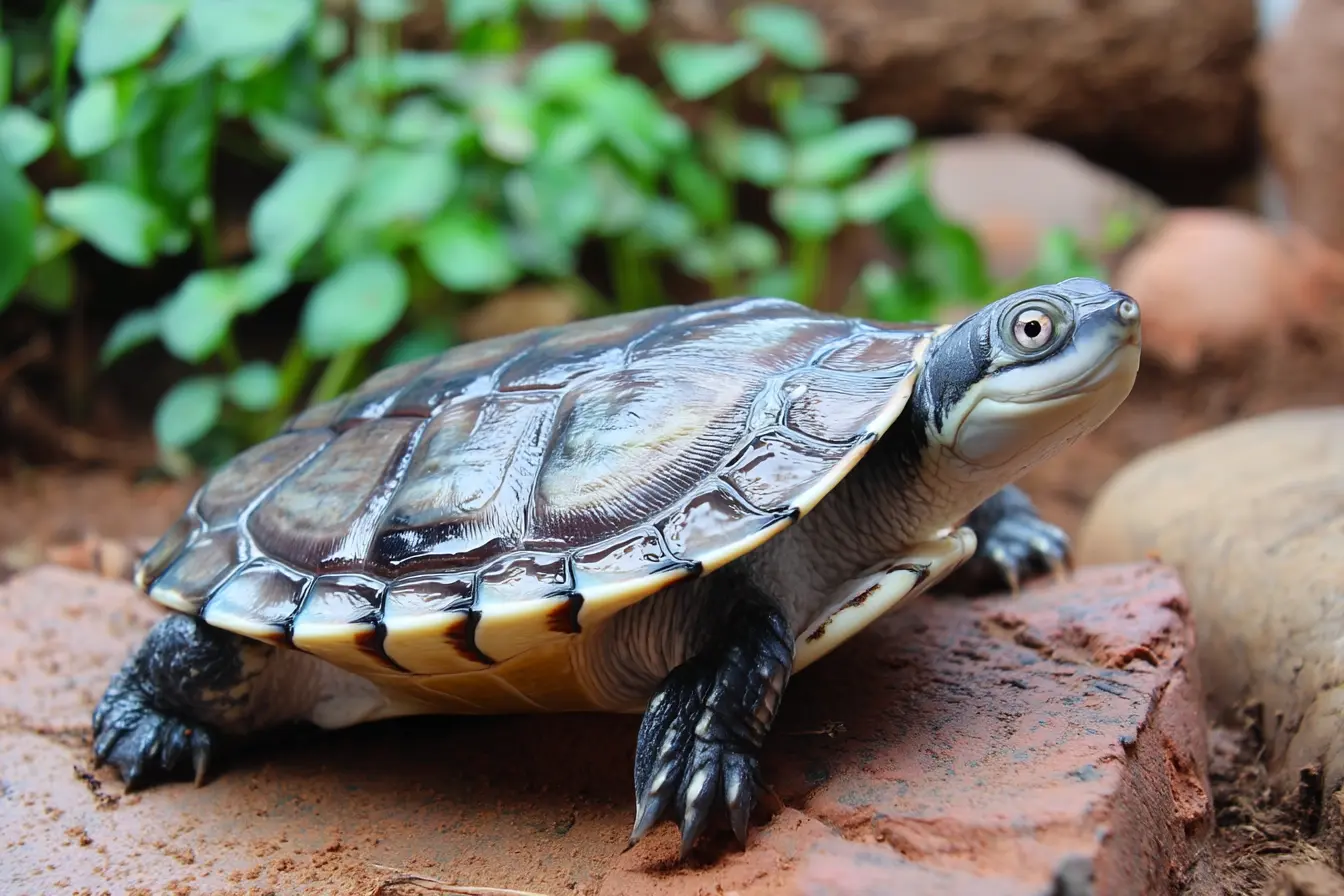
The African side-neck turtle (Pelusios castaneus) is a fascinating freshwater species known for its distinctive method of tucking its head sideways under its shell rather than pulling it straight in like most turtles. Native to West and Central Africa, this hardy and adaptable turtle is becoming an increasingly popular pet among reptile enthusiasts in the UK and beyond.
With their inquisitive personalities, manageable size, and intriguing behaviours, African side-neck turtles can make excellent companions for keepers who can meet their aquatic care needs. In this blog post, we’ll explore everything you need to know about keeping one of these turtles happy and healthy.
Origins and Natural Habitat
African side-neck turtles are semi-aquatic reptiles found in rivers, lakes, swamps, and marshes throughout sub-Saharan Africa. They are particularly well-suited to environments with slow-moving or stagnant water. In the wild, they are opportunistic omnivores and are known to thrive in a range of habitats, from temporary rain pools to permanent wetlands.
Their ability to adapt to various conditions makes them relatively easy to keep in captivity—provided you offer a well-maintained aquatic setup and a varied diet.
Appearance and Behaviour
Physical Traits
Size: Adult African side-neck turtles usually grow to around 18–25 cm in shell length
Shell: Brown to dark olive, oval-shaped, often slightly domed
Neck and Head: Long, flexible necks that bend sideways under the shell when retracted. They have large, expressive eyes and a broad snout
Behaviour
These turtles are generally active, especially during the day. They are naturally curious and often come to the front of the tank to greet their keepers. While they’re not overly social with humans, they do become accustomed to feeding routines and may beg for food when they see you approach.
They can be territorial, particularly males, so housing multiple individuals should be done with care.
Housing Requirements
Tank Setup
A well-maintained aquatic environment is essential for the health of an African side-neck turtle.
Tank size: A single adult requires at least a 100-litre tank. Bigger is always better
Water depth: Deep enough for swimming, ideally at least 30–40 cm
Basking area: A dry, accessible platform where the turtle can completely leave the water
Substrate: Bare-bottom tanks are easiest to clean, but smooth river rocks or large gravel can be used
Filtration: These turtles are messy eaters, so a strong external filter is necessary to maintain water quality
Heating and Lighting
Water temperature: Keep between 24–28°C with an aquarium heater
Basking spot: 32–35°C, created using a heat lamp above the platform
UVB lighting: A 10.0 UVB bulb is essential for vitamin D3 synthesis and shell health. Replace bulbs every 6 months
Diet and Feeding
African side-neck turtles are omnivores and benefit from a balanced diet that includes both animal and plant matter.
Protein Sources
Insects (crickets, mealworms, earthworms)
Freshwater fish (avoid goldfish due to fat content and parasites)
Shrimp and snails
Quality commercial turtle pellets
Vegetables and Plants
Romaine lettuce
Dandelion greens
Duckweed, water hyacinth, and other aquatic plants
Feeding Tips
Young turtles should be fed daily, while adults can be fed every 2–3 days. Remove uneaten food promptly to maintain clean water. You should also offer a calcium source such as a cuttlebone or calcium block in the tank.
Handling and Interaction
African side-neck turtles are best appreciated from outside the tank rather than through frequent handling.
Handling: Should be kept to a minimum to reduce stress. When necessary, lift gently and support their entire body
Hygiene: Always wash your hands before and after handling to reduce the risk of spreading bacteria such as Salmonella
These turtles may snap defensively if startled or picked up unexpectedly, so always approach them calmly and confidently.
Common Health Concerns
Shell Rot
A bacterial or fungal infection caused by poor water quality or injuries. Look for soft spots, discolouration, or foul odours
Respiratory Infections
Can result from poor heating or cold drafts. Symptoms include wheezing, nasal discharge, and lethargy
Metabolic Bone Disease (MBD)
Results from insufficient calcium or inadequate UVB exposure. Signs include soft shell, deformities, or difficulty moving
Parasites
Internal parasites can cause digestive issues and weight loss. Regular faecal checks by a reptile vet are advised
If you notice any signs of illness, consult a reptile-savvy vet promptly for diagnosis and treatment.
Social Housing Considerations
African side-neck turtles can be kept in groups, but caution is needed.
Do not house males together unless you have a very large tank
Introduce turtles slowly and monitor interactions
Ensure multiple basking spots and hiding areas to reduce competition
Aggression, biting, or constant chasing are signs that turtles may need to be separated.
Final Thoughts
The African side-neck turtle is an intriguing and resilient reptile that makes a wonderful pet for those with the space and commitment to meet its needs. Its quirky sideways-neck fold and energetic nature offer a unique charm that sets it apart from other turtle species.
With a well-maintained tank, proper heating and lighting, and a balanced diet, these turtles can thrive in captivity and live for 20–30 years or more. If you're ready to take on a long-term aquatic companion, the African side-neck turtle could be the perfect addition to your reptile collection.
Quick questions
- What should I know about african side-neck turtle?
- The African side-neck turtle is a unique freshwater species known for sideways tucking its head under its shell. Popular as pets in the UK, they need a well-maintained aquatic setup with a balanced diet of animal and plant matter. Vet Verified can help you compare UK veterinary practices by location, species, services and opening hours before you call.
- When should I contact a vet about african side-neck turtle?
- Contact a veterinary practice if your pet seems unwell, symptoms are getting worse, you are unsure what to do, or the situation may be urgent. Vet Verified helps you compare practice details, but a vet should advise on your pet's current care.
- Can Vet Verified help me find exotic vets?
- Yes. Use Vet Verified to compare exotic vets across the UK, then check practice profiles and call directly to confirm current availability.
Find a vet
Find a veterinary practice
Compare UK veterinary practices related to this topic. Call the practice to confirm its current services and availability.