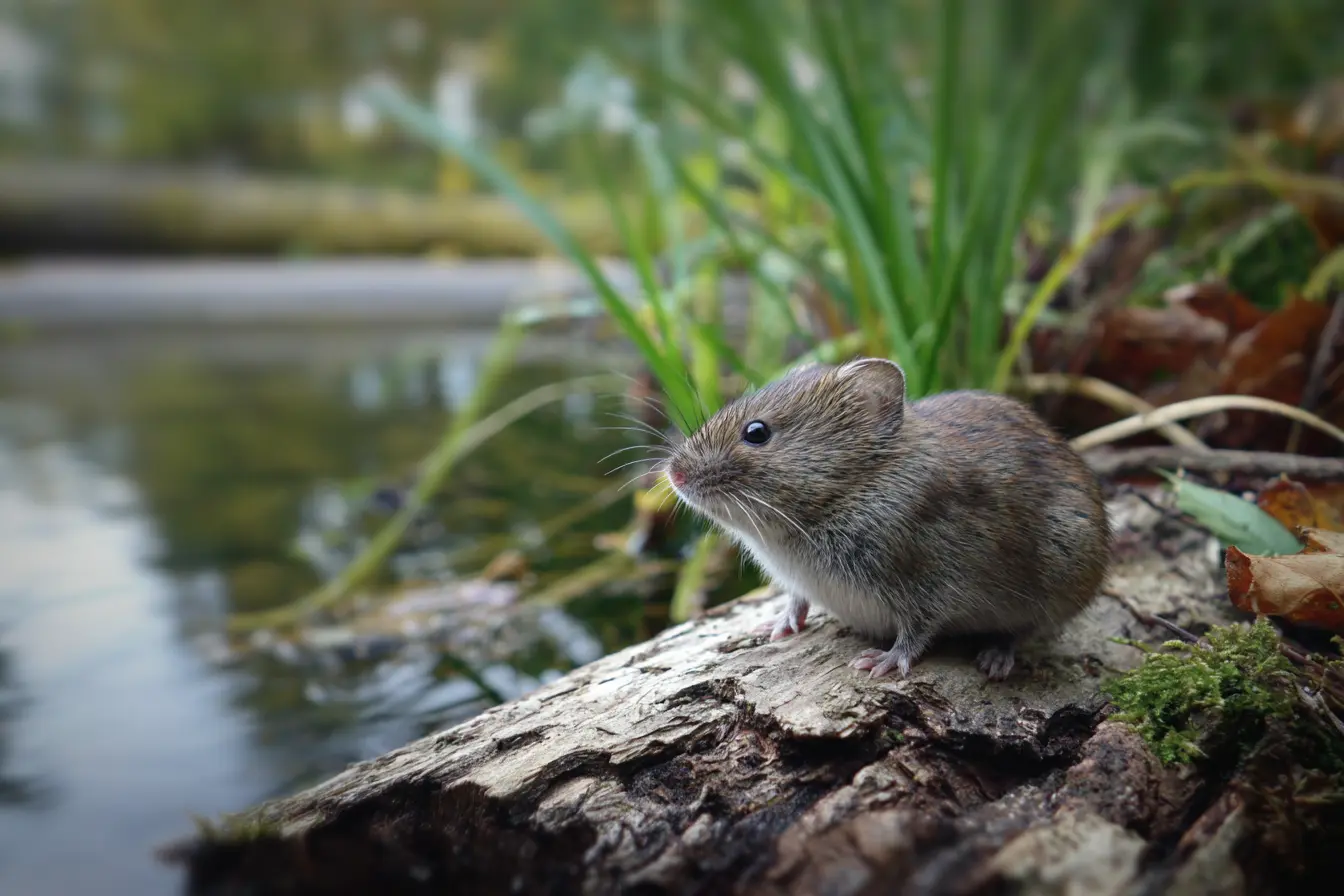
The bank vole (Myodes glareolus) is a small, chestnut-brown rodent commonly found throughout the UK’s woodlands, hedgerows and gardens. Though often overlooked due to its secretive lifestyle, the bank vole plays a vital role in the food web, serving as an important prey species and a key contributor to ecosystem health through its foraging and tunnelling behaviour.
This post takes a closer look at the bank vole’s appearance, behaviour, habitat, diet, life cycle, and ecological significance, as well as how it compares to similar small mammals.
Identification and Appearance
Bank voles are often confused with field voles and wood mice, but there are several features that help distinguish them.
Key features:
Size: 9–11 cm body length; 4–6 cm tail
Rich chestnut-brown fur with pale grey or white underparts
Rounded snout with a neat appearance
Prominent ears and eyes
Tail about half the body length
Agile climbers and often seen above ground
Distribution and Habitat
Bank voles are widespread across England, Wales and southern Scotland, and they are found in parts of Northern Ireland as well. They are adaptable and occupy a variety of semi-natural and human-influenced habitats.
Preferred habitats:
Broadleaf and mixed woodlands
Hedgerows and scrubland
Gardens and allotments
Bramble thickets and ground vegetation
Riverbanks and woodland edges
Behaviour and Lifestyle
Bank voles are mainly active at dawn and dusk, though they may also be seen during daylight in quiet areas.
Key behaviours:
Maintain small, scent-marked territories
Create surface runs, burrows and nests in leaf litter or soil
More likely than field voles to climb low vegetation
Communicate using scent, sound, and body language
Diet and Feeding
Bank voles are omnivores with a preference for plant matter, but they also consume animal protein.
Common food sources:
Seeds and berries
Green vegetation
Fungi
Roots and tubers
Insects, snails, and other invertebrates (especially in summer)
Reproduction and Life Cycle
Bank voles breed prolifically in spring and summer, allowing populations to build up quickly in suitable conditions.
Breeding facts:
Breeding season: March to October
Gestation: 18–22 days
Litter size: 4–6 pups per litter
Multiple litters per year
Pups weaned after 2–3 weeks
Sexual maturity reached in 6–8 weeks
Typical lifespan: less than 1 year in the wild
Predators and Threats
Bank voles are important prey for a wide range of predators.
Natural predators:
Tawny and barn owls
Foxes, weasels, and stoats
Domestic cats
Adders and grass snakes
Kestrels and other birds of prey
Human-related threats:
Habitat loss and fragmentation
Agricultural intensification
Chemical use reducing food and shelter
Signs of Bank Voles
Look for these signs in suitable habitats:
Narrow runways through vegetation
Nibbled seeds or hazelnuts
Small burrows at the base of logs or stumps
Scats and feeding remains near cover
Bank Voles vs Field Voles
Though similar in size, these species can be told apart by a few consistent features.
Bank vole:
Chestnut brown fur
Tail around half the body length
Favour woodlands and hedgerows
Prominent ears and eyes
Will climb low vegetation
Field vole:
Dull brown or grey fur
Short tail, less than half body length
Prefer rough grassland and open moor
Smaller, less visible ears
Ground-dwelling only
Importance in the Ecosystem
Bank voles play a valuable ecological role despite their size.
Ecological contributions:
Provide a crucial food source for a wide range of predators
Help disperse seeds and fungi spores
Aerate and structure soil through burrowing
Indicate healthy woodland and hedgerow habitats
Conclusion
Bank voles are vital but often overlooked members of the UK’s mammal community. With their rich colouring, active lifestyle and important ecological role, they are an indispensable part of healthy woodland and hedgerow ecosystems.
Supporting natural habitats, protecting hedgerows, and reducing chemical use helps ensure these charming little rodents continue to thrive—benefiting not only their predators but the countryside as a whole. Next time you walk through a patch of woodland or along a hedge, keep an eye out for the rustle of a bank vole in the undergrowth.
Quick questions
- What should I know about bank vole?
- The bank vole is a small, chestnut-brown rodent found across the UK's woodlands, hedgerows, and gardens. Vet Verified can help you compare UK veterinary practices by location, species, services and opening hours before you call.
- When should I contact a vet about bank vole?
- Contact a veterinary practice if your pet seems unwell, symptoms are getting worse, you are unsure what to do, or the situation may be urgent. Vet Verified helps you compare practice details, but a vet should advise on your pet's current care.
- Can Vet Verified help me find cat vets?
- Yes. Use Vet Verified to compare cat vets across the UK, then check practice profiles and call directly to confirm current availability.
Find a vet
Find a veterinary practice
Compare UK veterinary practices related to this topic. Call the practice to confirm its current services and availability.
Search by species
- Cat vets Find UK veterinary practices that list care for cats. Compare opening hours, services, facilities and verified profiles, then contact a practice directly.
- Bird vets Find UK veterinary practices that list care for birds. Compare opening hours, services, facilities and verified profiles, then contact a practice directly.