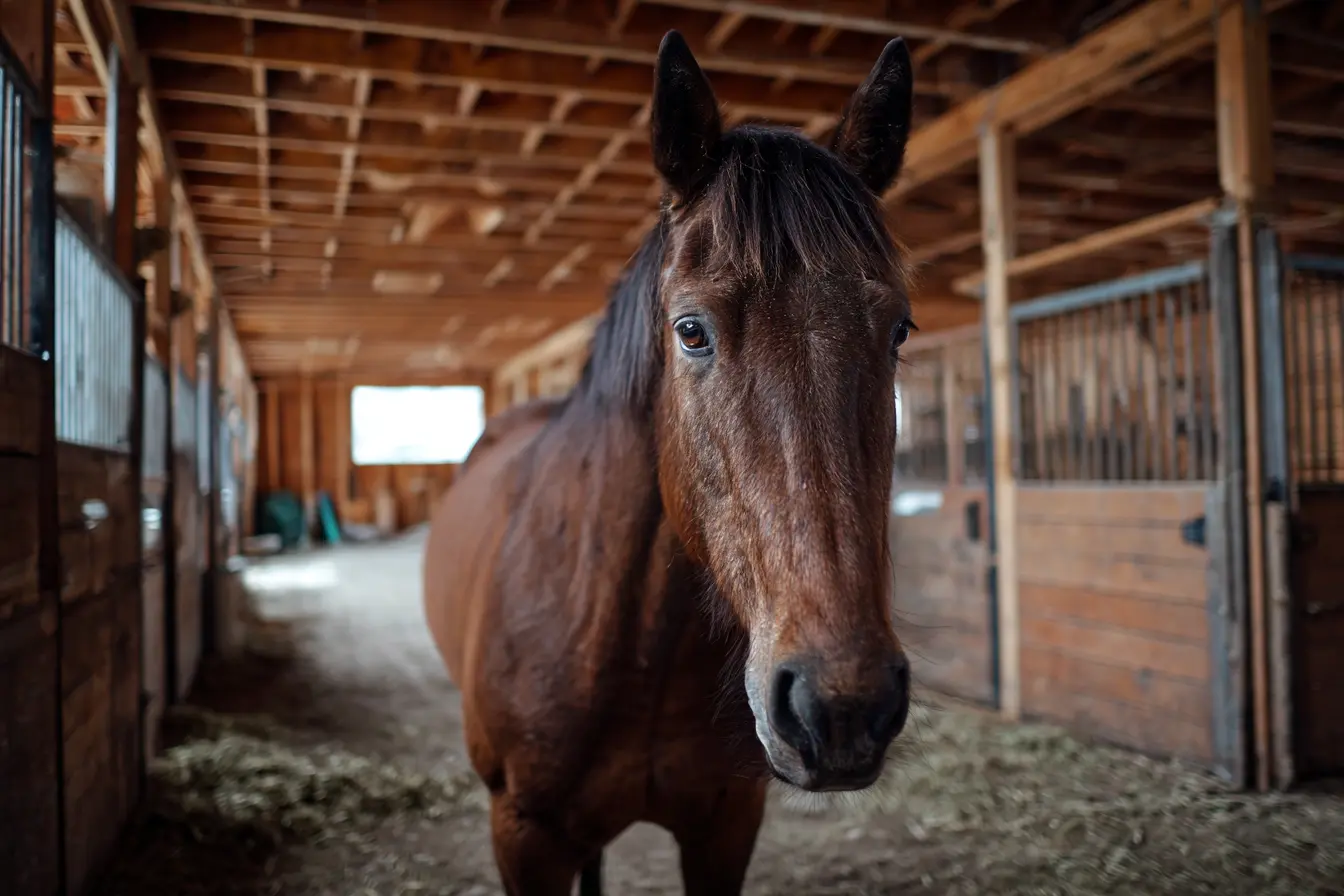
Housing a stallion requires careful planning, strong infrastructure, and a commitment to safety and welfare. Stallions are entire (uncastrated) male horses and often display stronger territorial and sexual behaviours than geldings or mares. Because of their strength and drive, they need secure, purpose-built accommodation and consistent management to ensure their safety, as well as the safety of handlers and other horses.
This post explains everything you need to know about housing a stallion, including stable design, fencing, turnout management, social contact, safety measures, and daily routines.
Understanding Stallion Needs
Stallions have the same basic needs as any horse, shelter, forage, space, and social contact, but they also require additional considerations due to their behaviour and strength.
They are more likely to challenge fences, doors, or barriers.
They may become agitated or aggressive if housed near mares.
They need secure, quiet spaces to reduce stress and frustration.
They require regular turnout or exercise to prevent boredom and behavioural issues.
Providing the right environment helps keep stallions calm, healthy, and manageable.
Stable Design and Layout
Purpose-built or adapted stables are essential for housing stallions safely.
Stables should be solidly constructed, with strong walls and doors that can withstand kicking or barging.
Doors should have top and bottom bolts and ideally a grill or mesh top door to allow visibility while preventing escape.
Avoid shared bars or low partitions between stables, as stallions may bite or strike at neighbours.
Provide good ventilation, natural light, and drainage while maintaining security.
The stable should be large enough for the stallion to move comfortably (minimum 3.6m x 3.6m, preferably larger).
Position the stallion stable in a quiet area away from mares if possible to reduce stimulation.
A well-designed stable helps prevent injuries, escape attempts, and stress-related behaviours such as weaving or box walking.
Fencing and Turnout Areas
Turnout is vital for a stallion’s physical and mental wellbeing, but it must be done safely.
Use strong, high fencing (at least 1.5–1.8 metres high).
Post-and-rail fencing is ideal, often combined with electric tape to discourage leaning or fighting.
Avoid wire fencing, which can cause serious injuries if a stallion challenges it.
Provide double-fenced boundaries or a wide buffer strip if mares are in neighbouring paddocks.
Ensure gates are securely fastened and cannot be opened by the horse.
Turnout should be regular, ideally daily, to allow movement and reduce frustration.
Social Contact and Companionship
Stallions are naturally social animals, and complete isolation can lead to stress, anxiety, and behavioural problems.
Allow visual or over-the-fence contact with other horses if direct contact is not possible.
Some stallions can live alongside geldings or young colts if carefully introduced and monitored, but never risk injuries.
Avoid housing stallions directly next to mares, especially in season, as this can cause agitation.
Mirrors can help reduce loneliness in stables if companions are not possible.
Providing social stimulation helps meet a stallion’s psychological needs without compromising safety.
Daily Management Routines
Consistent routines create stability and help prevent behavioural problems.
Handle the stallion at the same times each day to reduce anticipation and anxiety.
Provide regular exercise (ridden work, lunging, or in-hand walking) to release energy and promote calmness.
Keep the environment clean, well-bedded, and free from hazards.
Feed a forage-based diet and avoid excessive concentrates that may increase excitability.
Maintain strict rules for leading and handling to reinforce good manners.
Routine and predictability help stallions feel secure and less reactive.
Safety Measures
Because of their strength and potential unpredictability, safety is paramount when housing a stallion.
Only experienced, confident handlers should manage him.
Ensure all fences, gates, and stable doors are regularly checked and well maintained.
Keep clear signage on his stable and paddock stating that he is a stallion.
Inform yard staff, farriers, and vets about his status so they can take appropriate precautions.
Have appropriate insurance in place, as public liability risks are higher with stallions.
A proactive safety culture protects the stallion, people, and other horses.
Legal and Welfare Responsibilities
Housing a stallion comes with legal and ethical duties.
Owners must comply with UK animal welfare legislation and ensure the stallion’s physical and psychological needs are met.
Stabling must be safe, hygienic, and provide enough space, ventilation, light, and social contact.
Stallions must have daily exercise and freedom of movement.
Anyone housing a stallion on a livery or shared yard must get permission from the yard owner or manager.
Failure to provide suitable housing can result in injury, behavioural problems, or welfare breaches.
Conclusion
Housing a stallion safely and humanely requires secure facilities, careful planning, and experienced daily management. Well-constructed stables, strong fencing, controlled turnout, and consistent routines all help keep a stallion calm and safe.
With the right environment and handling, stallions can thrive, but their housing needs are far greater than those of geldings or mares, and they should only be kept by experienced and committed horse owners.
Quick questions
- What should I know about stallion housing?
- Learn how to house a stallion safely and responsibly. Discover important details about stable design, fencing, and daily care routines to keep stallions healthy and manageable. Vet Verified can help you compare UK veterinary practices by location, species, services and opening hours before you call.
- When should I contact a vet about stallion housing?
- Contact a veterinary practice if your pet seems unwell, symptoms are getting worse, you are unsure what to do, or the situation may be urgent. Vet Verified helps you compare practice details, but a vet should advise on your pet's current care.
- Can Vet Verified help me find horse vets?
- Yes. Use Vet Verified to compare horse vets across the UK, then check practice profiles and call directly to confirm current availability.
Find a vet
Find a veterinary practice
Compare UK veterinary practices related to this topic. Call the practice to confirm its current services and availability.