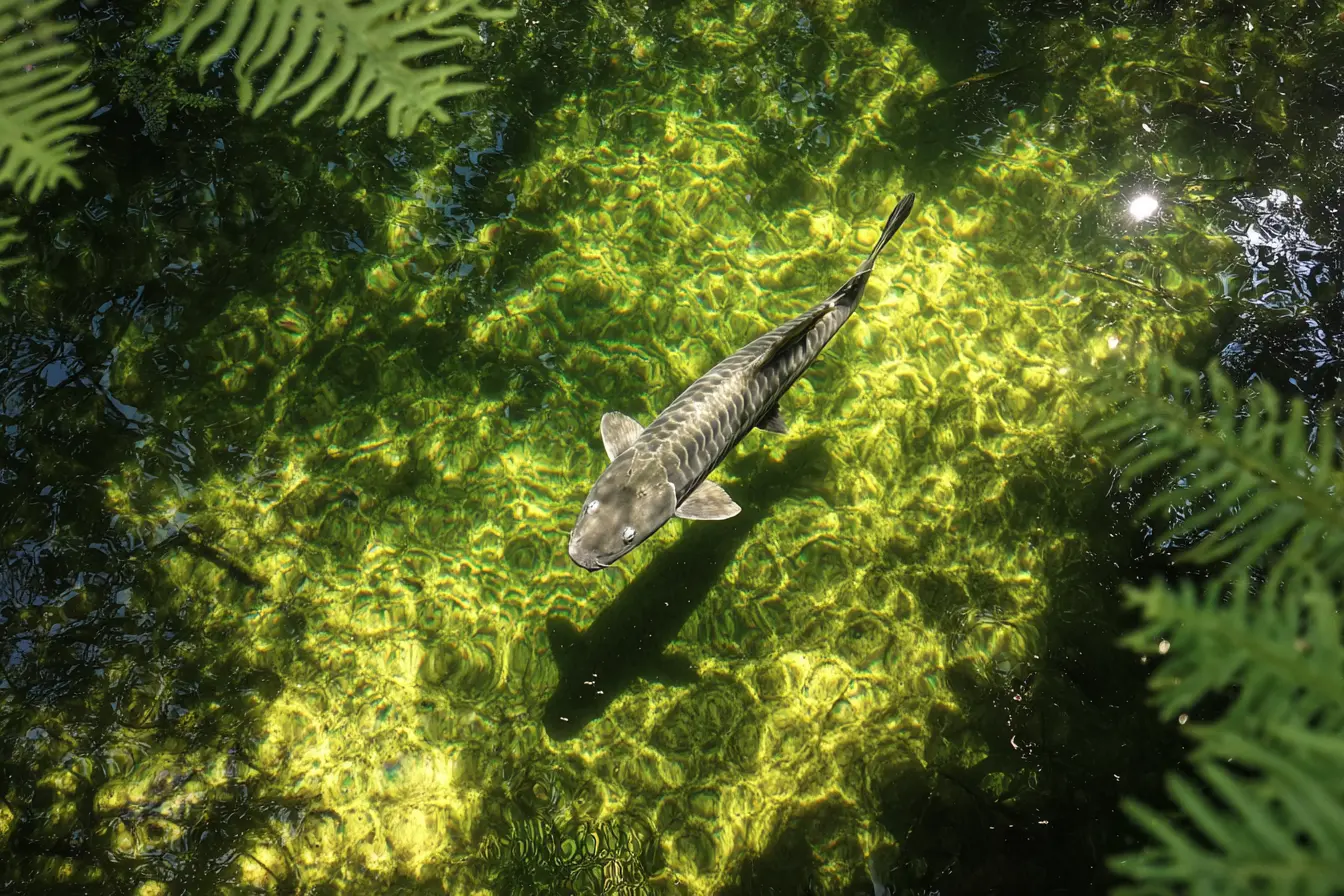
Sturgeon are among the most fascinating and ancient fish you can keep in a garden pond. With their distinctive, prehistoric appearance and graceful swimming, they can add a unique dimension to your pond. However, sturgeon have specific needs that make them more challenging to keep than other pond fish. Here’s a detailed guide to help you understand what’s involved in keeping sturgeon in your pond.
What Are Sturgeon?
Sturgeon are ancient fish, with a fossil record going back over 200 million years. In the UK pond-keeping scene, the most common species kept include:
Sterlet (Acipenser ruthenus) – the smallest and most suitable sturgeon for ponds, usually reaching 80–100 cm in length.
Diamond Sturgeon (Acipenser gueldenstaedtii) – larger and more striking, but requires a large, deep pond.
Siberian Sturgeon (Acipenser baerii) – another larger species, best kept in very large ponds or lakes.
These fish are bottom feeders with long, sensitive barbels used to find food.
Pond Requirements for Sturgeon
Pond Size and Depth
Sturgeon grow large and need a spacious, well-oxygenated pond:
Minimum pond size: At least 10,000 litres (2,200 gallons) for Sterlets, with much larger volumes for Diamond or Siberian sturgeon.
Depth: At least 1.2 metres (4 feet), though deeper is better.
Sturgeon do best in ponds designed with them in mind – deep, with smooth, rounded edges to prevent them getting stuck or injured.
Filtration and Aeration
Sturgeon produce a lot of waste and need excellent water quality:
Filtration: A powerful filter system that handles large volumes of water and waste. Consider adding a drum filter or large multi-bay filter system for best results.
Aeration: Sturgeon require high oxygen levels. Install an air pump, waterfall, or multiple air stones to ensure constant oxygenation.
Because sturgeon are sensitive to low oxygen levels, this is crucial, especially during warm summer months when oxygen levels can drop.
Water Quality
Sturgeon are more sensitive to poor water conditions than other pond fish:
pH: Should be stable between 7.0 and 8.0.
Ammonia and nitrite: Must be zero, as these are highly toxic.
Nitrate: Ideally kept below 40 ppm.
Test water at least weekly during warm months. If needed, perform partial water changes (around 10–20%) to reduce nitrates and maintain balance.
Feeding Sturgeon
Feeding sturgeon correctly is one of the biggest challenges for pond keepers. Sturgeon are bottom feeders and cannot compete with faster fish like koi and goldfish for floating foods.
Specialist sturgeon food: Use high-protein sinking pellets designed specifically for sturgeon. These sink quickly and are easier for sturgeon to locate and eat.
Feeding frequency: Feed small amounts 2–3 times a day during the warmer months. Sturgeon have high metabolisms and need regular feeding.
Winter feeding: Sturgeon remain active at lower temperatures than other pond fish and may continue to feed down to around 5–6°C. However, feed smaller amounts as digestion slows.
Watch carefully to ensure your sturgeon are actually getting the food – uneaten pellets can quickly decay and affect water quality.
Seasonal Care
Spring
Check and restart your filtration and aeration systems if turned off during winter.
Resume feeding as water temperatures rise.
Observe your sturgeon closely for any signs of stress or illness.
Summer
Ensure excellent oxygenation as warm water holds less oxygen.
Provide shaded areas in the pond to keep water cool.
Continue feeding with high-protein, sinking sturgeon pellets.
Autumn
Gradually reduce feeding as water temperatures drop.
Remove fallen leaves to prevent decay and water quality issues.
Prune pond plants to reduce organic waste.
Winter
Continue feeding sturgeon sparingly if water temperatures remain above 5–6°C and they’re actively searching for food.
Maintain a hole in any ice cover using an air stone, pond heater, or de-icer to ensure gas exchange.
Avoid disturbing your sturgeon, as they will be less active in cold water.
Health and Common Issues
Sturgeon are generally robust but can be vulnerable to specific problems:
Oxygen stress: Gasping at the surface indicates low oxygen levels – increase aeration immediately.
Damage from sharp pond edges: Sturgeon can scrape or injure themselves on rough surfaces. Smooth pond edges and liners reduce this risk.
Parasites and infections: Watch for unusual behaviour, lesions, or weight loss. Treat promptly with appropriate pond-safe medications.
Sturgeon can also become malnourished if they’re unable to get enough food – a common issue in ponds with faster fish like koi.
Introducing Sturgeon to Your Pond
When adding sturgeon to your pond:
Quarantine: If possible, keep new fish in a separate tank for at least two weeks to check for diseases.
Acclimatise: Float the transport bag in your pond for 15–20 minutes to equalise temperatures, then gradually add pond water to the bag before gently releasing them.
Monitor closely: Watch new sturgeon carefully to ensure they are eating and adjusting to their new home.
Creating a Balanced Pond Ecosystem
Sturgeon can coexist with other pond fish, provided their special needs are met:
Avoid overcrowding: Too many koi or goldfish can outcompete sturgeon for food.
Choose plants carefully: Submerged oxygenators and marginal plants are good for water quality but leave enough open water for sturgeon to swim.
A balanced pond with stable water quality and good oxygenation helps ensure sturgeon stay healthy and active.
Conclusion
Keeping sturgeon is a rewarding but challenging aspect of pond-keeping. With careful planning, proper feeding, and excellent water quality, you can enjoy these ancient, graceful fish for many years.
Quick questions
- What should I know about sturgeon?
- Learn how to keep sturgeon in your garden pond with this helpful guide. Sturgeon are ancient fish requiring specific care, including large, deep ponds, excellent filtration, and high oxygen levels. Vet Verified can help you compare UK veterinary practices by location, species, services and opening hours before you call.
- When should I contact a vet about sturgeon?
- Contact a veterinary practice if your pet seems unwell, symptoms are getting worse, you are unsure what to do, or the situation may be urgent. Vet Verified helps you compare practice details, but a vet should advise on your pet's current care.
- Can Vet Verified help me find a vet?
- Yes. Use Vet Verified to compare UK veterinary practices by location, species, services and opening hours, then call directly to confirm current availability.
Find a vet
Find a veterinary practice
Compare UK veterinary practices related to this topic. Call the practice to confirm its current services and availability.
Find a vet