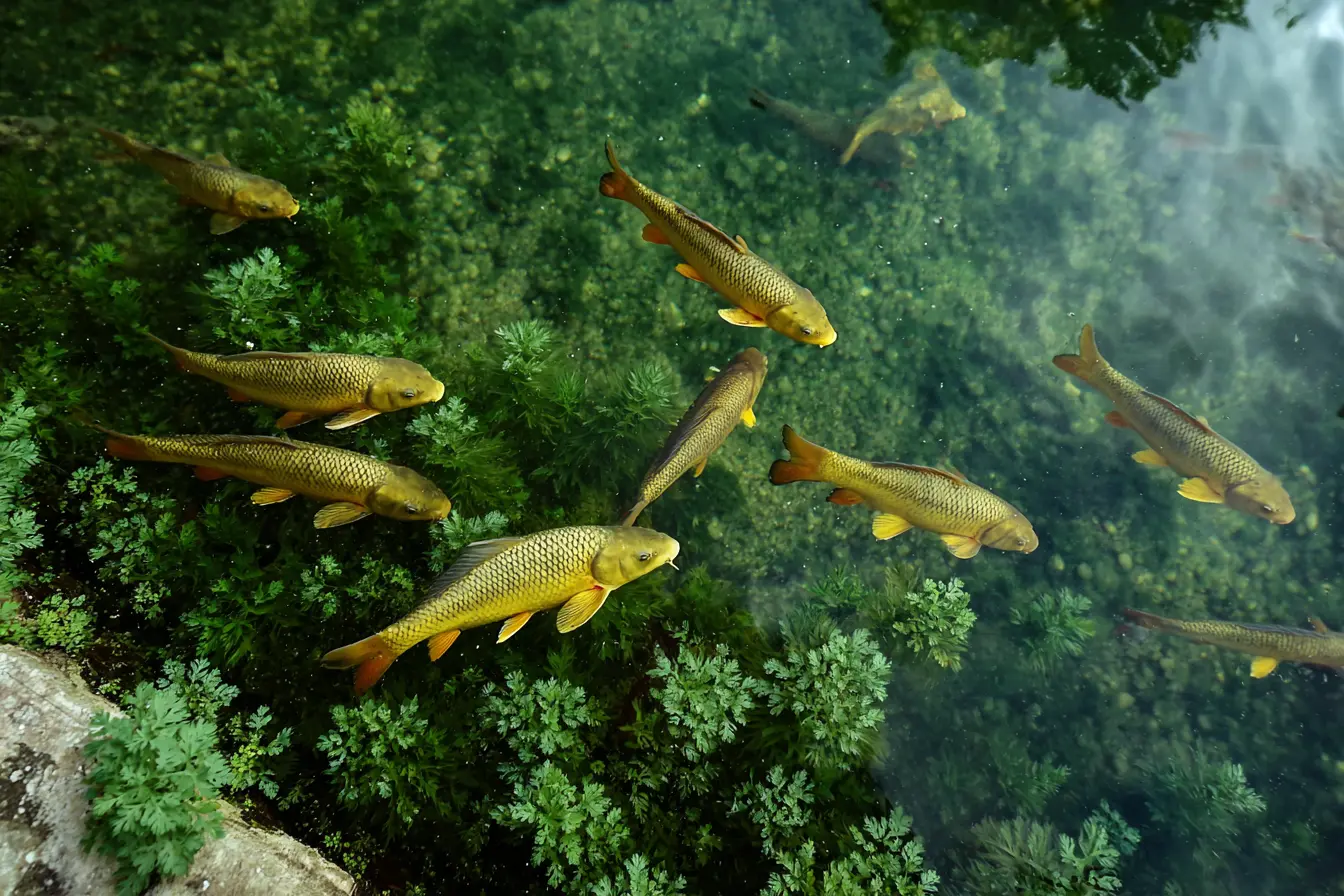
Tench are a fantastic choice for garden ponds in the UK, known for their peaceful nature, bottom-dwelling habits, and unique appearance. These olive-green fish, sometimes referred to as the “doctor fish” due to their supposed healing properties, add diversity to your pond and help keep it balanced. This guide covers everything you need to know about keeping tench in your garden pond.
Types of Tench
There are two main types of tench commonly kept in ponds:
Green Tench: The classic variety with a deep olive-green body and a golden sheen.
Golden Tench: A striking yellow-orange variety that’s particularly popular in ornamental ponds.
Both types are hardy and well-suited to the UK climate.
Pond Requirements for Tench
Pond Size and Depth
Tench are bottom-dwelling fish that enjoy rooting around in pond substrates. They are generally slow-moving and like to explore their surroundings.
Pond size: At least 1,000 litres (220 gallons) for a small group, though larger ponds are always better.
Pond depth: A minimum of 60 cm (24 inches) is recommended, with 1 metre (3 feet) or deeper providing extra protection from predators and winter cold.
Tench are social fish and prefer to be kept in small groups.
Filtration and Aeration
Although tench are tolerant of lower oxygen levels than some other pond fish, good filtration and aeration are still essential for overall pond health.
Filtration: A filter that provides both mechanical and biological filtration helps to keep water clear and break down waste.
Aeration: Features like fountains, waterfalls, or air stones ensure that oxygen levels remain sufficient, particularly in summer.
Substrate and Habitat
Tench like to sift through soft substrates in search of food. A layer of pond soil, sand, or smooth gravel on the pond bottom can help them feel more at home.
Adding marginal plants and submerged plants provides shelter and natural foraging areas, creating a more natural and healthy environment.
Water Quality
Tench are generally hardy, but stable water conditions are essential for their health:
pH: Between 7.0 and 8.0.
Ammonia and nitrite: Both should be zero, as they are toxic to fish.
Nitrate: Ideally below 40 ppm to reduce algae growth.
Test water weekly during the warmer months and carry out partial water changes (around 10–20%) if levels are off.
Feeding Tench
Tench are natural foragers and will eat a wide variety of foods:
Natural diet: They love insect larvae, small crustaceans, worms, and plant matter.
Supplemental diet: Sinking pond fish pellets or sticks are ideal, as tench feed primarily at the bottom.
Occasional treats: Offer live or frozen foods like bloodworms, daphnia, or chopped earthworms to encourage natural foraging behaviour.
Feed 1–2 times daily in summer, only what they can eat within a few minutes. Reduce feeding in autumn as temperatures cool, and stop altogether once water temperatures consistently fall below 10°C.
Seasonal Care
Spring
Clean the pond and check filtration and aeration equipment.
Begin feeding tench again once water temperatures are above 10°C.
Observe fish for any signs of illness after the winter period.
Summer
Ensure good oxygen levels, especially during warm spells.
Provide plenty of shaded areas with floating or marginal plants.
Avoid overfeeding to prevent water quality issues.
Autumn
Gradually reduce feeding as temperatures drop.
Remove fallen leaves to prevent them from decaying and affecting water quality.
Prune pond plants and tidy up around the pond.
Winter
Stop feeding once water temperatures remain below 10°C.
Keep an area of the pond ice-free using a pond heater, air stone, or de-icer to allow for gas exchange.
Avoid disturbing fish as they become less active and rest near the bottom.
Health and Common Issues
Tench are generally hardy, but like all pond fish, they can be affected by poor water quality or disease. Watch for:
Lethargy or gasping at the surface – can indicate low oxygen levels.
White spot (Ich) – small white cysts on fins or skin.
Red streaks or ulcers – signs of bacterial infection.
If you notice any of these symptoms, test your water and correct any imbalances. Treat diseases promptly, following product instructions carefully.
Introducing Tench to Your Pond
When introducing new tench:
Quarantine: If possible, keep new fish in a separate tank for at least two weeks to ensure they are healthy.
Acclimatise slowly: Float the transport bag in the pond for 15–20 minutes, then gradually add pond water to the bag before gently releasing the fish.
Add in small groups: Introducing fish in small numbers avoids sudden strain on your pond’s biological filter.
Creating a Balanced Pond Ecosystem
Tench play an important role in a balanced pond ecosystem:
Natural foraging: They help keep the pond floor clean by stirring up debris and consuming excess organic matter.
Coexist well: Tench are peaceful and get along well with other pond fish like goldfish and koi.
Wildlife-friendly: A well-planted pond that includes marginal and submerged plants supports a healthy environment for tench and encourages local wildlife.
Conclusion
Tench are a wonderful, low-maintenance addition to any pond. With their gentle nature, natural bottom-feeding behaviour, and ability to thrive in well-kept ponds, tench can bring balance and interest to your garden for years to come.
Have any questions or want to share your experiences with tench? Leave a comment below – I’d love to hear your stories and help you on your pond-keeping journey!
Quick questions
- What should I know about tench?
- Tench are ideal fish for UK garden ponds due to their calm nature and unique look. There are two types: Green Tench and Golden Tench, both suitable for British weather. Vet Verified can help you compare UK veterinary practices by location, species, services and opening hours before you call.
- When should I contact a vet about tench?
- Contact a veterinary practice if your pet seems unwell, symptoms are getting worse, you are unsure what to do, or the situation may be urgent. Vet Verified helps you compare practice details, but a vet should advise on your pet's current care.
- Can Vet Verified help me find a vet?
- Yes. Use Vet Verified to compare UK veterinary practices by location, species, services and opening hours, then call directly to confirm current availability.
Find a vet
Find a veterinary practice
Compare UK veterinary practices related to this topic. Call the practice to confirm its current services and availability.
Find a vet