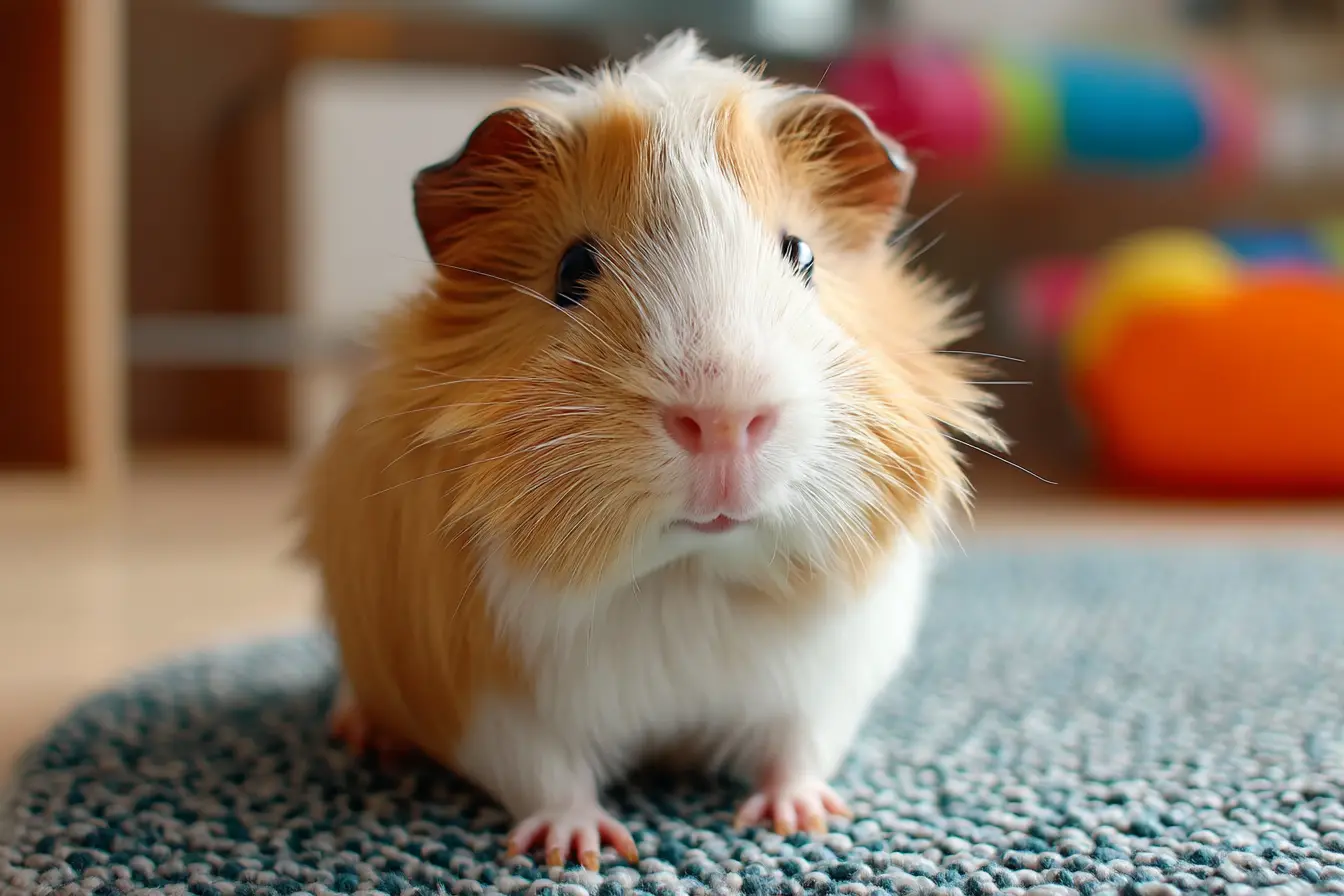
Abyssinian guinea pigs are one of the most recognisable and beloved guinea pig breeds, known for their striking coats of rosettes and their lively, spirited personalities. With their mischievous charm, active nature, and distinctive appearance, Abyssinians are a favourite among experienced keepers. While they require more grooming than smooth-coated breeds, they reward dedicated owners with affection, playfulness, and endless entertainment.
In this post, we’ll cover everything you need to know about Abyssinian guinea pigs, from their unique traits and grooming needs to housing, diet, behaviour, health, and whether they might be the right choice for you.
What Are Abyssinian Guinea Pigs?
The Abyssinian guinea pig is a breed of domesticated guinea pig (Cavia porcellus). Despite the name, the breed does not originate from Abyssinia (modern-day Ethiopia). Instead, it is thought to have been developed in Europe, where it quickly became one of the oldest recognised guinea pig breeds.
Their most distinctive feature is their coat, which is made up of multiple whorls (called rosettes). These tufts of fur grow in different directions, giving them a rough, tousled look that adds to their quirky personality.
Key Characteristics
Size: 20–25 cm in length, weighing between 700–1,200 g (females are typically smaller than males)
Lifespan: 5–7 years on average, with some living longer with excellent care
Temperament: Energetic, curious, social, and occasionally a little cheeky
Appearance: Short to medium-length fur arranged in 8–10 rosettes across the body
Colours/Patterns: Wide variety, including solid, bicolour, tricolour, agouti, brindle, and more
Abyssinians are sometimes described as “clowns” among guinea pigs due to their bold and curious personalities.
Social Needs
Like all guinea pigs, Abyssinians are highly social animals that should never be kept alone. They thrive in pairs or small groups, where they can interact, play, and groom one another.
Best Practices:
Keep them in same-sex groups or neutered pairs unless breeding is intended.
Pairs of females or a group of females generally get along well.
Males can live together if introduced correctly and provided with enough space.
Guinea pigs should not be housed with rabbits, as the species have different needs and may injure one another.
Social interaction with both humans and cage mates is essential for their happiness and health.
Housing and Environment
Abyssinian guinea pigs require a spacious, secure enclosure with plenty of room for activity. They are curious and energetic, so extra space for exploration is particularly important.
Enclosure Requirements:
Indoor cage size: Minimum 120 cm x 60 cm for a pair (larger is strongly recommended).
Outdoor hutches: Must be predator-proof, waterproof, and paired with a secure run for grazing.
Bedding: Paper-based bedding, kiln-dried wood shavings (aspen), or fleece liners. Avoid pine and cedar, which are unsafe.
Nesting material: Hay doubles as bedding and food.
Temperature: Keep between 18–24°C; avoid extremes of heat or cold.
Enrichment:
Hideouts, tunnels, and chew toys.
Regular floor time in a secure indoor or outdoor playpen.
Access to safe outdoor grazing in warmer months.
Clean the enclosure weekly and spot-clean daily to maintain hygiene and prevent odours.
Diet and Nutrition
Abyssinian guinea pigs, like all guinea pigs, require a diet rich in fibre and vitamin C. They cannot produce vitamin C naturally, so it must be provided through their diet.
Core Diet:
Hay: Unlimited access to fresh hay (timothy, meadow, or orchard). Essential for digestion and dental health.
Pellets: Guinea pig-specific pellets fortified with vitamin C.
Vegetables: Daily servings of leafy greens and vegetables such as kale, spinach, romaine lettuce, bell peppers, and cucumber.
Fruits: Occasional treats such as apple, strawberry, blueberry, or orange slice (due to sugar content).
Supplements: Vitamin C supplements may be required if diet is insufficient.
Foods to Avoid:
Iceberg lettuce (nutritionally poor and may cause diarrhoea).
Onions, garlic, and leeks (toxic).
Potato, rhubarb, and tomato leaves (toxic).
Processed human food, seeds, or nuts.
Fresh, clean water must be available at all times.
Grooming Needs
Abyssinians require more grooming than short-haired breeds such as the English guinea pig. Their rosetted coats can trap dirt and bedding, and without regular care they may become messy.
Grooming Guide:
Brushing: Brush two to three times per week with a soft brush to prevent tangles and remove loose hairs. Daily brushing may be required for show-quality Abyssinians.
Bathing: Rarely necessary and only if the guinea pig becomes very dirty. Use small-animal-safe shampoo and dry thoroughly.
Nail trimming: Every 4–6 weeks.
Health checks: Inspect rosettes for skin irritation, parasites, or sores, as their uneven coat can sometimes hide problems.
Grooming also doubles as a bonding experience and helps keep your Abyssinian comfortable and healthy.
Handling and Behaviour
Abyssinians are bold, curious, and energetic. They often enjoy exploring and may be more interactive than some other breeds, though they can also be a little mischievous.
Handling Tips:
Handle gently and support their body with both hands.
Begin with short sessions to help them adjust.
Speak softly to reassure them.
Provide daily human interaction to build trust.
With patience and care, Abyssinians become affectionate pets that enjoy lap time and hand-feeding.
Unique Traits
Rosette coat: Their signature feature, usually 8–10 rosettes covering the body.
Playful personality: Known for being lively, curious, and sometimes cheeky.
Clownish charm: Many owners describe them as the most entertaining of the guinea pig breeds.
Historical popularity: One of the oldest recognised guinea pig breeds in Europe.
Health and Common Issues
Abyssinians are generally healthy but can be prone to some common issues, particularly related to their coat.
Common Health Concerns:
Vitamin C deficiency (scurvy): Prevent with a vitamin C-rich diet.
Respiratory infections: Can develop from poor ventilation or damp bedding.
Dental problems: Caused by insufficient hay consumption.
Skin issues: Their coats can hide parasites such as mites or lice, so regular checks are important.
Obesity: Ensure they get plenty of exercise and a balanced diet.
Regular veterinary checks and a clean living environment are essential.
Is an Abyssinian Guinea Pig Right for You?
Abyssinians are ideal for:
Enthusiasts looking for a lively, outgoing pet.
Families with older children (with supervision).
Keepers willing to commit to regular grooming.
People who enjoy interactive, entertaining pets.
They may not be suitable for:
First-time keepers who prefer very low-maintenance breeds.
Homes with very young children who might struggle with gentle handling.
Anyone unable to commit to grooming and regular care.
Conclusion
Abyssinian guinea pigs are lively, affectionate, and distinctive pets, instantly recognisable by their rosette-covered coats. While they require more grooming and attention than smooth-coated breeds, their playful personalities and quirky charm make them one of the most rewarding guinea pig breeds to keep.
For dedicated keepers willing to invest time in grooming and enrichment, the Abyssinian offers companionship, entertainment, and affection in equal measure.
Quick questions
- What should I know about abyssinian guinea pigs?
- Abyssinian guinea pigs are a popular choice, loved for their unique rosette coats and lively personalities. Vet Verified can help you compare UK veterinary practices by location, species, services and opening hours before you call.
- When should I contact a vet about abyssinian guinea pigs?
- Contact a veterinary practice if your pet seems unwell, symptoms are getting worse, you are unsure what to do, or the situation may be urgent. Vet Verified helps you compare practice details, but a vet should advise on your pet's current care.
- Can Vet Verified help me find a vet?
- Yes. Use Vet Verified to compare UK veterinary practices by location, species, services and opening hours, then call directly to confirm current availability.
Find a vet
Find a veterinary practice
Compare UK veterinary practices related to this topic. Call the practice to confirm its current services and availability.
Find a vet