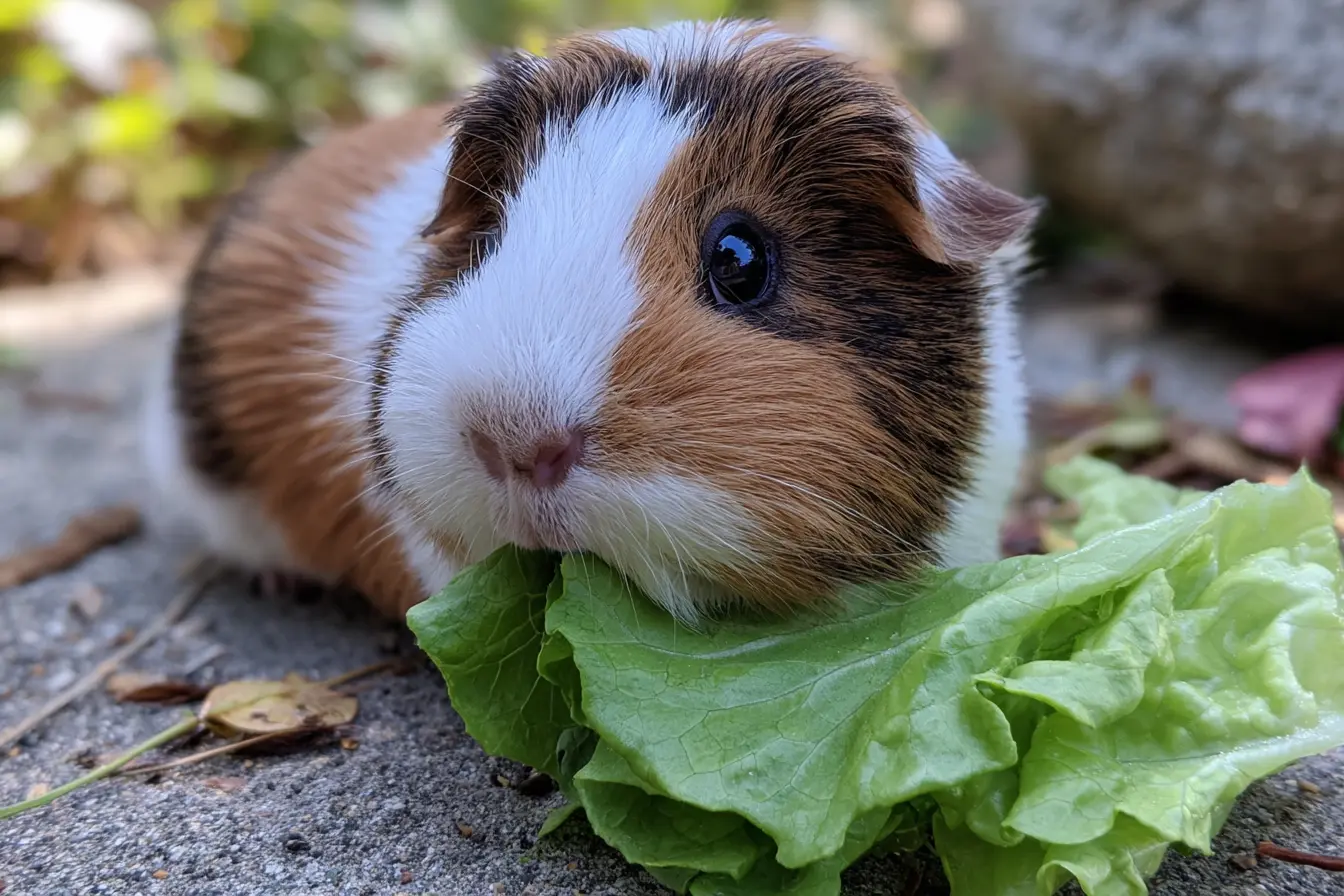
Fresh vegetables are an essential part of a guinea pig’s daily diet. While hay should always be the main component, guinea pigs need a variety of vegetables to provide vitamin C, fibre, hydration, and overall nutritional balance.
This guide explains which vegetables guinea pigs can eat, how to prepare them, which to avoid, and how much to feed to keep your piggies healthy.
Essential Guidelines Before Feeding Vegetables to Guinea Pigs
Feed vegetables daily, alongside unlimited hay.
Combine 5–6 types of vegetables for variety.
Avoid sudden dietary changes to prevent digestive issues.
Always wash vegetables thoroughly to remove pesticides.
Avoid onions, garlic, potatoes, and other toxic vegetables.
Introduce new vegetables slowly, monitoring droppings.
Safe Vegetables for Guinea Pigs
Romaine Lettuce
Benefits: Hydrating, crunchy, and rich in vitamins.
How to serve: Washed leaves, torn or whole.
Note: Better than iceberg lettuce, which lacks nutrients.
Little Gem Lettuce
Benefits: High in fibre, low in calories.
How to serve: Fresh leaves daily.
Portion: A few leaves per pig.
Spring Greens
Benefits: Excellent vitamin C source.
How to serve: Raw, shredded or whole.
Note: Suitable for daily feeding.
Kale
Benefits: Vitamin-rich and antioxidant-packed.
How to serve: Raw, chopped.
Caution: High calcium, only feed 2–3 times per week.
Spinach
Benefits: Good vitamin C content.
How to serve: Raw leaves.
Caution: High oxalates; feed sparingly.
Swiss Chard
Benefits: Hydrating and fibre-rich.
How to serve: Washed and chopped leaves and stems.
Note: Moderate portions due to oxalates.
Coriander (Cilantro)
Benefits: Gentle, aromatic, highly nutritious.
How to serve: Leaves and stems, fresh.
Perfect for: Daily feeding.
Parsley
Benefits: Very high vitamin C.
How to serve: Leaves and stems.
Caution: High calcium; give occasionally.
Mint (All Varieties)
Benefits: Aids digestion.
How to serve: Fresh leaves only.
Note: Offer small amounts; strong aroma may deter some pigs.
Basil
Benefits: Antioxidants and vitamins.
How to serve: Fresh small leaves.
Note: Feed sparingly.
Rocket
Benefits: Great for vitamin C and fibre.
How to serve: Fresh leaves only.
Tip: Peppery flavour can encourage fussy eaters.
Watercress
Benefits: Hydrating and vitamin-rich.
How to serve: Fresh bunches, chopped.
Perfect for: Vitamin C support.
Bell Peppers (All Colours)
Benefits: One of the BEST vegetables for guinea pigs as it is extremely high in vitamin C and low in sugar.
How to serve: Remove seeds and core; slice into strips.
Daily: Red, yellow, or green peppers can be fed daily.
Carrots
Benefits: Crunchy and appealing flavour.
How to serve: Raw slices or grated.
Caution: Higher in sugar so offer 2–3 times per week.
Carrot Tops
Benefits: Fibre-rich leafy greens.
How to serve: Washed and chopped.
Note: Healthier than the carrot itself.
Broccoli
Benefits: Full of vitamin C and fibre.
How to serve: Florets, leaves, and stems.
Caution: Can cause gas so offer only small amounts.
Cauliflower
Benefits: Nutritious and mild.
How to serve: Raw or lightly steamed.
Caution: Gas-producing; feed in moderation.
Cabbage
Benefits: Hydration and fibre.
How to serve: Small raw leaves.
Caution: May cause bloating; rotate rather than feed daily.
Brussels Sprouts
Benefits: Vitamin-packed.
How to serve: Raw or lightly cooked.
Caution: Very gassy so offer only occasionally.
Courgette
Benefits: Very hydrating, low in sugar.
How to serve: Raw slices or cubes.
Cucumber
Benefits: Hydrating and refreshing.
How to serve: Sliced with skin on.
Note: Limited nutritional value. It is best to combine with other veg.
Green Beans
Benefits: Provide fibre and crunch.
How to serve: Raw, chopped into small pieces.
Caution: Offer sparingly due to starch content.
Peas and Pea Pods
Benefits: Sweet, crunchy treat.
How to serve: Fresh pod and peas.
Caution: High in sugar and starch; a treat only.
Tenderstem Broccoli Stems
Benefits: Gentle on digestion compared to florets.
How to serve: Raw or lightly steamed.
Beetroot Leaves
Benefits: Nutritious leafy greens.
How to serve: Washed, chopped.
Caution: High in oxalates, offer occasionally.
Radish Tops
Benefits: High-fibre and nutritious.
How to serve: Fresh leaves; avoid spicy roots.
Note: Some pigs dislike the peppery flavour.
Turnip Greens
Benefits: Great for vitamin C.
How to serve: Fresh, chopped.
Avoid: Turnip root too often; it is high in starch.
Tomato (Ripe Only)
Benefits: Sweet and hydrating.
How to serve: Flesh only; remove seeds and avoid leaves or stems.
Caution: Acidic so offer small portions only.
Vegetables Guinea Pigs Can Eat Only With Caution
Sweetcorn
High in starch and sugar; offer as a rare treat.
Corn kernels only.
Avoid feeding often.
Asparagus
Safe in small amounts but may cause strong-smelling urine.
Offer occasionally only.
Herbs High in Calcium
Parsley
Basil
Mint
Too much calcium can contribute to bladder sludge.
Gas-Producing Veg
Cabbage
Broccoli
Cauliflower
Offer carefully to avoid bloating.
Vegetables Guinea Pigs Must Never Eat
Onions, Garlic, Leeks, Shallots
All are toxic and can cause blood disorders.
Never feed any allium vegetables.
Potatoes
Too starchy and contain solanine.
Avoid cooked and raw potatoes completely.
Mushrooms
May cause digestive upset, sometimes toxic.
Avoid entirely.
Rhubarb
Stalks and leaves contain toxins.
Never feed.
Iceberg Lettuce
Very low in nutrients and may cause diarrhoea.
Avoid.
How Much Vegetable Should a Guinea Pig Eat?
A good daily guideline:
1 cup (approx. a handful) of mixed vegetables per guinea pig per day.
Include a variety of leafy greens especially those high in vitamin C.
Combine low-calcium and high-calcium veg for balance.
The core of their diet should be:
Unlimited hay (timothy, orchard, meadow)
Fresh water
A measured portion of pellets
Vegetables daily
Fruit only 1–2 times per week
Signs Your Guinea Pig Has Had Too Many Vegetables
Soft or watery droppings
Bloating
Excessive gas
Reduced hay intake
Lethargy
Reduce portions and reintroduce slowly.
Fun and Enriching Ways to Serve Vegetables
Veggie kebabs on safe wooden skewers.
Scatter feeding to encourage natural foraging.
Veggie balls or bundles tied with safe edible twine.
Mix herbs and greens to add variety.
Hide vegetables in hay for enrichment.
Conclusion
Vegetables are a vital part of every guinea pig’s diet, providing essential vitamin C, hydration, fibre, and variety. By offering safe, nutritious options like bell peppers, leafy greens, and herbs, and avoiding harmful foods such as onions, potatoes, and rhubarb, guinea pig owners can ensure their pets stay healthy and happy.
With this guidance, you can confidently create a balanced vegetable plan that supports your guinea pig’s wellbeing every day.
Quick questions
- What should I know about vegetables?
- Fresh vegetables are a key part of a guinea pig's diet. While hay is the main food, a diverse range of vegetables is vital for providing vitamin C, fibre, and hydration. Vet Verified can help you compare UK veterinary practices by location, species, services and opening hours before you call.
- When should I contact a vet about vegetables?
- Contact a veterinary practice if your pet seems unwell, symptoms are getting worse, you are unsure what to do, or the situation may be urgent. Vet Verified helps you compare practice details, but a vet should advise on your pet's current care.
- Can Vet Verified help me find a vet?
- Yes. Use Vet Verified to compare UK veterinary practices by location, species, services and opening hours, then call directly to confirm current availability.
Find a vet
Find a veterinary practice
Compare UK veterinary practices related to this topic. Call the practice to confirm its current services and availability.
Find a vet