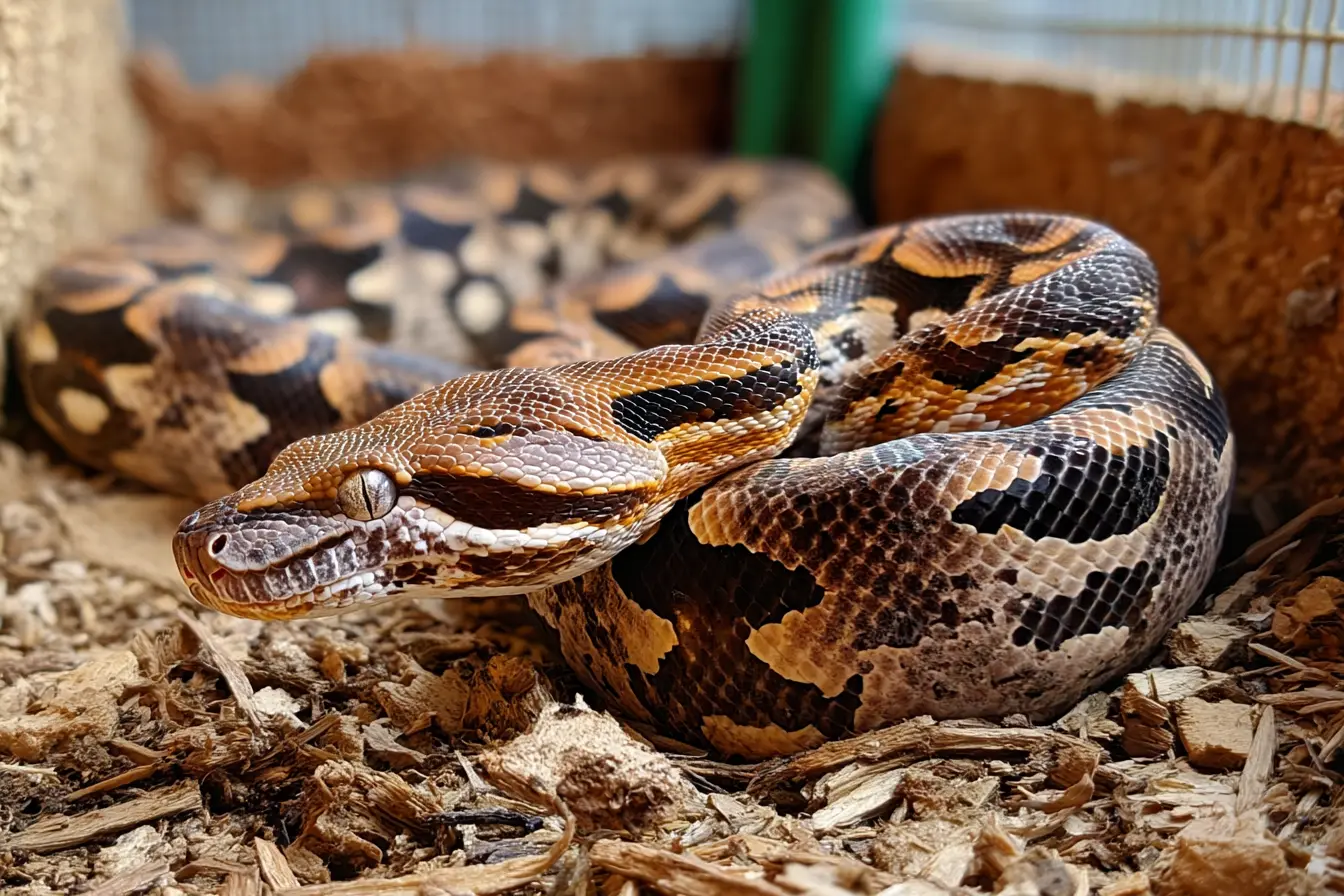
The Dumeril’s boa (Acrantophis dumerili) is a stunning and gentle snake species native to Madagascar. Known for its earthy tones, robust build, and calm temperament, this terrestrial boa has become a favourite among reptile enthusiasts seeking a large yet manageable and docile constrictor.
With its impressive appearance and relatively straightforward care needs, the Dumeril’s boa is a wonderful choice for intermediate keepers ready to care for a larger species. This guide covers everything you need to know about keeping a Dumeril’s boa healthy and thriving in captivity.
Origins and Natural Habitat
Dumeril’s boas are found in the dry forests and scrublands of southern and western Madagascar. Their natural environment experiences seasonal variations, including warm, dry conditions and cooler, humid periods.
These snakes are primarily terrestrial, spending much of their time hidden beneath leaf litter or in burrows. They are ambush predators, lying in wait for small mammals, birds, and lizards to pass by. Understanding their natural habitat helps in creating an appropriate captive environment that supports their health and natural behaviours.
Appearance and Temperament
Physical Traits
Size: Adults typically reach 1.8–2.4 metres in length, with females generally larger than males
Colouration: A mix of browns, tans, and greys, with darker irregular markings that form a perfect camouflage against the forest floor
Build: Stocky and muscular, with a short, blunt head and a thick tail
Eyes: Deep-set and expressive, often giving the snake a calm, intelligent appearance
Behaviour and Temperament
Dumeril’s boas are celebrated for their calm and tolerant nature. They are usually placid and slow-moving, rarely showing aggression when handled correctly. Hatchlings may be defensive at first but quickly settle with gentle handling.
They are crepuscular, most active during dusk and dawn, and tend to spend the day coiled quietly in their hide. This predictable and composed temperament makes them one of the most rewarding large snakes to keep.
Housing Requirements
Because Dumeril’s boas are large, ground-dwelling snakes, they require a spacious and secure enclosure that maintains warmth and humidity without being overly damp.
Enclosure Size
Juveniles: 90 cm x 45 cm x 45 cm
Adults: At least 180 cm x 90 cm x 60 cm, though larger is always beneficial
Wooden or PVC vivariums are ideal for maintaining consistent temperatures in the UK climate. Ensure the enclosure has secure locks, as adult boas are strong and capable of pushing against loose fittings.
Heating and Temperature Gradient
Warm end: 31–32°C
Cool end: 25–26°C
Night-time: Drop to around 23°C
Provide heat via a ceramic heater or deep-heat projector, controlled by a thermostat. Always use digital thermometers to monitor both ends of the enclosure. Because these snakes are terrestrial, under-tank or radiant heating works particularly well.
Lighting and UVB
While Dumeril’s boas are primarily crepuscular, a low-level UVB light (2–7%) can support overall health and natural day-night rhythms. Maintain a 12-hour light cycle throughout the year.
Humidity and Water
Maintain humidity levels between 50–60%, increasing slightly to 70% during shedding. Achieve this with occasional misting and by providing a large water bowl for soaking.
Good airflow is essential to prevent mould or respiratory issues, so ensure the enclosure is well ventilated without becoming dry.
Substrate and Furnishings
Substrate: A deep layer of cypress mulch, coconut fibre, or a soil mix to retain humidity
Hides: Provide multiple hides on both warm and cool sides of the enclosure
Decor: Add logs, rocks, and artificial plants for security and enrichment
These boas appreciate cluttered environments where they can feel hidden and secure. A naturalistic setup not only looks appealing but also supports natural behaviours.
Diet and Feeding
In the wild, Dumeril’s boas feed on small mammals, birds, and occasionally reptiles. In captivity, they are usually excellent feeders once established.
Feeding Schedule
Juveniles: Every 7–10 days
Adults: Every 3–4 weeks
Food Items
Offer appropriately sized frozen-thawed rodents such as mice or rats. The prey should be about as wide as the snake’s thickest section. Avoid overfeeding, as this species is prone to obesity in captivity.
Always thaw frozen prey completely and warm it to room temperature before offering. Feeding with tongs helps maintain safe and hygienic handling.
Feeding Tips
Feed in the evening when the snake is naturally more active. Avoid handling for 48 hours after feeding to allow for digestion. Remove uneaten food promptly.
Handling and Interaction
Dumeril’s boas are known for their calm and tolerant disposition, making them one of the most handleable large snake species.
Handle gently and confidently, supporting the full body
Avoid sudden movements or excessive restraint
Limit handling sessions to 10–15 minutes for juveniles, gradually increasing as they grow
Never handle after feeding or during shedding
Once accustomed to their keeper, these snakes often remain relaxed during handling and can become quite trusting over time.
Common Health Concerns
Respiratory Infections
Caused by cool or overly humid conditions. Symptoms include wheezing, bubbles from the nostrils, and lethargy. Maintain correct temperatures and humidity.
Shedding Problems
If humidity is too low, incomplete sheds may occur. Provide a humid hide and increase misting during the shedding cycle.
Obesity
Overfeeding and lack of exercise can lead to excessive weight gain. Feed sparingly and provide climbing or movement opportunities.
Parasites
External mites and internal parasites are possible, especially in wild-caught specimens. Regular health checks and hygiene are essential.
Good husbandry and observation prevent most health problems.
Lifespan and Breeding
Dumeril’s boas are long-lived snakes, with lifespans of 20–30 years or more in captivity when properly cared for.
Breeding typically takes place after a slight cooling period to mimic seasonal changes. Females give birth to live young, usually between 6 and 25 neonates, after a gestation period of around 6 months.
Captive-bred Dumeril’s boas are increasingly common and are preferable to wild-caught specimens due to better health and temperament.
Conclusion
The Dumeril’s boa is a truly remarkable species that combines beauty, size, and docility in one impressive package. Its calm nature and moderate husbandry requirements make it an ideal choice for keepers who want to experience a larger boa without the unpredictability of more temperamental species.
By providing the right balance of warmth, humidity, and space, along with a sensible feeding routine, your Dumeril’s boa will thrive for decades. For those ready to care for a sizeable yet serene constrictor, this Madagascan gem is one of the most rewarding snakes you can own.
Quick questions
- What should I know about dumeril’s boa?
- The Dumeril's boa, native to Madagascar, is a large, calm snake ideal for intermediate keepers. Vet Verified can help you compare UK veterinary practices by location, species, services and opening hours before you call.
- When should I contact a vet about dumeril’s boa?
- Contact a veterinary practice if your pet seems unwell, symptoms are getting worse, you are unsure what to do, or the situation may be urgent. Vet Verified helps you compare practice details, but a vet should advise on your pet's current care.
- Can Vet Verified help me find exotic vets?
- Yes. Use Vet Verified to compare exotic vets across the UK, then check practice profiles and call directly to confirm current availability.
Find a vet
Find a veterinary practice
Compare UK veterinary practices related to this topic. Call the practice to confirm its current services and availability.
Search by species
- Exotic vets Find UK veterinary practices that list care for exotic pets. Compare opening hours, services, facilities and verified profiles, then contact a practice directly.
- Bird vets Find UK veterinary practices that list care for birds. Compare opening hours, services, facilities and verified profiles, then contact a practice directly.