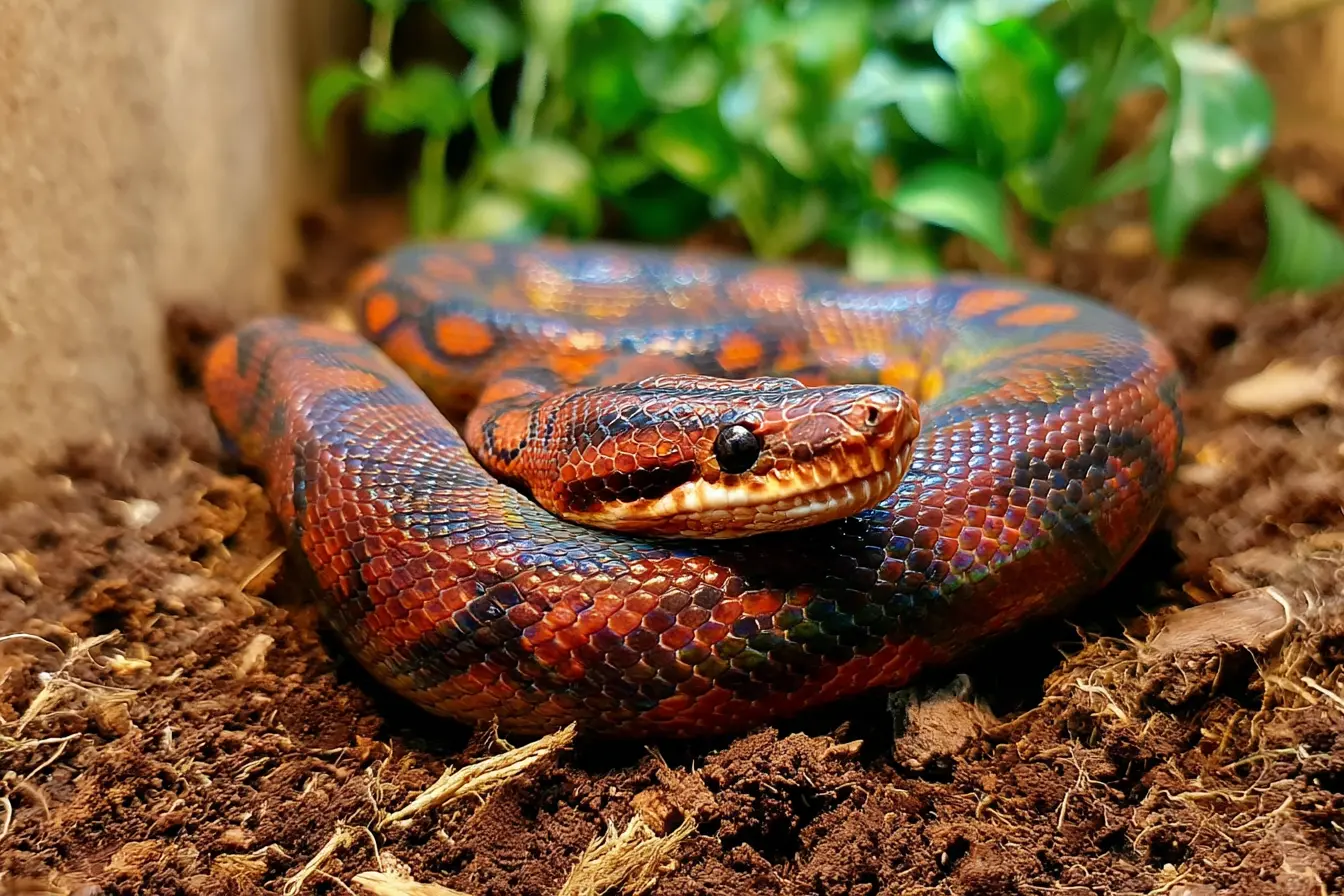
The Colombian rainbow boa (Epicrates maurus) is one of the most captivating snakes in the reptile world. Known for its iridescent scales that reflect a rainbow-like sheen under light, this tropical species combines beauty with a relatively manageable size and temperament. Native to the humid forests and grasslands of South America, the Colombian rainbow boa offers an enchanting experience for reptile keepers who are prepared to meet its environmental needs.
In this guide, we’ll explore the natural history, care, and behaviour of this dazzling species, and explain how to keep one healthy and thriving in captivity.
Origins and Natural Habitat
The Colombian rainbow boa is found throughout northern South America, particularly in Colombia, Venezuela, and surrounding regions. It inhabits tropical rainforests, savannah edges, and riverbanks, where high humidity and warmth are constant.
These boas are semi-arboreal and often spend their time hiding in leaf litter, burrows, or low vegetation. At night, they emerge to hunt small mammals, birds, and amphibians. Understanding their humid and sheltered natural environment is key to providing proper care in captivity.
Appearance and Temperament
Physical Traits
Size: Adults typically reach 1.5–2 metres, making them smaller than their close relative, the Brazilian rainbow boa
Colouration: Warm brown to reddish-brown base with darker circular or saddle-like markings along the back
Scales: Micro-structured scales that produce an iridescent, rainbow-like sheen when illuminated
Build: Slender but muscular, with a prehensile tail adapted for climbing
Behaviour and Temperament
Colombian rainbow boas are generally calm and slow-moving once settled, but juveniles can be defensive and prone to striking when handled. With consistent, gentle interaction, they typically become tolerant and curious adults.
They are crepuscular and nocturnal, meaning they are most active at dusk and night. Observing one gliding gracefully under dim lighting is a mesmerising experience.
Housing Requirements
Colombian rainbow boas require a warm, humid, and well-ventilated enclosure to replicate their tropical origins.
Enclosure Size
Juveniles: 90 cm x 45 cm x 45 cm
Adults: At least 120 cm x 60 cm x 60 cm, though larger enclosures are beneficial
Wooden vivariums or PVC enclosures work well in the UK for retaining humidity and heat. Ensure the enclosure is escape-proof, as boas are surprisingly strong and adept at finding gaps.
Heating and Temperature Gradient
Warm end: 30–31°C
Cool end: 25–26°C
Night-time: Can drop slightly to 23°C
Use a ceramic heat emitter or deep-heat projector controlled by a reliable thermostat. Provide a temperature gradient so the snake can thermoregulate effectively. Always use digital thermometers to monitor both ends of the enclosure.
Lighting and UVB
Though primarily nocturnal, low-level UVB (2–7%) is recommended, as it supports vitamin D3 synthesis and promotes overall health. A 12-hour light cycle helps maintain a natural rhythm.
Humidity and Water
Humidity is the most crucial factor for this species. Maintain levels between 70–85%, using a combination of misting, a large water bowl, and moisture-retentive substrates. Ensure the enclosure remains well-ventilated to prevent bacterial or fungal growth.
A large water dish big enough for the boa to soak in is essential, as they frequently submerge themselves to aid in shedding and hydration.
Substrate and Furnishings
Substrate: Coconut fibre, cypress mulch, or a mix of soil and moss to hold moisture
Hides: Provide at least two hides - one at the warm end and one at the cool end
Decor: Branches, vines, and cork bark for climbing opportunities and cover
A naturalistic setup with deep substrate and shaded areas will help your boa feel secure and encourage natural behaviour.
Diet and Feeding
Colombian rainbow boas are carnivorous constrictors, feeding on small vertebrates in the wild. In captivity, they readily accept rodents.
Feeding Schedule
Juveniles: Every 7–10 days
Adults: Every 2–3 weeks
Food Items
Feed appropriately sized frozen-thawed rodents. Pinkie mice are suitable for hatchlings, progressing to adult mice or small rats as the snake grows. The prey should be roughly the same width as the snake’s midsection.
Always thaw frozen prey fully and warm it to room temperature before feeding. Feeding with tongs helps maintain safety and prevents accidental bites.
Feeding Tips
Feed in the enclosure or in a separate tub, depending on your preference. Avoid handling for 48 hours after feeding to allow proper digestion. Remove uneaten food promptly to maintain hygiene.
Handling and Interaction
Once accustomed to regular care, Colombian rainbow boas are usually docile and handleable.
Start with short, gentle handling sessions
Support the snake’s full body and allow it to move freely
Avoid handling during shedding or immediately after feeding
Wash hands before and after handling
These boas often become calm and confident when handled correctly, making them suitable for intermediate keepers looking to work with a tropical species.
Common Health Concerns
Respiratory Infections
Often caused by incorrect temperature or excessive humidity. Symptoms include wheezing, bubbling from the nostrils, or lethargy.
Shedding Problems
If humidity drops too low, incomplete sheds can occur. Provide a humid hide and mist regularly.
Scale Rot
Caused by damp, unsanitary conditions. Clean the enclosure regularly and ensure it is not waterlogged.
Mites and Parasites
External mites can be introduced through contaminated decor or new animals. Maintain strict hygiene and quarantine new reptiles.
Good husbandry and consistent monitoring are essential for keeping this species healthy.
Lifespan and Breeding
Colombian rainbow boas can live for 20–25 years in captivity with proper care.
Breeding typically occurs during the cooler months. Females give birth to live young, usually between 10 and 25 neonates after a gestation period of around five months. The babies are independent from birth and will feed on small pinkie mice.
Conclusion
The Colombian rainbow boa is a stunning and rewarding species that combines manageable size with extraordinary beauty. Its shimmering scales and calm temperament make it one of the most mesmerising snakes to observe and keep.
However, this species demands attention to detail, especially when it comes to humidity and temperature. With the right setup, a balanced diet, and patient care, a Colombian rainbow boa can thrive for decades, bringing a touch of tropical brilliance to your reptile collection.
For keepers ready to meet its specialised needs, this iridescent serpent offers an experience that is as magical as its name suggests.
Quick questions
- What should I know about colombian rainbow boa?
- The Colombian rainbow boa is a striking snake known for its iridescent scales and calm nature. Native to South America, it thrives in humid and warm environments. Vet Verified can help you compare UK veterinary practices by location, species, services and opening hours before you call.
- When should I contact a vet about colombian rainbow boa?
- Contact a veterinary practice if your pet seems unwell, symptoms are getting worse, you are unsure what to do, or the situation may be urgent. Vet Verified helps you compare practice details, but a vet should advise on your pet's current care.
- Can Vet Verified help me find exotic vets?
- Yes. Use Vet Verified to compare exotic vets across the UK, then check practice profiles and call directly to confirm current availability.
Find a vet
Find a veterinary practice
Compare UK veterinary practices related to this topic. Call the practice to confirm its current services and availability.
Search by species
- Exotic vets Find UK veterinary practices that list care for exotic pets. Compare opening hours, services, facilities and verified profiles, then contact a practice directly.
- Bird vets Find UK veterinary practices that list care for birds. Compare opening hours, services, facilities and verified profiles, then contact a practice directly.