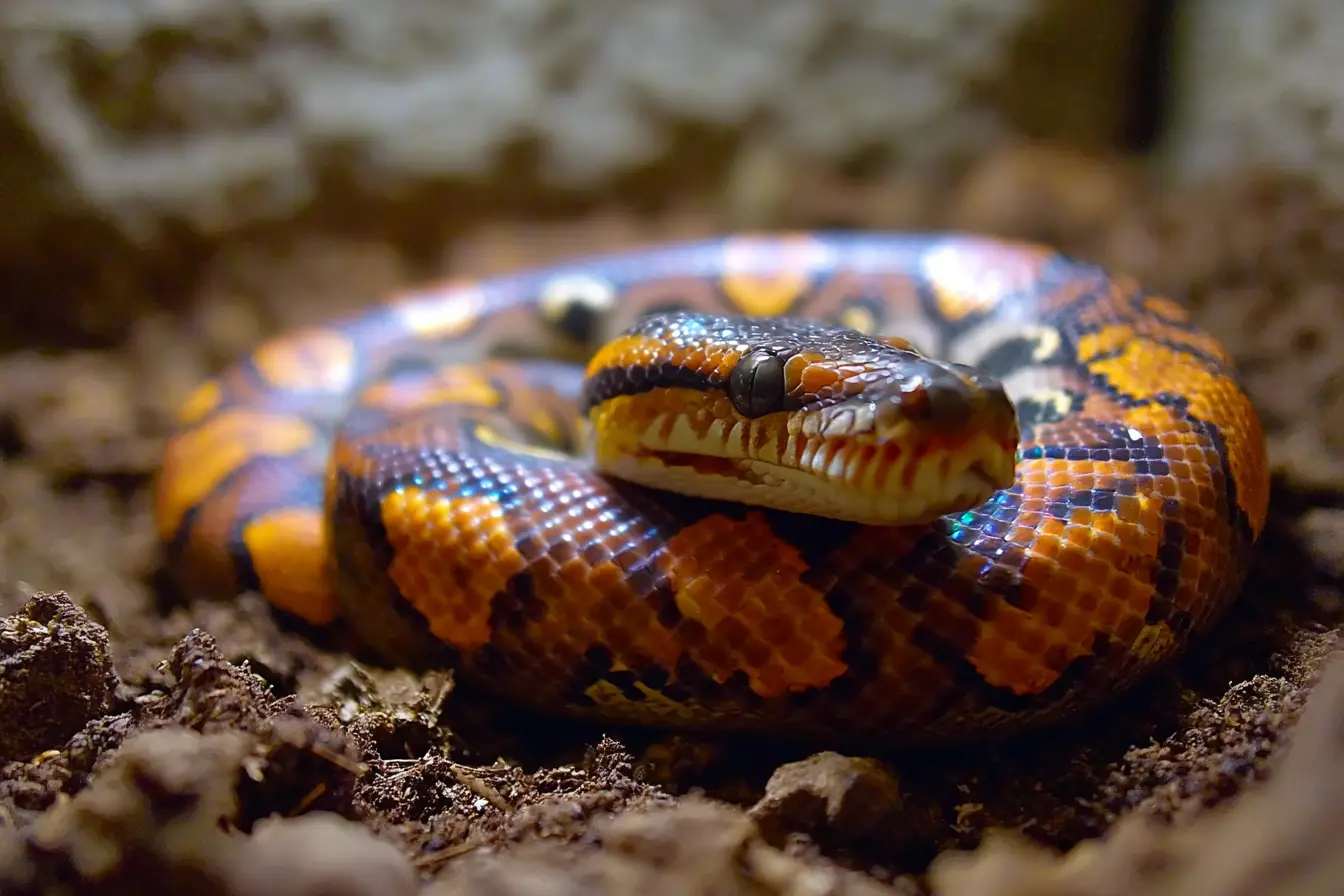
The Ecuadorian rainbow boa (Epicrates cenchria maurus or Epicrates cenchria cenchria, depending on classification) is one of the most visually stunning snakes in the reptile world. Famous for its dazzling iridescent scales that shimmer with every colour of the rainbow under light, this tropical constrictor is a jewel among boas.
Native to the humid forests of Ecuador and neighbouring regions, the Ecuadorian rainbow boa is slightly smaller and lighter in colour than its Brazilian relative. With the right care, this mesmerising species can thrive in captivity and reward its keeper with decades of quiet beauty and fascination.
Origins and Natural Habitat
Ecuadorian rainbow boas are found across Ecuador, Peru, and parts of northern Brazil, where they inhabit humid lowland forests and areas close to rivers and swamps. Their natural environment is warm, shaded, and perpetually moist, providing the ideal backdrop for their iridescent sheen to evolve as camouflage among wet leaves and dappled light.
In the wild, they are primarily nocturnal, spending daylight hours hidden under logs or within burrows before emerging at night to hunt small mammals, birds, and amphibians. Replicating this stable warmth and humidity is crucial for their wellbeing in captivity.
Appearance and Temperament
Physical Traits
Size: Adults reach 1.5–2 metres in length, with females generally larger than males
Colouration: A golden-brown or reddish-brown base with dark oval or circular markings along the back and sides
Scales: Smooth and iridescent, refracting light to produce a stunning rainbow sheen
Build: Slender and muscular with a prehensile tail for climbing
Behaviour and Temperament
Ecuadorian rainbow boas are usually calm once settled but can be defensive as juveniles, often striking when startled. Over time, they become more tolerant and can be handled gently without issue.
They are crepuscular to nocturnal, preferring dim lighting and higher humidity. Their secretive nature means they spend much of the day hiding, but when active, they move gracefully and with surprising curiosity.
Housing Requirements
Ecuadorian rainbow boas require a carefully controlled tropical environment with high humidity, consistent warmth, and good ventilation.
Enclosure Size
Juveniles: 90 cm x 45 cm x 45 cm enclosure
Adults: At least 120 cm x 60 cm x 60 cm, though larger vivariums are preferable
Wooden or PVC enclosures work best in the UK, as they help maintain humidity and temperature. Ensure all openings are secure, as boas are skilled at escaping through small gaps.
Heating and Temperature Gradient
Warm end: 30–31°C
Cool end: 25–26°C
Night-time: Allow a drop to around 23°C
Use a ceramic heater or deep-heat projector controlled by a thermostat. Provide a clear gradient so the snake can thermoregulate by moving between warm and cool zones. Digital thermometers should be placed at both ends of the enclosure.
Lighting and UVB
Though primarily nocturnal, low-level UVB (2–7%) has proven beneficial for rainbow boas, improving metabolism, activity levels, and overall health. Maintain a 12-hour day and night cycle for consistency.
Humidity and Water
Humidity should remain between 75–85% at all times. This can be achieved through regular misting, the use of a moisture-retentive substrate, and the inclusion of a large water bowl for soaking.
Ensure the enclosure is well-ventilated to prevent stagnation and mould growth. During shedding cycles, increase humidity slightly to help with skin removal.
Substrate and Furnishings
Substrate: Coconut fibre, sphagnum moss, or cypress mulch
Hides: Provide at least two—one at the warm end and one at the cool end
Decor: Branches, cork bark, and artificial plants for cover and climbing
A deep, soft substrate encourages natural burrowing behaviour, while climbing structures provide enrichment and exercise.
Diet and Feeding
Ecuadorian rainbow boas are carnivorous constrictors and thrive on a simple rodent-based diet in captivity.
Feeding Schedule
Juveniles: Every 7–10 days
Adults: Every 2–3 weeks
Food Items
Feed frozen-thawed rodents of appropriate size. Pinkie mice are best suited for hatchlings and small rats for adults. The prey item should be roughly equal in width to the snake’s midsection.
Always ensure food is fully thawed and warmed before feeding. Feeding with tongs prevents accidental bites and reinforces positive handling habits.
Feeding Tips
Feed during the evening when the snake is naturally active. Avoid handling for 48 hours after feeding to allow proper digestion. Remove uneaten food promptly to prevent spoilage and maintain hygiene.
Handling and Interaction
Ecuadorian rainbow boas can become calm and handleable with patience and consistency.
Begin with short, gentle handling sessions once the snake has settled after feeding
Always support the full body and avoid grabbing or restraining the head
Wash hands before and after handling
Avoid handling during shedding or when the snake appears defensive
Handled correctly, they become confident and relaxed, making them rewarding pets for intermediate or advanced keepers.
Common Health Concerns
Respiratory Infections
Often caused by improper temperature or excess humidity. Symptoms include wheezing, gaping, or mucus around the mouth and nostrils.
Shedding Problems
Low humidity can result in incomplete sheds. Increase misting and offer a moist hide during shedding.
Scale Rot
Occurs when the substrate is overly damp or dirty. Keep the enclosure clean and well-ventilated.
Mites and Parasites
External mites are uncommon but possible. Regular cleaning and quarantining new animals prevent infestations.
With proper care and regular observation, most health issues can be avoided entirely.
Lifespan and Breeding
Ecuadorian rainbow boas are long-lived snakes, with lifespans averaging 20–25 years in captivity.
Breeding typically occurs after a slight cooling period. Females are ovoviviparous, meaning they give birth to live young, usually between 10 and 25 babies, after a gestation period of around 5 months.
Captive breeding is becoming more common, with responsible breeders focusing on maintaining the species’ natural appearance rather than selective morphs.
Conclusion
The Ecuadorian rainbow boa is one of nature’s true masterpieces. With its vivid iridescence, elegant movements, and calm demeanour, it offers a captivating experience for any reptile enthusiast willing to meet its tropical care requirements.
Though slightly demanding when it comes to humidity and temperature, the reward is a spectacular, long-lived snake that is both beautiful and fascinating to observe.
For dedicated keepers ready to bring a touch of the Amazon rainforest into their home, the Ecuadorian rainbow boa is a radiant and unforgettable companion.
Quick questions
- What should I know about ecuadorian rainbow boa?
- The Ecuadorian rainbow boa is a visually striking snake known for its iridescent scales and calm nature. Native to humid forests of Ecuador and nearby regions, it thrives in a warm, moist environment. Vet Verified can help you compare UK veterinary practices by location, species, services and opening hours before you call.
- When should I contact a vet about ecuadorian rainbow boa?
- Contact a veterinary practice if your pet seems unwell, symptoms are getting worse, you are unsure what to do, or the situation may be urgent. Vet Verified helps you compare practice details, but a vet should advise on your pet's current care.
- Can Vet Verified help me find exotic vets?
- Yes. Use Vet Verified to compare exotic vets across the UK, then check practice profiles and call directly to confirm current availability.
Find a vet
Find a veterinary practice
Compare UK veterinary practices related to this topic. Call the practice to confirm its current services and availability.
Search by species
- Exotic vets Find UK veterinary practices that list care for exotic pets. Compare opening hours, services, facilities and verified profiles, then contact a practice directly.
- Bird vets Find UK veterinary practices that list care for birds. Compare opening hours, services, facilities and verified profiles, then contact a practice directly.