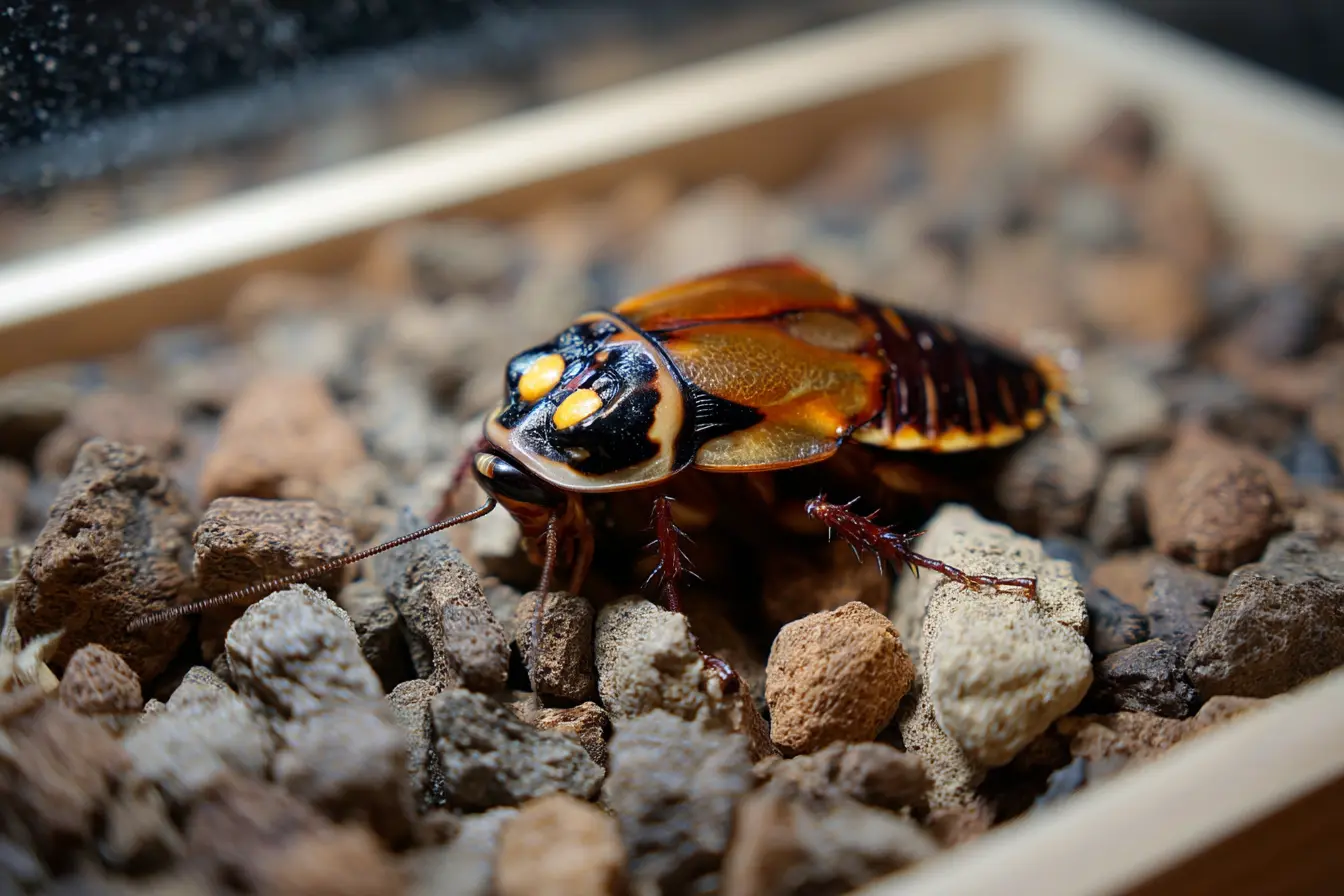
The headlight cockroach (Lucihormetica verrucosa) is a fascinating and rare invertebrate known for its bioluminescent-like spots and unique appearance. Often mistaken for a creature of science fiction, this species is actually a peaceful, slow-moving cockroach native to South America. For exotic pet enthusiasts looking to add a visually stunning and unusual insect to their collection, the headlight cockroach is a brilliant choice—literally and figuratively.
What is a Headlight Cockroach?
Native to the forests of Colombia and Venezuela, the headlight cockroach is part of the Blaberidae family. It gets its name from the two yellow-orange spots on the pronotum (the shield-like plate behind the head), which resemble headlights. In nature, these spots may help deter predators by mimicking the glowing eyes of larger animals—though the species does not actually emit light in captivity.
Key Characteristics:
Scientific name: Lucihormetica verrucosa
Size: 3.5–5 cm (1.4–2 inches)
Lifespan: 1.5–3 years
Appearance: Dark, glossy body with distinctive "headlight" spots on the pronotum
Wings: Males have wings (rarely fly), females are wingless
Temperament: Docile, slow-moving, and easy to observe
Despite their odd appearance, headlight cockroaches are clean, non-invasive, and perfectly safe to keep.
Enclosure Setup
Tank Size
A small group can be housed in a 10–20 litre plastic or glass enclosure with a secure, ventilated lid. This species is not overly active, so vertical height is less important than floor space.
Ventilation
Maintain good airflow with mesh-covered ventilation holes or a screen lid to prevent mould while keeping humidity stable.
Substrate
As a semi-fossorial species, L. verrucosa appreciates a soft substrate for hiding and light burrowing.
Coconut fibre (coir)
Organic topsoil (pesticide-free)
Sphagnum moss (optional, for moisture retention)
Leaf litter for natural cover
Aim for a substrate depth of 5–8 cm and keep it slightly damp, not wet.
Hides and Structure
Provide ample hiding spaces to reduce stress and simulate their natural forest-floor habitat:
Cork bark slabs
Bark tubes or half logs
Leaf litter piles
Egg cartons (cut and stacked)
They tend to stay hidden during the day and emerge at night.
Temperature and Humidity
Headlight cockroaches require a warm, humid environment to thrive.
Temperature: 24–28°C (75–82°F)
Humidity: 65–80%
Use a heat mat or heat cable attached to the side or bottom of the enclosure and a thermostat to maintain consistent warmth. Mist the enclosure lightly 2–3 times per week to keep humidity in range.
Diet and Feeding
These cockroaches are omnivores and will feed on a variety of plant and protein matter.
Vegetables:
Carrot
Cucumber
Sweetcorn
Squash
Fruits:
Apple
Banana
Melon
Berries
Protein:
Fish flakes
Quality dry cat or dog food (small amounts)
Cooked egg or chicken (occasional)
Commercial insect jelly or roach chow
Feed small quantities 2–3 times weekly. Always remove uneaten food within 24–48 hours to avoid attracting mould or mites.
Water
Ensure your cockroaches stay hydrated using one or more of the following:
Moist fruit and veg
Water gel crystals
A shallow water dish with a sponge or cotton wool (to prevent drowning)
Handling and Behaviour
Headlight cockroaches are slow and easy to handle, but they generally prefer not to be disturbed.
Tips for Handling:
Gently scoop rather than grab
Wash hands before and after
Avoid disturbing freshly moulted individuals
They’re nocturnal, so most activity—including feeding and exploration—occurs at night.
Breeding and Colony Management
With the right conditions, headlight cockroaches can breed in captivity, though they reproduce more slowly than some other species.
Reproduction Facts:
Ovoviviparous: Females retain egg cases internally
Gestation: 2–3 months
Nymphs: Pale at birth, darkening over time
Time to maturity: 6–9 months
Colony Tips:
Keep at least one male and several females for breeding
Provide deep substrate and avoid overhandling to encourage reproduction
Nymphs can be raised with adults if conditions are clean and food is plentiful
Cleaning and Maintenance
Headlight cockroaches produce little waste and are generally low maintenance.
Cleaning Routine:
Daily: Check food and water; spot clean
Weekly: Remove old food and faeces
Monthly: Replace substrate and clean enclosure surfaces
Use warm water or a vinegar solution for cleaning—avoid commercial cleaners.
Health and Common Issues
This species is robust but still susceptible to a few common issues.
Dehydration: Lethargy or shrivelled appearance
Mould: Indicates poor ventilation or over-misting
Mites: Attracted by uneaten food or poor hygiene
Failed moults: Usually caused by low humidity
Stable conditions and a clean enclosure are key to long-term health.
Pros and Cons
Pros:
Striking appearance with “headlight” markings
Low-maintenance and hardy
Silent and odourless
Safe for children and education
Rare and fascinating species
Cons:
No actual bioluminescence in captivity
Can be shy and reclusive
Breeds more slowly than other roaches
Requires warmth and humidity
Final Thoughts
The headlight cockroach is a unique and beautiful addition to any invertebrate collection. Its strange appearance and gentle behaviour make it a great species for display or educational purposes. Though not as prolific as other cockroach species, Lucihormetica verrucosa rewards patient keepers with a glimpse into one of nature’s more mysterious insects.
If you're looking for an exotic pet that sparks curiosity and conversation, while requiring minimal upkeep, the headlight cockroach may just be your next favourite invertebrate.
Quick questions
- What should I know about headlight cockroach?
- The headlight cockroach, is a rare invertebrate from South America, known for its distinctive 'headlight' spots. These slow-moving, docile cockroaches are ideal exotic pets for those wanting a unique insect. Vet Verified can help you compare UK veterinary practices by location, species, services and opening hours before you call.
- When should I contact a vet about headlight cockroach?
- Contact a veterinary practice if your pet seems unwell, symptoms are getting worse, you are unsure what to do, or the situation may be urgent. Vet Verified helps you compare practice details, but a vet should advise on your pet's current care.
- Can Vet Verified help me find dog vets?
- Yes. Use Vet Verified to compare dog vets across the UK, then check practice profiles and call directly to confirm current availability.
Find a vet
Find a veterinary practice
Compare UK veterinary practices related to this topic. Call the practice to confirm its current services and availability.
Search by species
- Dog vets Find UK veterinary practices that list care for dogs. Compare opening hours, services, facilities and verified profiles, then contact a practice directly.
- Cat vets Find UK veterinary practices that list care for cats. Compare opening hours, services, facilities and verified profiles, then contact a practice directly.
- Exotic vets Find UK veterinary practices that list care for exotic pets. Compare opening hours, services, facilities and verified profiles, then contact a practice directly.
- Bird vets Find UK veterinary practices that list care for birds. Compare opening hours, services, facilities and verified profiles, then contact a practice directly.