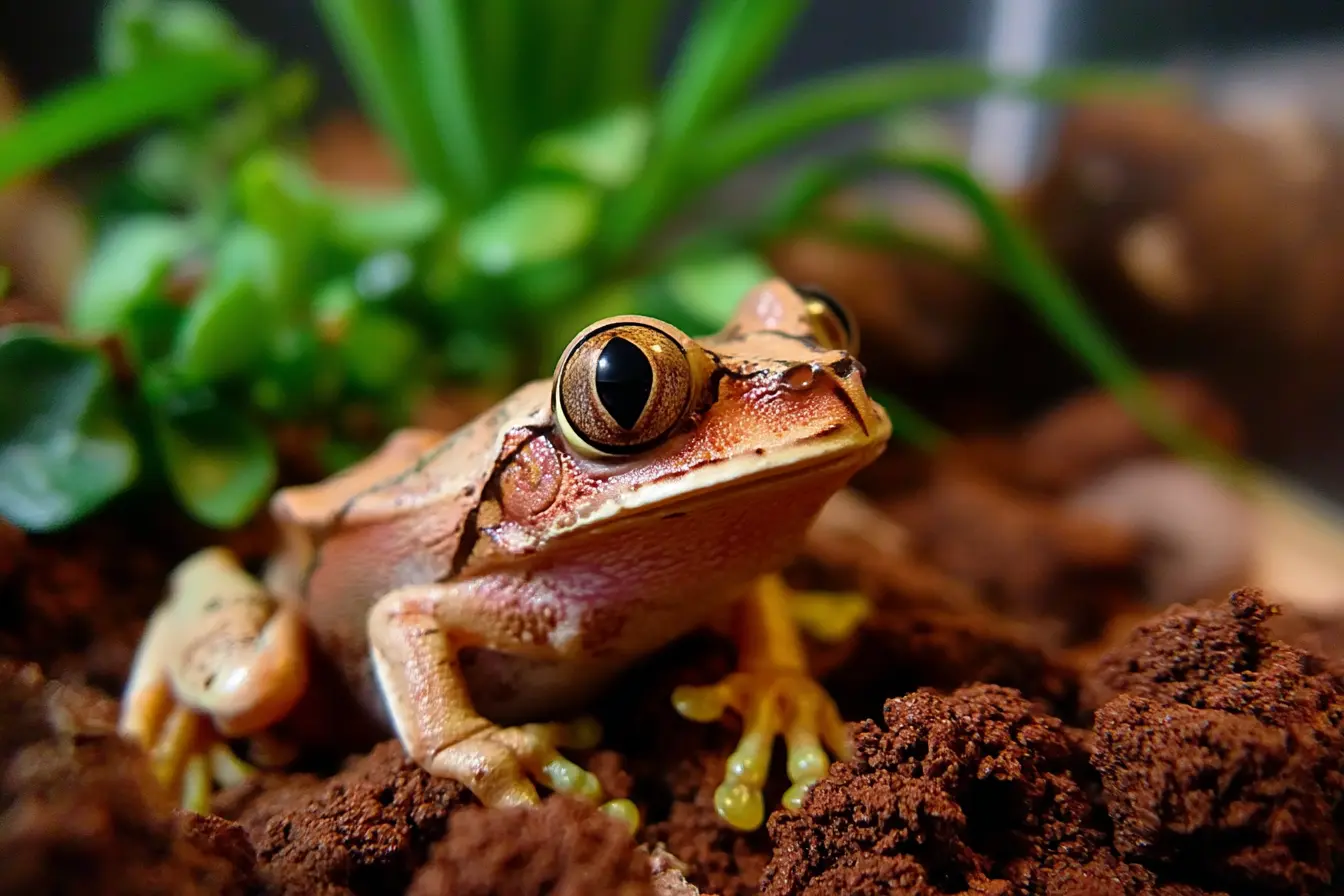
The African big-eyed tree frog (Leptopelis vermiculatus) is a captivating arboreal amphibian known for its large, expressive eyes and beautiful mottled patterning. Native to the tropical rainforests of East Africa, particularly Tanzania, this nocturnal frog is a favourite among hobbyists seeking an engaging display species with striking features. With its calm temperament, unique vocalisations, and manageable care requirements, the African big-eyed tree frog is well-suited for both experienced and intermediate amphibian keepers.
This guide provides an in-depth look at the care, housing, feeding, and breeding of African big-eyed tree frogs, ensuring their health and well-being in captivity.
Physical Characteristics
Size
Adults typically reach 6–9 cm (2.5–3.5 inches) in length, with females generally larger than males.
Lifespan
In captivity, African big-eyed tree frogs can live 8–12 years with proper care.
Colouration and Skin Texture
These frogs display intricate mottled or vermiculated patterns in shades of green, brown, and cream, aiding in camouflage among leaves and branches.
Their namesake large, dark eyes enhance their endearing, alert expression.
The skin is smooth and slightly sticky to aid in climbing.
Sexual Dimorphism
Females are larger and more robust, while males are smaller with slightly more prominent vocal sacs.
Males frequently call at night, producing a loud, melodious croak.
Legal and Ethical Considerations
The African big-eyed tree frog is not considered endangered and is widely available in the pet trade. Nevertheless, ethical sourcing is crucial. Choose captive-bred individuals from reputable breeders to ensure healthy specimens and to discourage unsustainable wild collection.
Always check local laws regarding exotic pet ownership before acquiring your frog.
Housing and Enclosure Setup
As an arboreal species, African big-eyed tree frogs thrive in vertically oriented enclosures that mimic their natural rainforest habitat.
Enclosure Size
A single adult requires at least a 45 litre (12 gallon) tall terrarium (e.g., 45 cm tall).
A 60 litre (20 gallon) or larger tank is preferable, especially for pairs or groups.
Taller enclosures are ideal to allow climbing opportunities.
Substrate
Use moisture-retentive substrates such as:
Coconut fibre
Organic soil (chemical-free)
Leaf litter with a sphagnum moss layer
A bioactive setup with live plants, springtails, and isopods is highly recommended for naturalistic maintenance.
Hides and Decor
Provide plenty of vertical climbing structures using branches, cork bark, and live or artificial plants.
Dense foliage and elevated hiding spots help these nocturnal frogs feel secure.
A shallow water dish with dechlorinated water must be available at all times.
Temperature and Humidity
Temperature: 22–26°C (72–79°F) during the day, with a slight drop at night.
Humidity: Maintain 70–90% humidity, achieved through regular misting.
Use a hygrometer to monitor humidity levels and a thermostat for heating control.
Lighting
Provide a low-intensity light cycle to replicate natural daylight (12-hour cycles).
UVB lighting is optional but can benefit plant growth and promote natural activity patterns.
Avoid bright, harsh lighting, as these frogs are crepuscular and nocturnal.
Diet and Feeding
African big-eyed tree frogs are insectivores, thriving on a varied diet of live prey.
Suitable Food Items
Crickets (gut-loaded)
Black soldier fly larvae
Small roaches
Locusts (for adults)
Waxworms and mealworms (sparingly due to high fat)
Occasional small earthworms
Fruit flies and springtails for juveniles
Feeding Schedule
Juveniles: Feed daily.
Adults: Feed 2–3 times per week.
Feeding is best done in the evening when the frogs are naturally active.
Supplementation
Dust feeder insects with a calcium supplement twice weekly.
Provide a quality multivitamin supplement every 2–4 weeks to prevent nutritional deficiencies.
Behaviour and Handling
African big-eyed tree frogs are charming display pets, but like most amphibians, they do not tolerate frequent handling.
Behaviour
Primarily nocturnal, they are most active after dusk.
Males vocalise with loud, croaky calls during the evening and in response to environmental cues like rain.
They prefer to remain perched in foliage and descend to lower areas for water or feeding.
Handling
Avoid regular handling to protect their sensitive, permeable skin.
When necessary, handle gently with clean, wet hands or powder-free gloves.
Always wash hands before and after any contact.
Health and Common Problems
When cared for correctly, African big-eyed tree frogs are hardy and adaptable, but improper conditions can lead to health issues.
Common Health Issues
Dehydration: From low humidity or lack of clean water.
Obesity: From overfeeding high-fat insects.
Nutritional deficiencies: From a limited diet or lack of supplementation.
Skin infections: Resulting from dirty enclosures or excessive dryness.
Stress-related inappetence: From improper temperatures, lack of hides, or overhandling.
Preventative Care
Maintain high humidity and proper temperatures.
Provide a clean environment with regular spot cleaning and occasional substrate changes.
Offer a varied, gut-loaded diet with proper supplementation.
Minimise stress with adequate hides and minimal handling.
Breeding African Big-Eyed Tree Frogs
Breeding is achievable in captivity, though less commonly attempted compared to other amphibians.
Breeding Triggers
Simulate a rainy season by increasing misting frequency and slightly lowering nighttime temperatures.
Provide ample vertical spaces for calling males and egg deposition sites.
Reproduction
Males vocalise to attract females, engaging in amplexus (mating embrace).
Females lay eggs on vegetation overhanging water.
Tadpole Care
After hatching, tadpoles drop into the water and should be transferred to a separate aquatic setup.
Feed tadpoles high-quality aquatic foods such as finely crushed fish flakes or specialised tadpole diets.
Metamorphosis occurs within 6–8 weeks, after which juveniles should be transferred to a terrestrial setup.
Conclusion
The African big-eyed tree frog is an enchanting addition to any amphibian collection, offering striking beauty, engaging nocturnal activity, and the potential for naturalistic enclosure setups. With straightforward care requirements centred around humidity, warmth, and a nutritious diet, they are well-suited to keepers interested in observing natural behaviours rather than frequent handling.
With proper care, these fascinating frogs can thrive in captivity for many years, providing a unique and rewarding experience for amphibian enthusiasts.
Quick questions
- What should I know about african big-eyed tree frog?
- The African big-eyed tree frog is a popular pet due to its large eyes and mottled patterns. Native to East Africa, it suits both experienced and intermediate keepers. Vet Verified can help you compare UK veterinary practices by location, species, services and opening hours before you call.
- When should I contact a vet about african big-eyed tree frog?
- Contact a veterinary practice if your pet seems unwell, symptoms are getting worse, you are unsure what to do, or the situation may be urgent. Vet Verified helps you compare practice details, but a vet should advise on your pet's current care.
- Can Vet Verified help me find exotic vets?
- Yes. Use Vet Verified to compare exotic vets across the UK, then check practice profiles and call directly to confirm current availability.
Find a vet
Find a veterinary practice
Compare UK veterinary practices related to this topic. Call the practice to confirm its current services and availability.