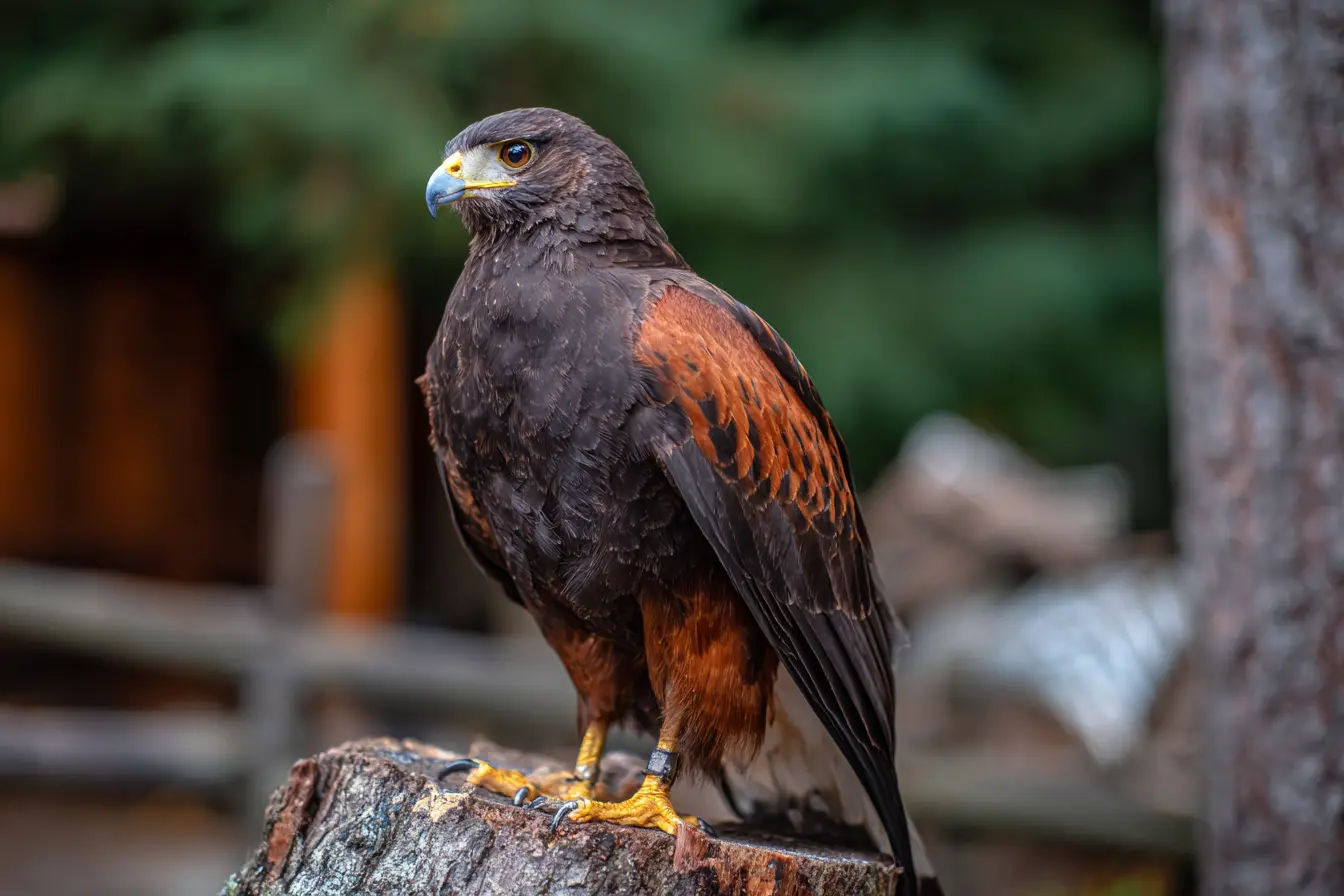
The Harris’s Hawk (Parabuteo unicinctus) is one of the most popular birds of prey in modern falconry, especially for beginners. Native to the Americas, this striking raptor is famous for its intelligence, adaptability, and social hunting behaviour - unusual traits among birds of prey. In the UK, they are kept primarily for falconry, pest control, and public flying displays. While they are more forgiving than some species, Harris’s Hawks still demand a high level of skill, time, and responsibility from their keeper.
Appearance and Characteristics
Size: Medium-sized raptor; females are larger (900–1,200g) than males (700–900g).
Plumage: Dark brown with rich chestnut shoulders and thighs; white-tipped tail.
Temperament: Intelligent, confident, and often more sociable than other raptors.
Unique Feature: Known for cooperative hunting in family groups in the wild - a trait that contributes to their trainability.
Legal Considerations in the UK
Wildlife and Countryside Act 1981: Harris’s Hawks are not native to the UK and do not require Schedule 4 registration, but proof of legal acquisition is necessary.
CITES: They are listed under Appendix II, meaning international trade requires permits.
Hunting Permissions: You must have landowner permission before hunting with any bird of prey.
General Welfare Laws: Birds must be kept in conditions meeting the Animal Welfare Act standards.
Housing Requirements
Mews (Aviary)
Size: Minimum of 3m (length) × 3m (width) × 2m (height) for one bird; larger is always better.
Structure: Weatherproof section for shelter and an open-air section with secure mesh.
Perches: Several types (block, bow, flat) to prevent foot problems.
Safety: Predator-proof and escape-proof with secure doors.
Weathering Area
Outdoor space for the hawk to perch in fair weather, tethered and supervised.
Equipment Needed
Gauntlet: Thick leather glove for safe handling.
Anklets, Jesses, and Leash: For control during handling and transport.
Swivels: Prevent the leash from tangling.
Telemetry: Radio or GPS tracking for locating a lost bird.
Perches: Indoor and outdoor perches suited to the bird’s size.
Weighing Scales: Accurate to within 1g to monitor flying weight.
Diet and Feeding
Daily Diet
Whole prey is essential for health, such as:
Quail
Day-old chicks
Pigeon
Rabbit (cut into manageable portions)
Feeding Guidelines
Remove uneaten food promptly to avoid attracting pests.
Vary prey type to ensure balanced nutrition.
Provide fresh, clean water daily.
Training and Flying
Manning
The process of taming and acclimating the bird to human contact.
Involves handling, feeding on the glove, and getting the bird used to surroundings.
Creance Training
Flying on a long, lightweight line to practice recall.
Free Flight
Once the bird responds reliably to the glove, it can be flown untethered.
Hunting
Harris’s Hawks are versatile hunters, capable of taking rabbits, hares, pheasants, and corvids.
Always hunt legally, ethically, and within your bird’s capabilities.
Health and Maintenance
Common Health Issues
Bumblefoot: A foot infection caused by poor perching surfaces.
Respiratory Infections: Often linked to damp or poorly ventilated housing.
Parasites: Mites and internal worms are common without routine checks.
Preventative Care
Clean housing and equipment regularly.
Rotate perch types to avoid foot strain.
Conduct daily visual health checks.
Schedule regular visits to an avian vet.
Daily Responsibilities
Feed and water every day.
Fly the hawk regularly for fitness and mental stimulation.
Monitor weight before flying. Weight management is key to training and recall.
Check equipment for wear and tear.
Suitability for Beginners
Harris’s Hawks are often recommended for newcomers because:
They are highly trainable and forgiving of handler errors.
They are social and tend to stay within sight during flights.
They adapt well to different hunting environments.
However, they still require:
Significant daily time commitment.
Training under an experienced falconer.
Appropriate facilities and legal compliance.
Lifespan and Commitment
Harris’s Hawks can live 15–20 years in captivity with proper care. This is a long-term commitment involving daily handling, regular flying, and ongoing expenses for food, equipment, and vet care.
Conclusion
Keeping a Harris’s Hawk is a deeply rewarding experience for those prepared to commit to the responsibilities of falconry. With their intelligence, sociable nature, and hunting skill, they make excellent partners for dedicated falconers. By providing suitable housing, a varied diet, consistent training, and attentive health care, you can ensure your Harris’s Hawk thrives and builds a lasting bond with you.
Quick questions
- What should I know about harris’s hawk?
- The Harris’s Hawk, a popular bird in modern falconry, is known for its intelligence and social hunting behaviour. In the UK, they're used for falconry and pest control. Vet Verified can help you compare UK veterinary practices by location, species, services and opening hours before you call.
- When should I contact a vet about harris’s hawk?
- Contact a veterinary practice if your pet seems unwell, symptoms are getting worse, you are unsure what to do, or the situation may be urgent. Vet Verified helps you compare practice details, but a vet should advise on your pet's current care.
- Can Vet Verified help me find bird vets?
- Yes. Use Vet Verified to compare bird vets across the UK, then check practice profiles and call directly to confirm current availability.
Find a vet
Find a veterinary practice
Compare UK veterinary practices related to this topic. Call the practice to confirm its current services and availability.