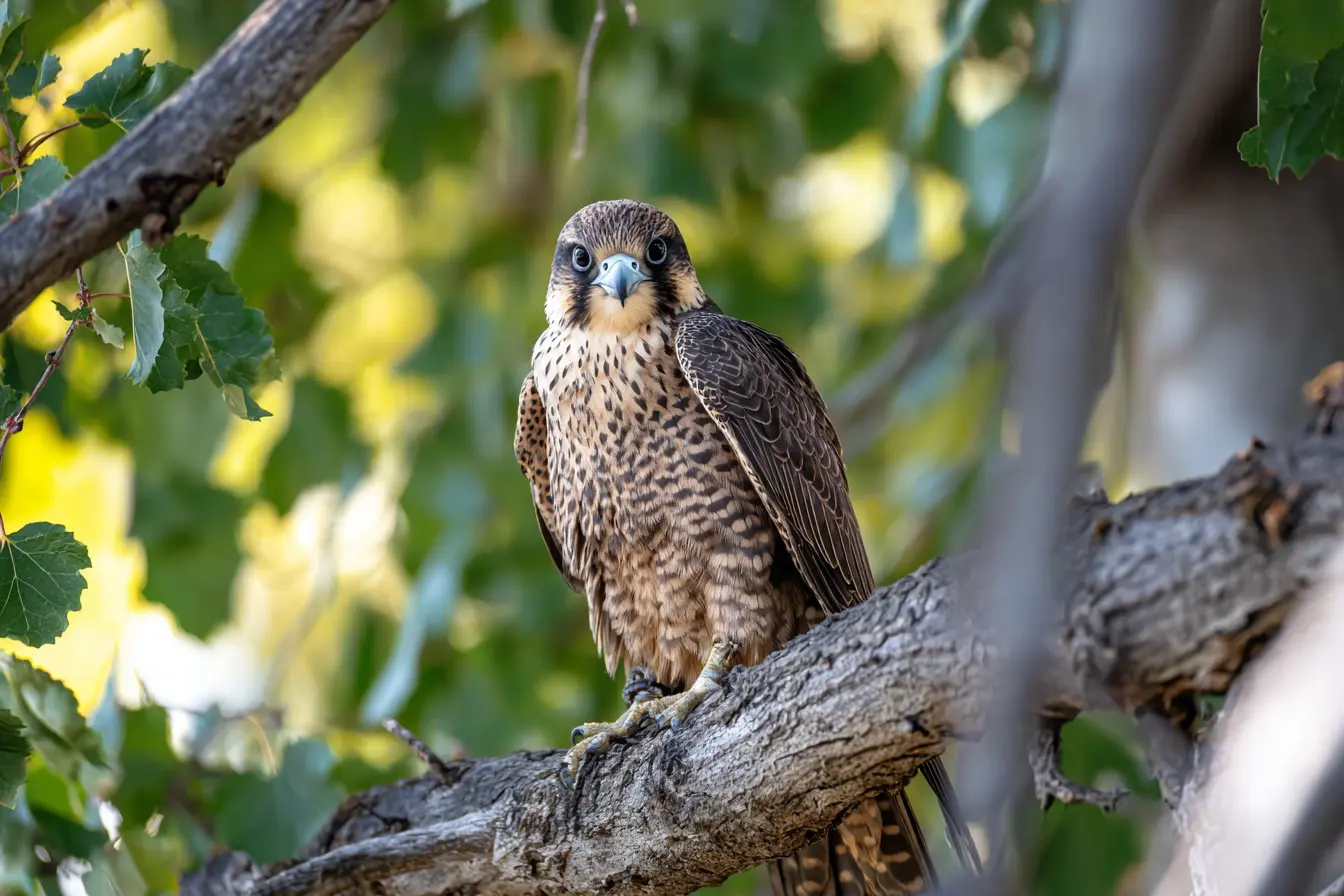
The Peregrine Falcon (Falco peregrinus) is one of the most iconic birds of prey in the world. Known for its unmatched speed, capable of reaching over 200 mph (320 km/h) in a hunting stoop, it has fascinated humans for centuries. In the UK, the Peregrine holds a special place in falconry history and wildlife conservation. While it can be a challenging bird to keep, experienced falconers value the Peregrine for its elegance, precision, and incredible hunting prowess.
Appearance and Characteristics
Size: Medium-sized falcon; females (900–1,300g) are larger than males (600–900g).
Plumage: Blue-grey back, barred underparts, and distinctive dark “moustache” marks.
Flight: Unrivalled speed in stoop dives, combined with superb aerial agility.
Temperament: Highly driven, independent, and demanding; requires skill and patience to train.
Legal Considerations in the UK
Wildlife and Countryside Act 1981: Peregrines are a Schedule 1 protected species in the wild. Captive-bred birds must have closed rings and proper documentation.
Registration: All Peregrines are listed under Schedule 4 and must be registered with DEFRA.
CITES: Listed under Appendix I, meaning strict controls apply to international trade.
Hunting Permissions: Landowner consent is required for hunting, and all quarry laws must be followed.
Housing Requirements
Mews (Aviary)
Size: Minimum 3m (length) × 3m (width) × 2m (height); larger is preferable for flight conditioning.
Design: Secure, weatherproof indoor area with perches; well-ventilated but sheltered from draughts.
Safety: Must be predator-proof and escape-proof, with double-door entry.
Weathering Area
Secure outdoor space with perches for tethering and sunlight exposure in good weather.
Equipment Needed
Gauntlet: Heavy-duty leather glove for handling.
Jess, Anklets, and Leash: For safe restraint and handling.
Swivels: Prevent leash twisting.
Hood: Essential for calming the bird during transport and handling.
Telemetry: GPS or radio tracking to locate the falcon if it flies out of range.
Weighing Scales: Accurate to 1g for precise weight management - critical for training.
Perches: Block perches are common for falcons to avoid feather damage.
Diet and Feeding
Daily Diet
Peregrines require a diet of whole prey for proper nutrition:
Quail
Pigeon
Partridge
Day-old chicks (supplemental, not as sole diet)
Feeding Tips
Provide a varied diet to ensure nutritional balance.
Remove uneaten food promptly to avoid attracting pests.
Fresh water should be available at all times for drinking and bathing.
Training a Peregrine Falcon
Manning
Initial process of taming and building trust through regular handling and feeding on the glove.
Creance Flights
Long-line flights to establish recall and fitness before free flight.
Free Flight
Peregrines are often trained to the lure - a piece of leather or wing material swung on a line to simulate prey.
Lure training encourages speed, agility, and hunting response.
Hunting
Peregrines hunt from height, stooping onto quarry at tremendous speeds.
Common quarry includes gamebirds, pigeons, and ducks.
Hunting should always be conducted ethically, within legal quarry seasons, and in suitable open spaces.
Health and Maintenance
Common Health Issues
Aspergillosis: A fungal respiratory infection caused by damp or mouldy environments.
Bumblefoot: A foot infection from poor perching surfaces.
Feather Damage: Caused by improper housing or collisions.
Preventative Care
Keep housing clean and dry.
Rotate perching surfaces to prevent foot problems.
Monitor body weight daily to detect health issues early.
Conduct regular parasite checks.
Daily Responsibilities
Feed and water daily with high-quality whole prey.
Fly regularly to maintain fitness. Peregrines need space and commitment.
Check for signs of stress or illness.
Maintain and inspect all equipment before use.
Suitability for Falconers
Peregrines are not typically recommended for absolute beginners due to:
Their speed and independence, which can challenge recall.
The precision and timing required for lure training.
Their need for large, open spaces for safe flights.
They are best suited to falconers who already have experience with other raptors, such as Harris’s Hawks or smaller falcons.
Lifespan and Commitment
A healthy captive Peregrine can live 15–20 years. This is a long-term, daily commitment that requires skill, resources, and legal compliance.
Conclusion
Keeping a Peregrine Falcon is one of the most rewarding experiences a falconer can have, offering a unique partnership with the fastest animal on earth. With the right training, housing, diet, and care, a Peregrine will demonstrate breathtaking hunting flights and remarkable loyalty to its handler. However, their needs are demanding—success depends on dedication, patience, and a deep respect for the bird’s nature.
Quick questions
- What should I know about peregrine falcon?
- The Peregrine Falcon, known for its high speed of over 200 mph during hunting, is valued in UK falconry and conservation. This guide outlines its appearance, training, and care needs. Vet Verified can help you compare UK veterinary practices by location, species, services and opening hours before you call.
- When should I contact a vet about peregrine falcon?
- Contact a veterinary practice if your pet seems unwell, symptoms are getting worse, you are unsure what to do, or the situation may be urgent. Vet Verified helps you compare practice details, but a vet should advise on your pet's current care.
- Can Vet Verified help me find bird vets?
- Yes. Use Vet Verified to compare bird vets across the UK, then check practice profiles and call directly to confirm current availability.
Find a vet
Find a veterinary practice
Compare UK veterinary practices related to this topic. Call the practice to confirm its current services and availability.