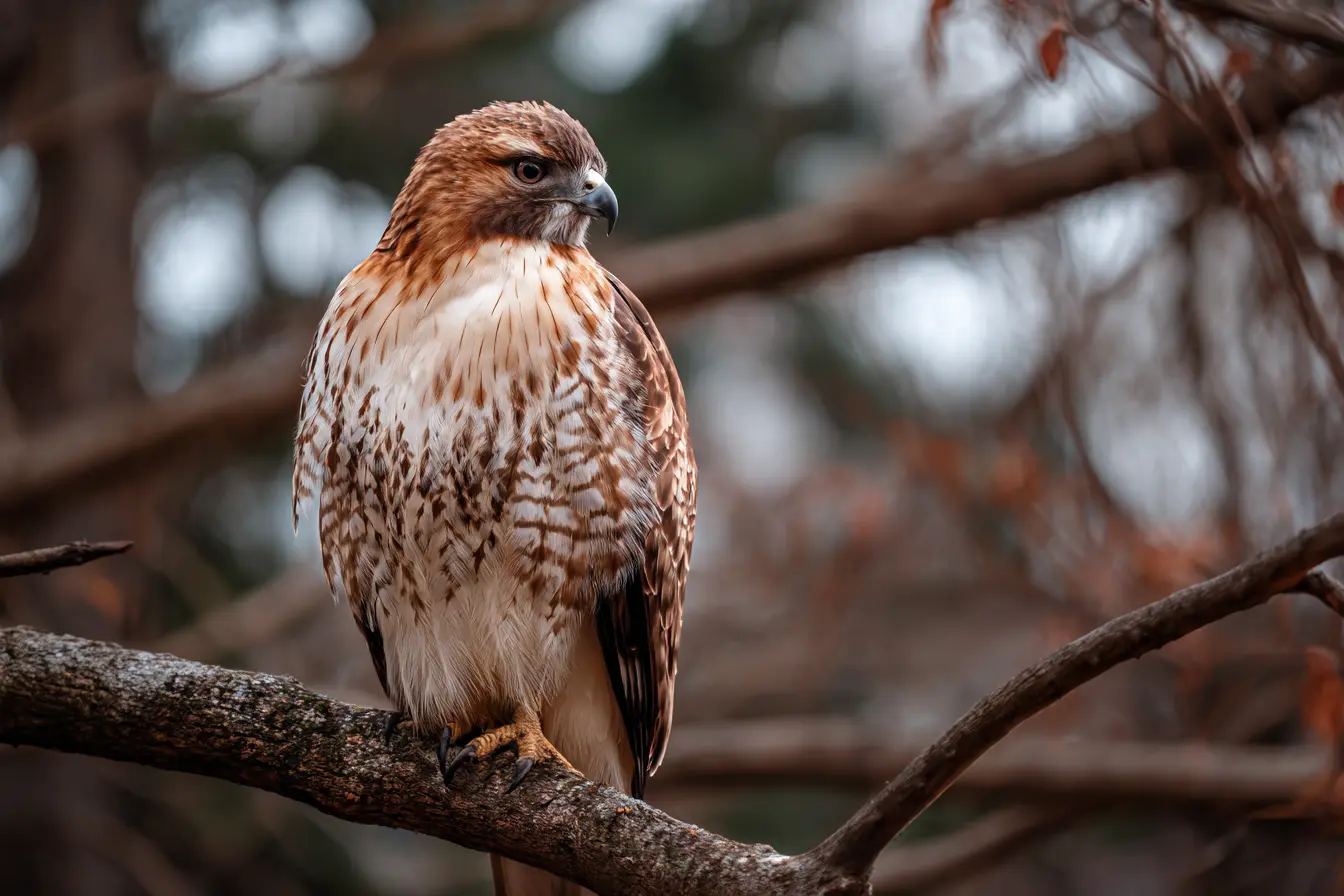
The Red-tailed Hawk (Buteo jamaicensis) is a powerful and adaptable bird of prey native to North America, instantly recognisable by its broad wings and distinctive reddish-brown tail. In the UK, they are kept almost exclusively for falconry, pest control, and public displays, as they are not a native species. Known for their strength, endurance, and versatility in hunting, Red-tailed Hawks are often recommended for beginners in North America, but in the UK they are usually kept by falconers with some prior experience handling large hawks.
Appearance and Characteristics
Size: Large Buteo hawk; females weigh 1,000–1,300g, males 800–1,000g.
Plumage: Variable brown upperparts with pale underparts and a cinnamon to brick-red tail in adults.
Flight Style: Soaring on broad wings, capable of rapid stoops and strong, controlled descents.
Temperament: Calm but powerful, with a strong grip - requires confident handling.
Legal Considerations in the UK
Wildlife and Countryside Act 1981: Red-tailed Hawks are non-native and not protected in the wild, but you must keep proof of legal acquisition.
CITES: Listed under Appendix II - permits are required for international trade.
No Schedule 4 Registration: Unlike native species, they do not need to be registered with DEFRA, but responsible record-keeping is essential.
Hunting Permissions: Landowner consent is required to hunt with a bird of prey.
Housing Requirements
Mews (Aviary)
Size: Minimum 3m (length) × 3m (width) × 2.5m (height) for one bird. Bigger is always better.
Design: Combination of a sheltered indoor section and an open-air section with secure mesh for ventilation.
Perches: A mix of bow, block, and flat perches to encourage foot health.
Safety: Must be predator-proof and secure against escapes.
Weathering Area
A secure outdoor area where the hawk can be tethered in good weather for fresh air and sunlight.
Equipment Needed
Gauntlet: Heavy leather glove suitable for large hawks.
Anklets, Jesses, and Leash: For handling and tethering.
Swivels: To prevent leash twisting.
Telemetry: GPS or radio tracking device for locating the bird if it flies out of sight.
Scales: Accurate to 1g for weight monitoring.
Perches: Multiple perch types to prevent pressure sores and encourage natural posture.
Diet and Feeding
Daily Diet
Red-tailed Hawks need whole prey for balanced nutrition:
Rabbit
Squirrel
Pigeon
Quail
Day-old chicks (as part of a varied diet, not the sole food)
Feeding Guidelines
Offer fresh prey daily, removing leftovers to prevent contamination.
Rotate prey types to ensure a varied diet.
Provide clean, fresh water for drinking and bathing.
Training a Red-tailed Hawk
Manning
Taming and acclimating the bird to human presence and handling.
Involves feeding on the glove and allowing the bird to relax around people.
Creance Training
Flying the bird on a long line to build recall and flight fitness.
Free Flight
Once recall is reliable, the hawk can be flown untethered.
Red-tails are often used for hunting rabbits, hares, and squirrels due to their strength and persistence.
Weight Management
Daily weighing is essential. Flying weight affects responsiveness and training success.
Health and Maintenance
Common Health Issues
Bumblefoot: Foot infection from poor perching surfaces.
Aspergillosis: Respiratory infection linked to damp, mouldy housing.
Feather Damage: From collisions or unsuitable perches.
Preventative Care
Keep housing clean and dry.
Rotate perches to avoid pressure sores.
Conduct daily health checks and regular parasite treatments.
Use a specialist avian vet for routine and emergency care.
Daily Responsibilities
Feed and water every day.
Fly regularly to maintain health and fitness.
Monitor weight before every flight.
Inspect all equipment for wear and replace if damaged.
Suitability for Falconers
In the UK, Red-tailed Hawks are typically kept by falconers with some experience, though they are considered a good beginner bird in North America.
They are strong, hardy, and relatively forgiving of training errors.
Best suited for hunting in open fields, woodland edges, and mixed countryside.
Lifespan and Commitment
Red-tailed Hawks can live 20–25 years in captivity with proper care. Keeping one is a serious, long-term commitment requiring:
Time for daily handling and flying
Adequate housing and hunting opportunities
Ongoing investment in equipment, food, and vet care
Conclusion
The Red-tailed Hawk is a robust, versatile, and impressive bird of prey, capable of thrilling flights and powerful hunting displays. With proper training, secure housing, a varied diet, and consistent care, a Red-tail can be a loyal falconry partner for decades. However, they are still large, strong raptors that demand respect, knowledge, and commitment from their keeper, making them best suited to dedicated falconers who can meet their needs year-round.
Quick questions
- What should I know about red-tailed hawk?
- The Red-tailed Hawk is a strong bird of prey found in North America, but in the UK, it is used mainly for falconry and pest control. It is easily recognised by its reddish-brown tail and broad wings. Vet Verified can help you compare UK veterinary practices by location, species, services and opening hours before you call.
- When should I contact a vet about red-tailed hawk?
- Contact a veterinary practice if your pet seems unwell, symptoms are getting worse, you are unsure what to do, or the situation may be urgent. Vet Verified helps you compare practice details, but a vet should advise on your pet's current care.
- Can Vet Verified help me find bird vets?
- Yes. Use Vet Verified to compare bird vets across the UK, then check practice profiles and call directly to confirm current availability.
Find a vet
Find a veterinary practice
Compare UK veterinary practices related to this topic. Call the practice to confirm its current services and availability.