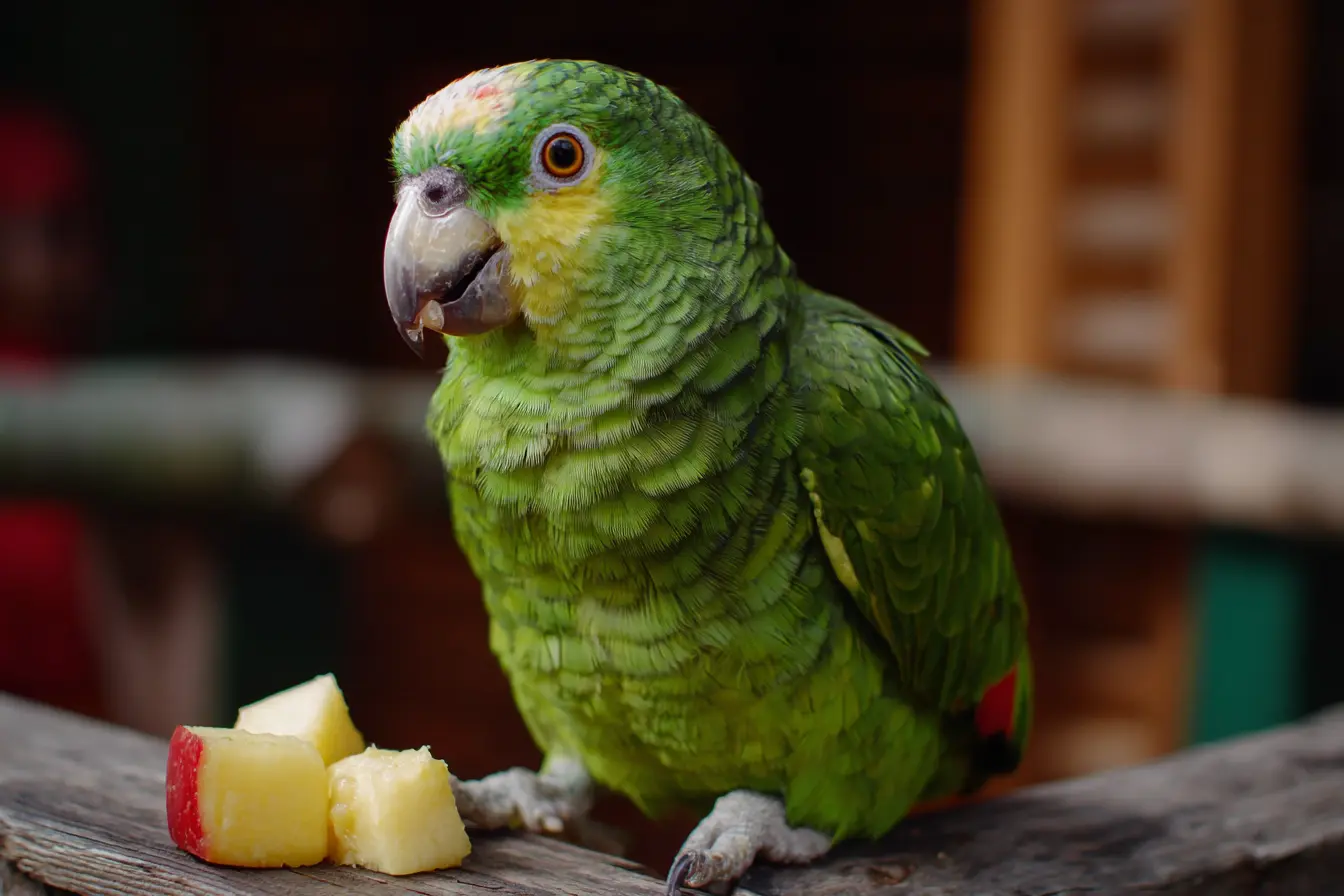
Fruit plays an important role in the diets of many parrot species. While pellets and vegetables should make up the bulk of a companion parrot’s nutrition, fresh fruit provides essential vitamins, antioxidants, hydration, and natural enrichment. However, not all fruits are safe, and some must be prepared properly to avoid harm.
This comprehensive guide explains which fruits parrots can eat, how to offer them safely, and which fruits should be avoided entirely.
Important Rules Before Feeding Fruit to Parrots
Fruit should make up around 10–20% of the overall diet, depending on species.
Always wash fruit thoroughly to remove pesticides.
Remove seeds, pits, and stones unless specifically safe.
Serve in manageable pieces to suit your parrot’s size.
Introduce fruit slowly if your parrot is new to fresh produce.
Avoid dried fruit with added sugar, syrups, or preservatives.
Safe Fruits for Parrots (With Full Guidance)
Apples
Benefits: Rich in vitamins A and C; crunchy texture encourages beak activity.
How to serve: Remove seeds entirely (contain cyanide); slice or dice the flesh.
Best for: All parrot sizes, from budgies to macaws.
Bananas
Benefits: High in potassium and natural energy.
How to serve: Slice, mash, or offer small peeled chunks.
Note: Some parrots enjoy the peel; only offer if organic and thoroughly washed.
Blueberries
Benefits: Antioxidant-rich “superfood”.
How to serve: Whole for larger parrots; halved for small species.
Tip: Expect messy faces, blueberries may stain feathers temporarily.
Strawberries
Benefits: Hydrating and high in vitamin C.
How to serve: Washed, with leaves removed, chopped into small pieces.
Note: Only give occasionally due to higher sugar levels.
Raspberries
Benefits: Gentle fibre and antioxidants.
How to serve: Offer whole berries; very soft and easy to eat.
Caution: Sticky juice can stain perches.
Blackberries
Benefits: Good fibre and hydration.
How to serve: Halved or whole depending on the parrot’s size.
Note: Slightly tart. A great option for birds who dislike very sweet fruit.
Grapes
Benefits: Hydrating and high in antioxidants.
How to serve: Halved for smaller parrots; whole for macaws.
Important: Grapes are toxic to dogs, but parrots can eat them safely. They should be offered sparingly due to the sugar content.
Oranges
Benefits: Vitamin C boost and natural hydration.
How to serve: Peeled and de-segmented; remove seeds.
Note: Too much citrus may cause mild stomach upset.
Clementines & Tangerines
Benefits: Similar to oranges but milder in flavour.
How to serve: Seedless segments only.
Tip: Many parrots enjoy peeling these themselves as enrichment.
Kiwi
Benefits: Packed with antioxidants and vitamin C.
How to serve: Peeled and sliced; seeds are safe for parrots.
Note: Slightly tangy flavour many parrots enjoy.
Mango
Benefits: High in vitamins A, B6, and C.
How to serve: Remove skin and the hard pit; offer soft chunks.
Perfect for: Improving feather condition.
Papaya
Benefits: Excellent source of vitamin A for vision and skin health.
How to serve: Remove seeds; offer diced flesh.
Tip: Great for species prone to vitamin A deficiency (African greys, Amazons).
Melon (Watermelon, Cantaloupe, Honeydew)
Benefits: Highly hydrating and rich in vitamins.
How to serve: Flesh only; remove rind and seeds.
Note: Watermelon seeds can be eaten by parrots but should be removed for safety in small species.
Pineapple
Benefits: High in vitamin C, bromelain, and natural sweetness.
How to serve: Remove the outer skin and hard core; give small pieces.
Avoid: Tinned pineapple due to sugary syrup.
Pears
Benefits: Gentle on digestion, high in fibre.
How to serve: Remove seeds and core; slice or dice.
Tip: Soft texture is ideal for conures and cockatiels.
Peaches
Benefits: Rich in vitamins A and C.
How to serve: Remove the stone, which is toxic; chop the flesh.
Note: Organic peaches are preferred as they are often heavily sprayed.
Plums
Benefits: Antioxidants and hydration.
How to serve: Remove the pit completely; offer small soft pieces.
Caution: Stains feathers.
Cherries
Benefits: Vitamin-rich and tasty.
How to serve: Remove stems, leaves, and pits (all toxic); give the flesh only.
Tip: Expect red beaks and happy birds.
Cranberries
Benefits: Antioxidants and tangy flavour.
How to serve: Fresh or unsweetened dried cranberries (sparingly).
Avoid: Sweetened cranberry juice and cranberry sauces.
Figs
Benefits: High in calcium and fibre.
How to serve: Fresh or dried (no added sugar).
Note: Sticky but extremely nutritious.
Dragon Fruit
Benefits: Hydrating and mineral-rich.
How to serve: Scoop flesh and offer bite-sized pieces; seeds are safe.
Fun: Vibrant colours make excellent sensory enrichment.
Guava
Benefits: Rich in vitamin C and fibre.
How to serve: Peel if desired; seeds are safe but hard, remove for smaller parrots.
Pomegranate
Benefits: Powerful antioxidants.
How to serve: Remove the outer rind; offer seeds (arils) only.
Tip: A great foraging activity, birds love picking out the seeds.
Fruits Parrots Can Eat With Caution
Tomatoes (Ripe Only)
Parrots can eat ripe red tomato flesh but never stems, vines, or leaves.
These contain harmful alkaloids.
Dried Fruits
Safe only if unsweetened and free from sulphur preservatives.
Limit due to concentrated sugar.
Fruits Parrots Should Avoid
Avocado
The flesh of some varieties contains persin, which is toxic to birds.
Even if a specific cultivar is low in persin, the risk is not worth it.
Rhubarb
Contains oxalates which are toxic to parrots.
How Much Fruit Should a Parrot Eat?
Small parrots (budgies, cockatiels): 1–2 teaspoons per day.
Medium parrots (conures, Senegal parrots): 1–2 tablespoons per day.
Large parrots (Amazons, macaws): A small handful per day.
Fruit should never exceed 20% of the diet.
The remainder should come from:
High-quality pellets
Vegetables
Grains
Occasional nuts
Fresh water daily
Health Conditions That Need Extra Care
Overweight Parrots
Avoid high-sugar fruits:
Grapes
Mango
Bananas
Pineapple
Prefer:
Berries
Melon
Kiwi
Parrots with Liver Issues
Choose low-sugar fruits and moderate portions.
Avoid dried fruit entirely.
Vitamin A Deficiency (Common in African Greys & Amazons)
Offer plenty of:
Mango
Papaya
Cantaloupe
Apricots (flesh only, pit removed)
Digestive Sensitivities
Introduce fruits slowly and avoid acidic options like citrus.
Fun & Enriching Ways to Serve Fruit
Fruit skewers hung in the cage.
Freeze fruit chunks for summer cooling treats.
Hide fruit in foraging toys to encourage natural behaviours.
Mix fruit into bird-safe smoothies (no dairy or sugar).
Offer whole soft fruits for parrots to tear apart for enrichment.
Conclusion
Fruit is an important and enjoyable part of many parrots’ diets when served safely and in moderation. From antioxidant-rich berries to hydrating melon and vitamin-packed mango, the right fruits support vibrant feathers, strong immunity, and excellent overall health.
By following this guidance, parrot owners can feel confident offering safe fruit choices while avoiding dangerous ones like avocado and rhubarb. As always, if your parrot has underlying health issues, seek advice from an avian specialist vet before making dietary changes.
Quick questions
- What should I know about parrot fruits?
- Fruits are a beneficial addition to a parrot's diet, offering vitamins, antioxidants, and hydration. However, they should only make up 10–20% of the overall diet, with caution exercised around certain fruits. Vet Verified can help you compare UK veterinary practices by location, species, services and opening hours before you call.
- When should I contact a vet about parrot fruits?
- Contact a veterinary practice if your pet seems unwell, symptoms are getting worse, you are unsure what to do, or the situation may be urgent. Vet Verified helps you compare practice details, but a vet should advise on your pet's current care.
- Can Vet Verified help me find dog vets?
- Yes. Use Vet Verified to compare dog vets across the UK, then check practice profiles and call directly to confirm current availability.
Find a vet
Find a veterinary practice
Compare UK veterinary practices related to this topic. Call the practice to confirm its current services and availability.
Search by species
- Dog vets Find UK veterinary practices that list care for dogs. Compare opening hours, services, facilities and verified profiles, then contact a practice directly.
- Bird vets Find UK veterinary practices that list care for birds. Compare opening hours, services, facilities and verified profiles, then contact a practice directly.