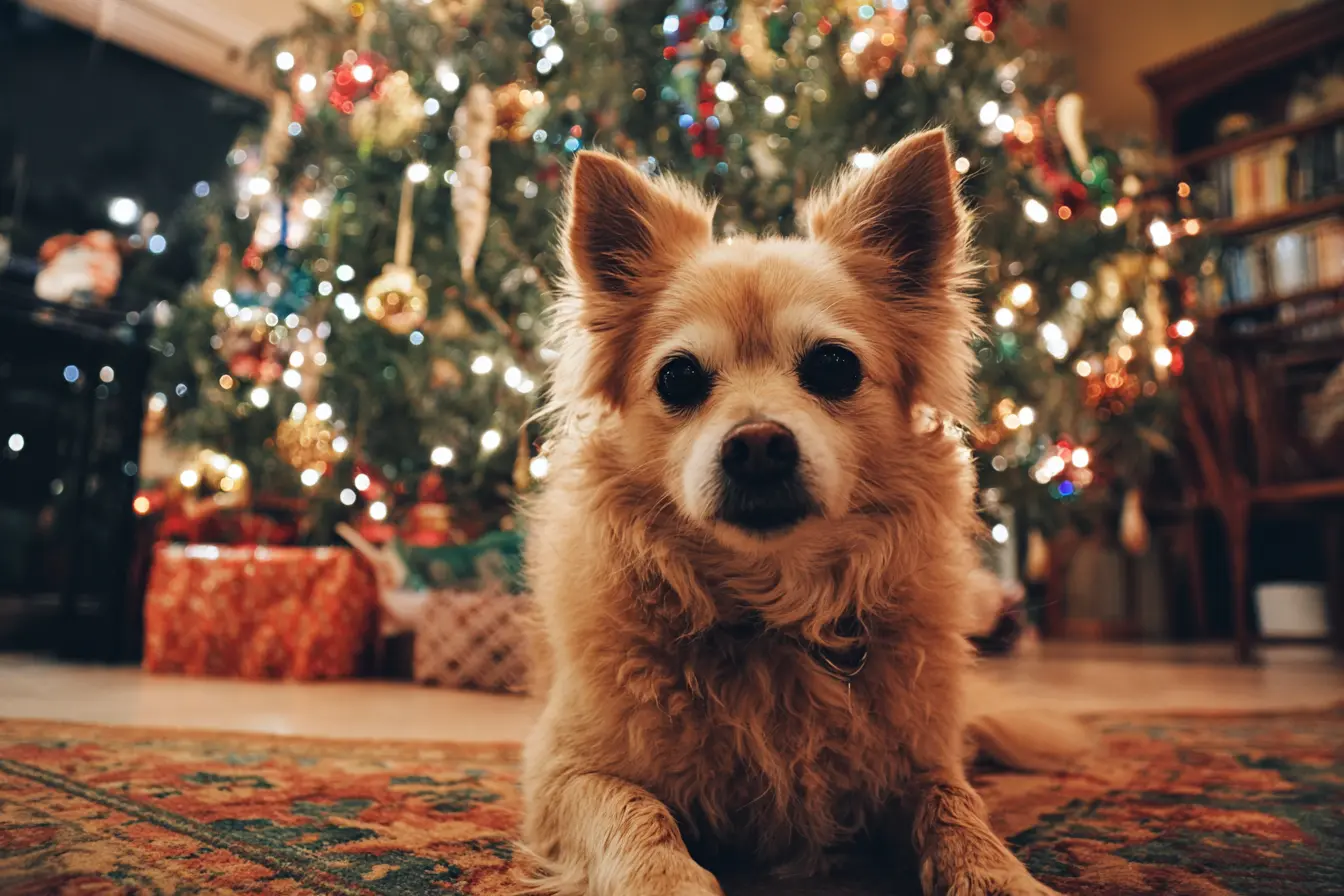
The festive season brings warmth, cheer, and a lot of new sights, smells, and objects into the home. While we enjoy the celebrations, many traditional Christmas items can be dangerous for dogs. This guide explains the key hazards, how to recognise risks, and what you can do to keep your dog safe throughout the holidays.
Christmas Foods That Are Dangerous for Dogs
Chocolate
Chocolate contains theobromine and caffeine, which are toxic to dogs. Dark and baking chocolates contain the highest levels. Even small amounts can cause vomiting, diarrhoea, agitation, tremors, seizures, or heart complications.
Common sources at Christmas:
Tree chocolates
Selection boxes
Advent calendars
Hot chocolate sachets
Baking ingredients
Always keep chocolate completely out of reach and never hang edible ornaments on the tree.
Grapes, Raisins, Sultanas and Currants
These dried fruits can cause acute kidney failure in dogs, and sensitivity varies hugely. Even a single mince pie or small piece of Christmas cake can be dangerous.
Foods to avoid:
Mince pies
Christmas pudding
Fruit cake
Stollen
Panettone
Alcohol
Dogs are far more sensitive to alcohol than humans. Drinks, unbaked dough containing yeast, and alcohol-soaked foods can lead to low blood sugar, respiratory depression, seizures, coma, and death.
Fatty and Rich Foods
Leftovers may seem like a treat, but high-fat foods can lead to gastrointestinal upset or pancreatitis, a potentially life-threatening condition.
Avoid giving dogs:
Turkey skin
Goose fat
Gravy
Sausages and stuffing (stuffing also often contains onion and garlic which are toxic)
Onions, Garlic, Leeks, Shallots and Chives
These all belong to the allium family and can cause haemolytic anaemia in dogs. The effect is often delayed and builds up over time. Gravy, stuffing, soups and many festive recipes contain these ingredients.
Sweeteners (Especially Xylitol)
Xylitol, found in sugar-free sweets, gum, peanut butter, some baked goods and medications, can cause rapid hypoglycaemia and liver failure.
Macadamia Nuts
Common in Christmas snack bowls. These nuts can cause weakness, tremors, hyperthermia and vomiting.
Bones
Cooked bones, especially poultry bones, splinter easily and can cause choking, throat or gut perforation, or obstruction.
Decorative Hazards
Christmas Trees
Both real and artificial trees carry risks.
Needles can lodge in paws or throats.
Tree water may contain fertilisers, sap or mould that irritate the stomach.
Stability issues: dogs brushing past or pulling decorations may cause the tree to fall.
Use a sturdy stand, a barrier (such as a pet gate), and supervise interactions.
Tree Decorations
Baubles: glass ones can shatter; plastic ones can be swallowed.
Tinsel and ribbon: these can cause life-threatening linear foreign bodies if ingested.
Lights: electric cables pose electrocution risks if chewed; hot bulbs can burn curious noses.
Keep breakable items higher up, secure cables, and consider cable-protection tubing.
Advent Calendars
Chocolate calendars are common hazards. Even “pet-safe” ones can cause tummy upsets if eaten in large quantities.
Candles and Wax Melts
Burns, ingestion of wax, and fire hazards all pose real risks. Electric diffusers can also cause issues if essential oils are toxic to dogs.
Toxic Seasonal Plants
Holly
Leaves and berries can cause drooling, vomiting and abdominal discomfort.
Mistletoe
Toxicity varies by species, but ingestion can lead to vomiting, diarrhoea, low heart rate and seizures.
Poinsettia
Often overstated as extremely toxic; usually causes mild irritation and drooling, but still worth keeping out of reach.
Christmas Trees (Pine, Fir, Spruce)
Sap and needles can irritate the mouth and gut if chewed or swallowed.
Amaryllis and Lilies
Very toxic plants. Amaryllis bulbs, in particular, can cause severe gastrointestinal and neurological signs. Lilies should never be in dog-owning homes.
Wrapping and Gift Hazards
Wrapping Paper
Often harmless in small quantities, but large ingestion can cause blockage, and coloured inks may irritate the gut.
Bows, Ribbons and String
These are classic ingestion hazards and can cause choking or dangerous intestinal obstruction.
Batteries
Many festive items use batteries (string lights, toys, cards). If punctured or swallowed, batteries can cause severe internal burns and are always an emergency.
New Toys
Children’s toys may contain small detachable parts that dogs can ingest. Also beware of soft plastic toys that dogs may chew through.
Household and Routine Disruptions
Visitors and Excitement
Increased noise and activity can stress dogs, leading to hiding, growling, or escape attempts.
Tips:
Provide a safe, quiet room.
Avoid forcing interactions.
Use baby gates if needed.
Open Doors
Frequent visitors increase the risk of dogs slipping out unnoticed. Consider a dog gate or sign reminding guests to shut doors quickly.
Fireplaces and Heaters
Burns and singed fur can happen easily during the colder months. Always use a fire guard.
Gifts and Edible Presents Left Under the Tree
Dogs can smell wrapped food; especially chocolate, biscuits, or edible hampers. Keep food gifts entirely out of reach and avoid putting any under the tree.
Scented Products and Essential Oils
Some essential oils (including eucalyptus, tea tree, peppermint and clove) can be harmful to dogs. Diffusers, potpourri, and scented candles should be used cautiously.
Travel and Christmas Trips
Car Journeys
Make sure your dog is safely restrained in accordance with UK law. Long trips should include water, ventilation and rest breaks.
Staying Away From Home
New environments may contain unfamiliar hazards. Bring your dog’s usual bed, food and toys to reduce stress.
Loud Noises and Festive Events
Crackers
The snap sound can frighten dogs or cause panic. Keep crackers away from nervous pets.
Fireworks
Some areas use fireworks around Christmas and New Year. Provide a quiet safe space, turn on the TV or radio, and use vet-approved calming aids if necessary.
Rubbish and Recycling
The aftermath of Christmas presents an array of tempting smells.
Common hazards in bins include:
Turkey carcasses
Foil wrapping
Strings from joints of meat
Plastic packaging
Use dog-proof bins and empty them regularly.
Signs Your Dog May Have Ingested Something Harmful
Seek immediate veterinary help if you notice:
Vomiting or retching
Diarrhoea
Excessive drooling
Lethargy or collapse
Restlessness or agitation
Tremors or seizures
Pale gums
Rapid or abnormal heart rate
Do not make your dog vomit unless a vet instructs you to do so.
Creating a Safe Christmas Environment
Put safety gates around trees if needed.
Keep all food far from reach; preferably shut away.
Store decorations and spare batteries securely.
Supervise dogs closely during gatherings.
Ensure a quiet retreat area is always available.
Brief guests (especially children) on house rules.
Conclusion
Christmas is a joyful time, but it also brings an array of potential hazards for dogs. By understanding the risks, from toxic foods and dangerous decorations to changes in routine and increased household activity, you can take practical steps to keep your dog safe and comfortable throughout the festive period. With a little preparation and vigilance, your canine companion can enjoy a peaceful, hazard-free Christmas alongside the family. If you ever suspect your dog has eaten something harmful or is showing unusual symptoms, contact your vet immediately for advice.
Quick questions
- What should I know about christmas hazards?
- Christmas is a time of celebration, but it also poses various risks for dogs. Common hazards include chocolate, dried fruits, alcohol, and fatty foods, which can cause serious health problems. Vet Verified can help you compare UK veterinary practices by location, species, services and opening hours before you call.
- When should I contact a vet about christmas hazards?
- Contact a veterinary practice if your pet seems unwell, symptoms are getting worse, you are unsure what to do, or the situation may be urgent. Vet Verified helps you compare practice details, but a vet should advise on your pet's current care.
- Can Vet Verified help me find dog vets?
- Yes. Use Vet Verified to compare dog vets across the UK, then check practice profiles and call directly to confirm current availability.
Find a vet
Find a veterinary practice
Compare UK veterinary practices related to this topic. Call the practice to confirm its current services and availability.
Search by species
- Dog vets Find UK veterinary practices that list care for dogs. Compare opening hours, services, facilities and verified profiles, then contact a practice directly.
- Bird vets Find UK veterinary practices that list care for birds. Compare opening hours, services, facilities and verified profiles, then contact a practice directly.