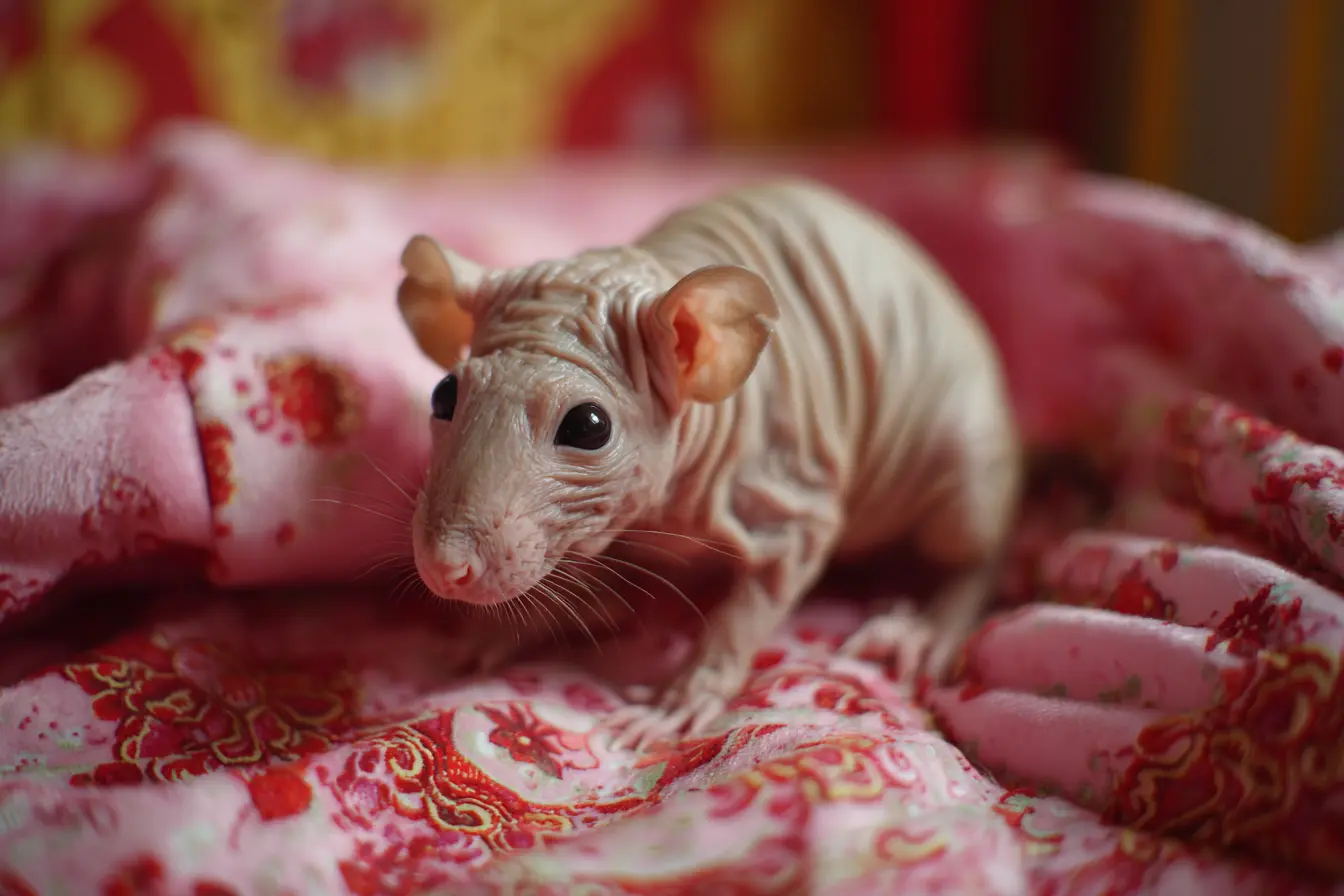
Sphynx rats, also known as hairless rats, are one of the most unusual varieties of fancy rat. With their smooth, bare skin, large ears, and visible wrinkles, they stand out immediately from their furred relatives. While their striking appearance appeals to many enthusiasts, sphynx rats require more attentive care due to their lack of fur and associated sensitivities.
In this post, we’ll cover everything you need to know about sphynx rats, from their traits and social needs to housing, diet, health, and suitability as pets.
What Are Sphynx Rats?
The sphynx rat is a variety of the domesticated fancy rat (Rattus norvegicus domestica) that carries a genetic mutation preventing the growth of a full coat of fur. Some sphynx rats are completely bald, while others may have a fine down or patchy fuzz in certain areas.
This lack of fur is purely aesthetic, sphynx rats are not a separate species, and they share the same intelligence, temperament, and social needs as all fancy rats.
Key Characteristics
Size: 20–25 cm body length, with a tail of similar length
Weight: 250–700 g (females are typically smaller than males)
Lifespan: 1.5–2.5 years on average (sometimes slightly shorter than furred rats)
Temperament: Affectionate, curious, intelligent, and highly social
Appearance: Wrinkled, furless skin, often pink or pale in colour; large ears and prominent features
Sphynx rats often feel warm to the touch due to their lack of fur and higher energy use to maintain body heat.
Social Needs
Rats are intensely social creatures, and sphynx rats are no exception. They must be kept with at least one companion, preferably in small groups.
Social Benefits:
Companionship prevents loneliness and stress
Rats groom and play together, which maintains wellbeing
Groups allow for more natural behaviours and stimulation
Sphynx rats may appreciate the warmth of snuggling with furred cage mates, making mixed groups (hairless with standard rats) a good option.
Housing and Environment
While sphynx rats can live in the same enclosures as other fancy rats, their lack of fur means some special adjustments are needed.
Cage Requirements:
Minimum size: 80 cm x 50 cm x 80 cm for a pair or trio (larger is ideal)
Type: Multi-level wire cages with ramps and hammocks; avoid aquariums due to poor ventilation
Bar spacing: Maximum 1.5 cm to prevent escapes
Bedding: Paper-based, hemp, or aspen; avoid rough or dusty substrates that may irritate skin
Nesting material: Shredded paper or tissue (no cotton wool)
Enrichment: Hammocks, ropes, cardboard boxes, chew toys, tunnels, ladders, and digging boxes
Special Considerations:
Warmth: Hairless rats lose heat quickly and require a consistently warm environment (20–24°C). Provide fleece hammocks, soft bedding, and ensure the cage is free from draughts.
Skin protection: Their skin is delicate and prone to scratches or dryness. Avoid sharp cage accessories and check regularly for irritation.
Soft fabrics: Hammocks, fleece liners, and plush hides are especially important for comfort.
Diet and Nutrition
Sphynx rats burn more calories than furred rats because they must work harder to regulate their body temperature. Their diet should therefore be slightly richer in protein and healthy fats.
Suggested Diet:
Staple food: High-quality rat nuggets or lab blocks
Vegetables: Broccoli, kale, peas, cucumber, courgette, spinach, carrots
Fruits: Apples, pears, bananas, berries (in small amounts)
Protein: Cooked chicken, fish, egg, tofu, or mealworms (a little more frequently than for furred rats)
Healthy fats: Small amounts of avocado, nuts, or seeds
Avoid: Citrus fruits (especially for males), chocolate, onions, sticky foods, raw beans, and highly processed human food
Fresh water should always be available in bottles or bowls.
Handling and Behaviour
Sphynx rats are just as affectionate and playful as their furred relatives. Many owners find them especially cuddly due to their warmth and love of physical contact.
Handling Tips:
Handle gently, as their skin is prone to scratches
Wash your hands before handling to avoid transferring oils or irritants
Support their body fully and avoid rough surfaces
Provide plenty of interaction, as they thrive on human contact
Sphynx rats are intelligent, trainable, and can learn to respond to names, come when called, and perform tricks. Daily out-of-cage time in a safe, warm area is essential.
Unique Traits
Sphynx rats stand out not only for their appearance but also for their quirks:
Hairless skin: Warm and soft, often wrinkled around the body and face
High metabolism: They eat more to compensate for heat loss
Visible features: Muscles, veins, and expressions are more noticeable without fur
Sensitive skin: Prone to scratches, dryness, and sometimes acne-like spots
These traits make them fascinating but also demand careful attention from their keepers.
Health and Common Issues
Sphynx rats are prone to certain health issues, some related specifically to their lack of fur.
Common Health Concerns:
Respiratory disease: A common problem in all fancy rats
Tumours: Especially mammary tumours in females
Skin problems: Dryness, scratches, or irritation are more common
Temperature stress: They are more sensitive to cold and must be kept warm
Infections: Cuts and scrapes can become infected more easily due to exposed skin
Regular health checks, a clean cage, and an experienced vet are essential.
Is a Sphynx Rat Right for You?
Sphynx rats are ideal for:
Enthusiasts seeking a unique and unusual pet
Keepers who can provide warmth and soft housing
People with time for daily handling, socialisation, and care
Families with older children who understand gentle handling
They are not recommended for:
Very young children (due to delicate skin and handling needs)
Keepers seeking a low-maintenance pet
Homes where stable warmth cannot be maintained
Conclusion
Sphynx rats are affectionate, intelligent, and interactive pets, just like other fancy rats, but their lack of fur makes them both unique and demanding. They require warmth, soft bedding, careful handling, and a nutrient-rich diet to stay healthy and comfortable.
For committed keepers willing to provide this extra care, sphynx rats offer a truly special experience. Their striking appearance, affectionate personalities, and love of human company make them some of the most memorable companions you can keep.
Quick questions
- What should I know about sphynx rats?
- Sphynx rats, or hairless rats, are a unique type of fancy rat known for their smooth, furless skin and large ears. Vet Verified can help you compare UK veterinary practices by location, species, services and opening hours before you call.
- When should I contact a vet about sphynx rats?
- Contact a veterinary practice if your pet seems unwell, symptoms are getting worse, you are unsure what to do, or the situation may be urgent. Vet Verified helps you compare practice details, but a vet should advise on your pet's current care.
- Can Vet Verified help me find bird vets?
- Yes. Use Vet Verified to compare bird vets across the UK, then check practice profiles and call directly to confirm current availability.
Find a vet
Find a veterinary practice
Compare UK veterinary practices related to this topic. Call the practice to confirm its current services and availability.