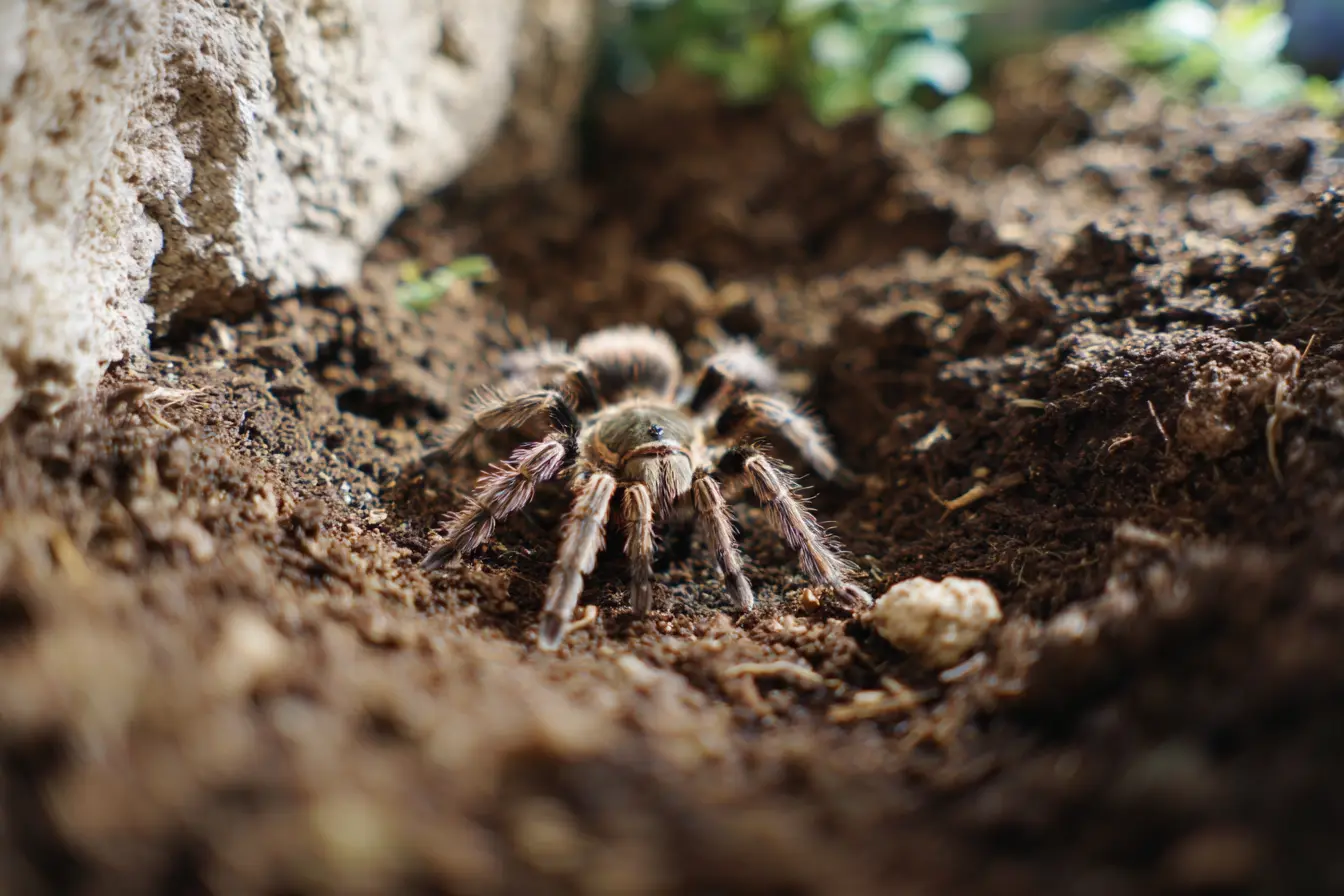
When entering the fascinating world of tarantula keeping, one of the first distinctions you'll encounter is between Old World and New World tarantulas. These terms refer not only to geography, but also to behaviour, temperament, and care considerations. Understanding the key differences can help you make an informed decision when choosing your next (or first) eight-legged companion.
What Do “Old World” and “New World” Mean?
Old World Tarantulas: Native to Africa, Asia, Europe, and parts of Australasia. These tarantulas evolved in environments without natural mammalian predators, which has influenced their defensive behaviours.
New World Tarantulas: Found in the Americas — particularly Central and South America, as well as parts of North America. These species have evolved alongside more ground-dwelling predators, leading to different defensive adaptations.
Key Differences
Defensive Mechanisms
Old World:
Do not possess urticating hairs.
Rely on speed, threat postures, and biting when threatened.
Many are extremely defensive and should not be handled.
Their venom is often more medically significant than that of New World species.
New World:
Have urticating hairs — barbed bristles they can flick from their abdomen as a defence.
Generally more docile and tolerant of disturbance (though not always).
Biting is usually a last resort.
Venom is typically mild to humans.
Temperament and Behaviour
Old World:
Typically faster, more reactive, and can be more aggressive.
Less likely to tolerate handling or enclosure disturbance.
Often display dramatic threat postures when agitated.
New World:
Often more calm and slow-moving.
Many species are suitable for beginner hobbyists due to their forgiving nature.
More likely to use urticating hairs than bite.
Care Requirements
Old World:
Often fossorial or arboreal, requiring deeper enclosures or vertical space.
May require higher humidity levels and more secure setups.
Maintenance should be done with extreme caution due to their speed and temperament.
New World:
Generally easier to care for and more forgiving of beginner mistakes.
Suitable for both terrestrial and arboreal setups depending on the species.
Handling is more common but still not recommended unless necessary.
Appearance and Growth
Old World:
Often more subdued in colouration but with striking physical features (e.g., Asian Earth Tigers, Baboon tarantulas).
Tend to grow faster and mature more quickly than their New World counterparts.
New World:
Often vibrantly coloured, such as the Mexican Redknee or Greenbottle Blue.
Growth rates vary but are generally slower.
Examples of Each
Old World Tarantulas:
Poecilotheria regalis (Indian Ornamental)
Chilobrachys fimbriatus (Indian Violet)
Cyriopagopus lividus (Cobalt Blue)
Harpactira pulchripes (Golden Blue Leg Baboon)
New World Tarantulas:
Grammostola pulchra (Brazilian Black)
Chromatopelma cyaneopubescens (Greenbottle Blue)
Aphonopelma seemanni (Zebra Knee)
Which Should You Choose?
For Beginners:
New World tarantulas are usually the safer and more manageable choice. Species like the Mexican Redknee or Brazilian Black are excellent starter tarantulas due to their calm temperament and lower venom potency.
For Experienced Keepers:
Old World tarantulas offer a more intense and exciting experience, but require skill, caution, and respect. They’re ideal for keepers looking to expand their collection with a challenge.
Final Thoughts
The distinction between Old and New World tarantulas is fundamental to understanding their behaviour, care needs, and suitability for different levels of experience. While both groups include remarkable and rewarding species, being aware of their differences ensures both the keeper’s safety and the spider’s wellbeing.
Whether you’re drawn to the vibrant colours of New World species or the fierce beauty of Old World varieties, there’s a tarantula to match your interests—just be sure to do your research and proceed with respect.
Quick questions
- What should I know about old world and new world tarantulas?
- Learn about the differences between Old World and New World tarantulas to choose the best eight-legged pet. Vet Verified can help you compare UK veterinary practices by location, species, services and opening hours before you call.
- When should I contact a vet about old world and new world tarantulas?
- Contact a veterinary practice if your pet seems unwell, symptoms are getting worse, you are unsure what to do, or the situation may be urgent. Vet Verified helps you compare practice details, but a vet should advise on your pet's current care.
- Can Vet Verified help me find exotic vets?
- Yes. Use Vet Verified to compare exotic vets across the UK, then check practice profiles and call directly to confirm current availability.
Find a vet
Find a veterinary practice
Compare UK veterinary practices related to this topic. Call the practice to confirm its current services and availability.