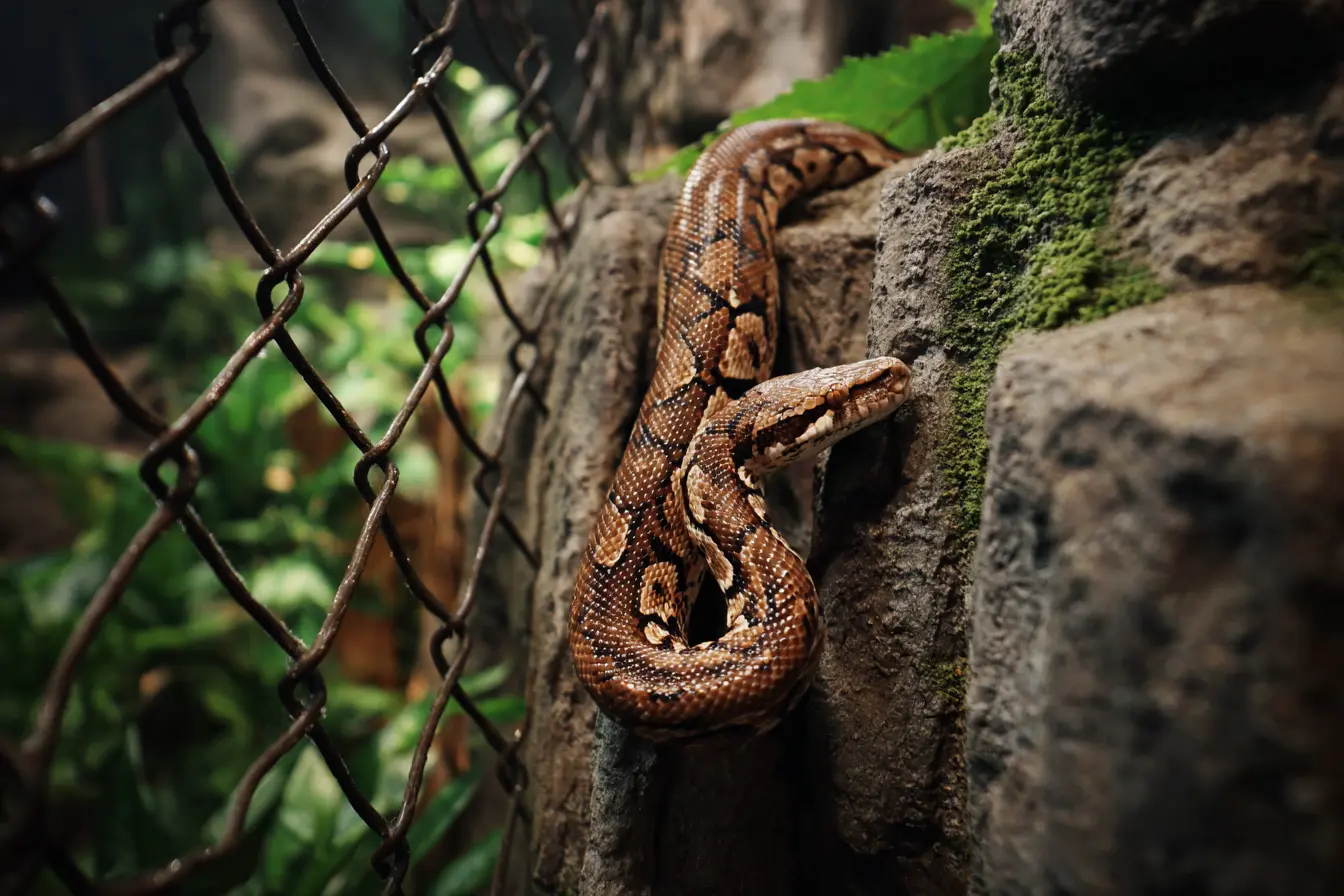
The Paraguayan Rainbow Boa (Epicrates crassus) is a stunning and powerful constrictor renowned for the extraordinary iridescent sheen that shimmers across its scales under light. Subtle by day and breathtaking under the right illumination, this species combines beauty, strength, and an engaging temperament.
Native to central South America, the Paraguayan Rainbow Boa is generally more robust and tolerant of moderate humidity than its Brazilian relative, making it an appealing choice for keepers seeking a rainbow boa without the extreme environmental demands. While not a beginner snake, it is well suited to confident keepers willing to provide space, stability, and respectful handling.
Origins and Natural Habitat
The Paraguayan Rainbow Boa is found across Paraguay, northern Argentina, southern Brazil, and parts of Bolivia. It inhabits a range of environments including dry forests, savannahs, scrubland, and forest edges, often near water sources but not restricted to rainforests.
Compared to the Brazilian Rainbow Boa (Epicrates cenchria), this species is adapted to slightly drier conditions and seasonal fluctuations. It is primarily terrestrial but will readily climb low branches or vegetation when hunting or resting.
Appearance and Temperament
Physical Traits
Size: Typically 120–150 cm in length, with large females occasionally exceeding this
Build: Thick-bodied and muscular, with a strong tail and powerful coils
Colouration: Brown, tan, or grey base colour with dark-edged saddles and ocelli
Iridescence: Exceptional rainbow sheen visible under direct or angled light
Eyes: Prominent with vertical pupils, giving a sharp, alert expression
Behaviour and Temperament
Paraguayan Rainbow Boas are generally calm and confident when properly kept. While juveniles can be defensive, most individuals mellow significantly with age and regular, respectful interaction.
They are primarily nocturnal or crepuscular, becoming active in the evening. In captivity, many individuals are alert and curious, often observing activity outside their enclosure.
Housing Requirements
This species thrives in a secure, well-ventilated vivarium that prioritises floor space, environmental stability, and appropriate humidity.
Enclosure Size
Adult male: Minimum 120 cm x 60 cm x 60 cm
Adult female: 150 cm x 75 cm x 75 cm
Larger enclosures allow for better thermal gradients and enrichment.
Heating and Temperature Gradient
Warm side: 30–32°C
Ambient temperature: 26–28°C
Cool side: 23–24°C
Night-time: Drop to 22–24°C
Heat is best provided via radiant heat panels or guarded ceramic heat emitters to create gentle, ambient warmth.
Lighting
UVB is not strictly required but low-level UVB (2–5%) can be beneficial for overall health and circadian rhythm regulation. Provide a clear day/night cycle of around 12 hours.
Humidity and Water
Maintain humidity between 60–75%, with short peaks after misting.
Mist lightly 2–3 times per week
Provide a large, sturdy water bowl suitable for soaking
Ensure good airflow to prevent overly damp conditions
Paraguayan Rainbow Boas tolerate moderate humidity well but still require consistency for healthy shedding.
Substrate and Furnishings
Substrate: Cypress mulch, orchid bark, or a soil-based mix
Hides: At least two secure hides, one on the warm side and one on the cool side
Decor: Cork bark, low branches, and leaf litter
Plants: Live or artificial foliage for cover
Although primarily terrestrial, low climbing options provide enrichment.
Diet and Feeding
Paraguayan Rainbow Boas are carnivorous constrictors with steady metabolisms.
Feeding Schedule
Juveniles: Every 7–10 days
Adults: Every 14–21 days
Food Items
Appropriately sized mice or rats
Prey should be no larger than the widest part of the snake’s body.
Feeding Notes
Feed during the evening where possible. Avoid handling for 48 hours after feeding to prevent regurgitation.
Handling and Interaction
When captive-bred and well-established, Paraguayan Rainbow Boas are often calm and manageable.
Handling guidelines:
Support the full body
Avoid handling during shedding or immediately after feeding
Move slowly and confidently
Regular, gentle handling helps maintain a relaxed temperament, but excessive handling should still be avoided.
Common Health Concerns
Respiratory Infections
Usually linked to low temperatures or stagnant, overly humid air. Maintain proper ventilation and temperature gradients.
Shedding Issues
Caused by low or inconsistent humidity. Increase misting slightly during shed cycles.
Obesity
Overfeeding is common. Maintain a conservative feeding schedule.
Stress
Frequent enclosure changes or lack of hiding spots can cause chronic stress.
Lifespan and Breeding
With proper care, Paraguayan Rainbow Boas commonly live 15–20 years in captivity.
They are livebearers, producing litters of 10–25 neonates. Breeding typically requires seasonal cycling, with a cooler period followed by gradual warming.
Observation and Enrichment
Though relatively sedentary by day, this species benefits from subtle enrichment.
Ideas include:
Rearranging decor occasionally
Providing varied hide textures
Seasonal lighting and temperature changes
Their iridescence, slow movements, and alert behaviour make them highly rewarding to observe.
Conclusion
The Paraguayan Rainbow Boa is a superb blend of beauty and manageability. With its remarkable iridescence, steady temperament, and adaptability to moderate humidity, it stands out as one of the most appealing rainbow boa species in captivity.
While it requires space, consistency, and respectful handling, the Paraguayan Rainbow Boa rewards dedicated keepers with longevity, visual splendour, and a calm, confident presence that few snakes can match.
Quick questions
- What should I know about paraguayan rainbow boa?
- The Paraguayan Rainbow Boa is a striking snake known for its shiny scales. It is native to parts of South America such as Paraguay and Brazil, thriving in various habitats like dry forests and savannahs. Vet Verified can help you compare UK veterinary practices by location, species, services and opening hours before you call.
- When should I contact a vet about paraguayan rainbow boa?
- Contact a veterinary practice if your pet seems unwell, symptoms are getting worse, you are unsure what to do, or the situation may be urgent. Vet Verified helps you compare practice details, but a vet should advise on your pet's current care.
- Can Vet Verified help me find exotic vets?
- Yes. Use Vet Verified to compare exotic vets across the UK, then check practice profiles and call directly to confirm current availability.
Find a vet
Find a veterinary practice
Compare UK veterinary practices related to this topic. Call the practice to confirm its current services and availability.