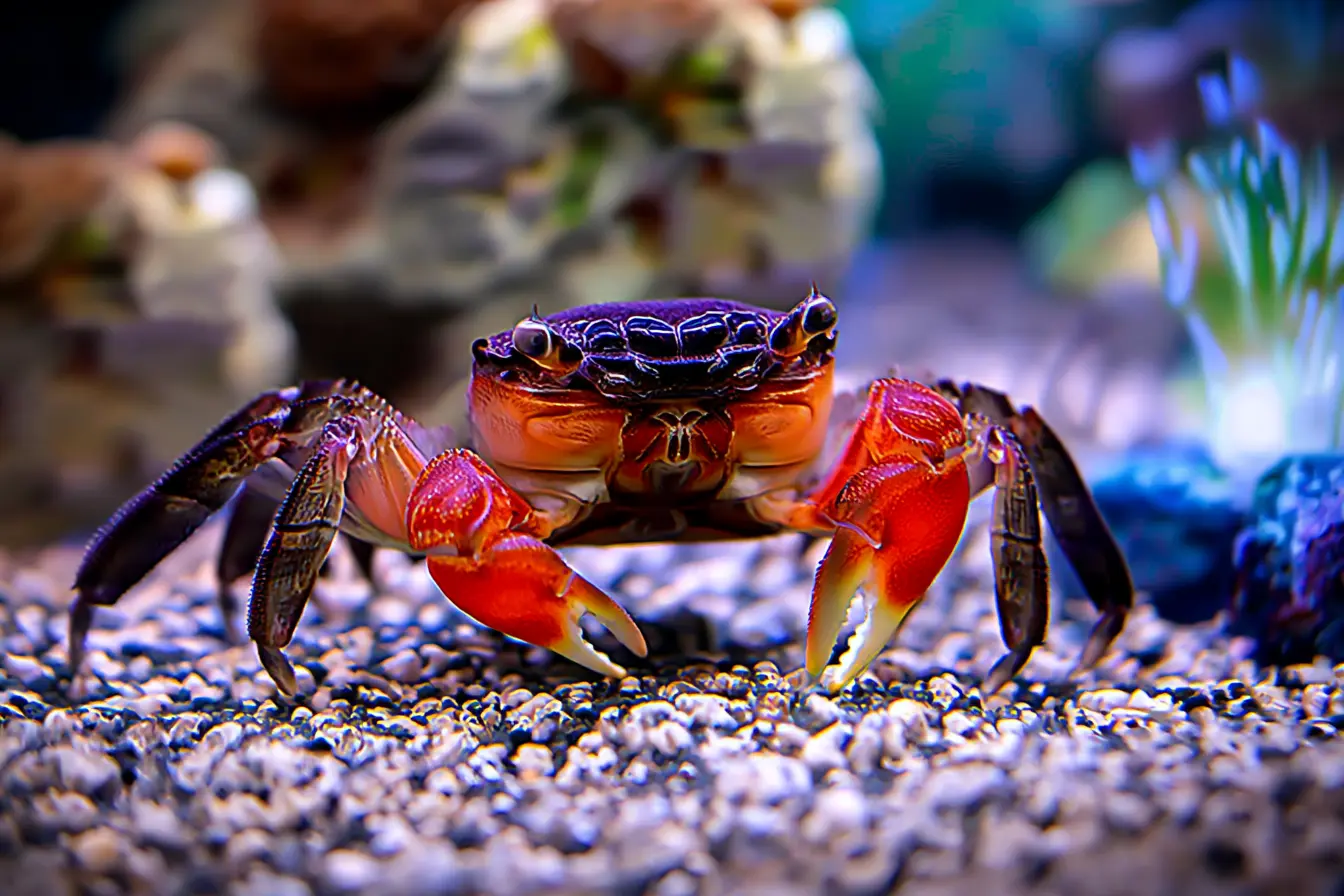
Red Claw Crabs (Perisesarma bidens) are eye-catching semi-aquatic crabs known for their vivid red claws and active behaviour. Originating from the brackish coastal mangroves of Southeast Asia, these crabs are a popular choice for aquarists looking to add a splash of colour and character to a paludarium. With proper habitat and care, Red Claw Crabs can thrive and display fascinating behaviours.
What Are Red Claw Crabs?
Red Claw Crabs are small, territorial crustaceans found in tidal areas across Thailand, India, and Singapore. Despite their presence in freshwater aquaria, they are naturally brackish water dwellers and require a carefully balanced environment to remain healthy.
They are:
Small: Adults grow to around 4 cm across the carapace
Semi-aquatic: Need both land and water access in their setup
Aggressive: Especially towards others of their kind
Territorial: Best kept singly or with great care in groups
Enclosure Requirements
Aquarium Size
A single Red Claw Crab can be kept in a 40-litre tank, but a larger enclosure (60+ litres) is strongly recommended if housing more than one. They require both aquatic and terrestrial zones to mimic their natural habitat.
Paludarium Setup
Red Claw Crabs are not fully aquatic and will drown if they cannot access land.
Recommended layout:
50–60% land using rocks, cork bark, or sloped substrates
40–50% brackish water, no deeper than 10–15 cm
Provide ramps or sloped areas so crabs can move between zones with ease.
Substrate
Use a combination of:
Sand or fine gravel in the aquatic portion
Coconut fibre, moss, and smooth rocks for the land area
A drainage layer under the land zone will help prevent stagnant water and mould.
Water Conditions
Although often sold as freshwater pets, Red Claw Crabs require brackish water to stay healthy.
Salinity: 1.005–1.010 specific gravity (use marine salt mix)
Temperature: 24–28°C
pH: 7.5–8.5
Water changes: 20–30% weekly, using properly mixed brackish water
Use a gentle filter, such as a sponge filter or low-flow internal unit, and ensure there is no strong current.
Humidity and Temperature
The terrestrial area should remain humid to support healthy moulting and activity.
Humidity: 70–85%
Temperature: 24–28°C throughout the tank
Use a heat mat or ceramic heat emitter as needed
Mist the land area daily
Monitor with a hygrometer and thermometer to maintain proper environmental conditions.
Lighting
Red Claw Crabs do not require strong lighting, but a day/night cycle of 10–12 hours helps mimic natural rhythms. Use low-level LED lighting and avoid direct sunlight.
Decor and Hiding Spots
Provide:
Rocks, driftwood, and caves for hiding
Floating or terrestrial plants (pothos, spider plants, Java moss)
Climbing structures like bark or slate
Visual barriers reduce stress and aggression among tank mates.
Diet and Feeding
Red Claw Crabs are omnivores and scavengers, feeding on both animal and plant matter.
Protein Sources:
Bloodworms
Brine shrimp
Insect larvae
Crushed snails or small feeder insects
Plant-Based Foods:
Algae wafers
Blanched spinach, kale, or courgette
Sinking pellets
Seaweed sheets
Feed 3–4 times per week, removing uneaten food after a few hours. A varied diet promotes health, colouration, and successful moulting.
Social Behaviour and Tank Mates
Red Claw Crabs are territorial and aggressive, especially males. Inadequate space or lack of hides can lead to fights.
Group guidelines:
Best kept alone or in a male-female pair in a large tank
If keeping more, ensure 1 male per 2–3 females and add multiple hides
Never keep two males in a small tank
Suitable tank mates:
Fast-swimming brackish-tolerant fish (e.g. mollies, guppies)
Avoid bottom-dwellers or slow-moving species
Crabs may attack smaller or weaker tank mates, especially at night.
Moulting
Like all crabs, Red Claws moult regularly to grow. They are vulnerable during and after moulting.
Support moulting with:
High humidity
Secure hiding spots
Calcium-rich diet (cuttlebone, crushed eggshell)
Do not disturb moulting crabs, and remove uneaten moults only after several days—they often eat their old exoskeleton for nutrients.
Breeding
Breeding Red Claw Crabs in captivity is extremely rare due to their complex larval development.
Females carry eggs under their abdomen
Hatchlings are planktonic and require full marine water to develop
Successful captive breeding requires specialist marine rearing setups
Most crabs in the trade are wild-caught or bred in commercial farms.
Common Health Issues
Red Claw Crabs are hardy when kept in correct conditions, but issues arise with poor water quality or incorrect salinity.
Watch for:
Lethargy or inactivity
Aggressive behaviour due to overcrowding
Incomplete moults
Maintain clean water, balanced salinity, and provide plenty of space to reduce stress.
Lifespan and General Care
Lifespan: 2–2.5 years in captivity
Activity: Diurnal and crepuscular (active at dawn/dusk)
Maintenance: Weekly water changes, daily misting, and regular health checks
They’re best suited to hobbyists comfortable with semi-aquatic and brackish setups.
Final Thoughts
Red Claw Crabs are bold, beautiful creatures that add dynamic behaviour to a paludarium. With their vivid claws and curious nature, they’re entertaining to watch and rewarding to keep, provided their brackish and semi-aquatic needs are met.
They are ideal for experienced aquarists looking for an engaging, low-maintenance invertebrate with a lot of personality. Careful planning, proper tank design, and respect for their territorial behaviour will ensure your Red Claw Crab lives a healthy and vibrant life.
Quick questions
- What should I know about red claw crabs?
- Red Claw Crabs, native to Southeast Asia, are popular semi-aquatic pets for aquarists. These small crabs, known for their red claws, require a balanced brackish habitat with both land and water areas. Vet Verified can help you compare UK veterinary practices by location, species, services and opening hours before you call.
- When should I contact a vet about red claw crabs?
- Contact a veterinary practice if your pet seems unwell, symptoms are getting worse, you are unsure what to do, or the situation may be urgent. Vet Verified helps you compare practice details, but a vet should advise on your pet's current care.
- Can Vet Verified help me find exotic vets?
- Yes. Use Vet Verified to compare exotic vets across the UK, then check practice profiles and call directly to confirm current availability.
Find a vet
Find a veterinary practice
Compare UK veterinary practices related to this topic. Call the practice to confirm its current services and availability.