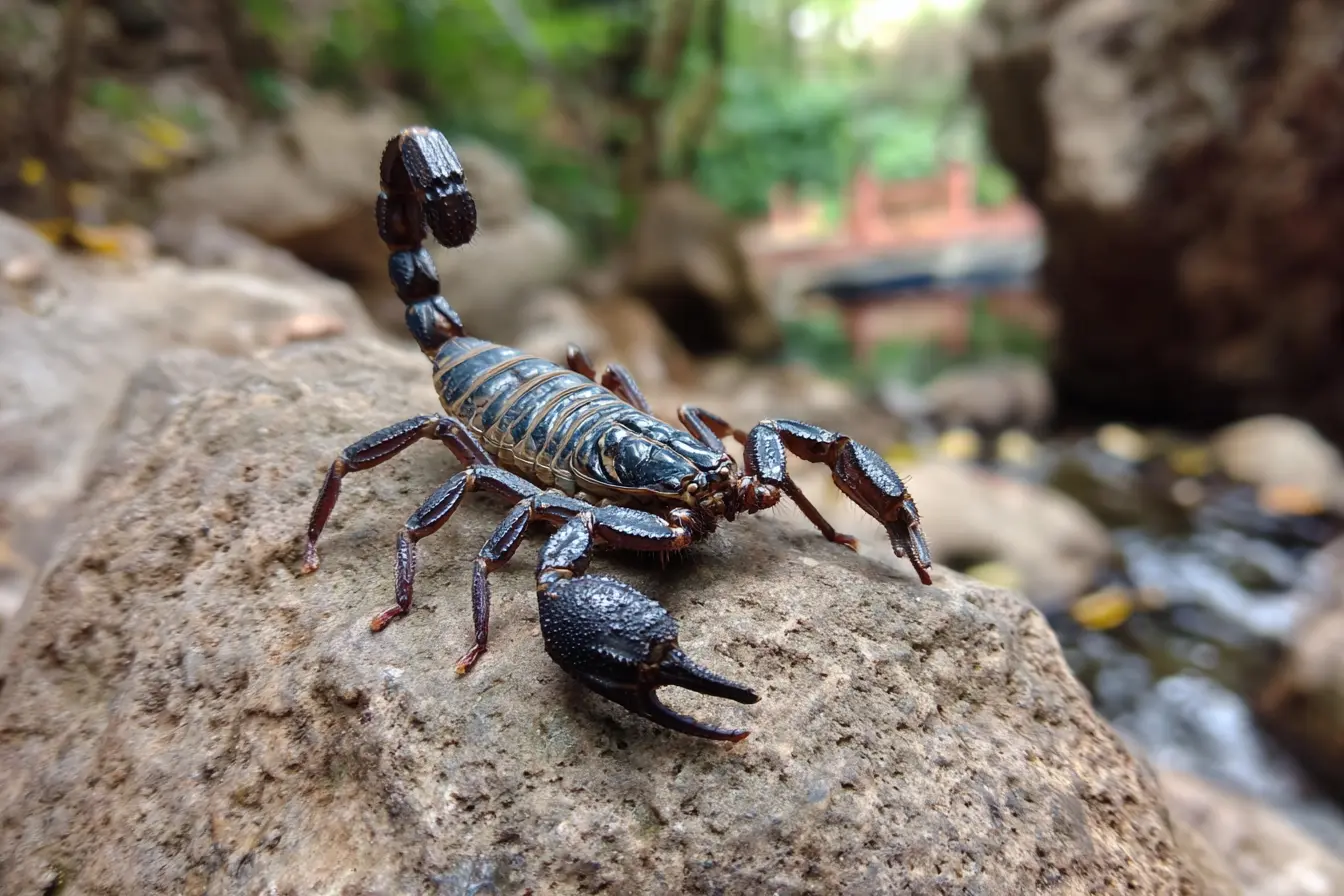
The Laos Forest Scorpion (Heterometrus laoticus) is a large, powerful Old World scorpion native to the tropical forests of Laos and surrounding regions of Southeast Asia. Often confused with other members of the Heterometrus genus, this species is prized for its impressive size, jet-black coloration, and relatively calm disposition compared to more dangerous desert scorpions.
Popular among invertebrate keepers, the Laos Forest scorpion is a visually striking, terrestrial species that makes an excellent display animal when housed correctly.
Why Choose a Laos Forest Scorpion?
This species is well suited to beginners and intermediate keepers who want a large, impressive scorpion without the risks associated with medically significant species.
Large and Imposing: Thick pincers and a robust body give it a commanding presence.
Relatively Mild Venom: Its venom is weak, with effects similar to a bee sting for most people.
Hardy Species: Tolerant of minor care mistakes when compared to arid or high-risk scorpions.
Interesting Behaviour: Active at night and often visible when hunting.
While still not a handling pet, it is far more forgiving than many Old World desert species.
Housing Your Laos Forest Scorpion
Enclosure
A humid, secure enclosure that allows burrowing is essential.
Size: A 30x20x20 cm enclosure is suitable for a single adult. Larger enclosures are acceptable.
Substrate: Provide 8–12 cm of substrate such as coconut fibre, soil, or a soil–sand mix. The substrate should be slightly moist but not wet.
Ventilation: Moderate ventilation is key. Enough airflow to prevent mould without drying the enclosure.
This species is terrestrial and fossorial, spending much of its time under cover.
Decor and Hiding Spots
Cork Bark Flats or Tubes: Essential for providing secure hides.
Leaf Litter: Helps retain humidity and creates a naturalistic environment.
Stable Decor: Ensure all items are firmly placed to prevent collapse during burrowing.
Expect the scorpion to rearrange its enclosure to suit its needs.
Temperature and Humidity
As a tropical forest species, Heterometrus laoticus thrives in warm, humid conditions.
Temperature: 24–28°C, with a slight drop at night.
Heating: Use a heat mat on the side or back of the enclosure if required, always regulated by a thermostat.
Humidity: 70–80% is ideal. Keep the substrate lightly damp and mist occasionally if needed.
Avoid stagnant air, as excessive moisture without airflow can cause mould issues.
Feeding Your Laos Forest Scorpion
Diet
Laos Forest scorpions are opportunistic predators and strong feeders.
Crickets
Dubia or Red Runner Roaches
Locusts
Occasional Mealworms or Waxworms
Feed adults once every 7–10 days. Juveniles can be fed every 5–7 days. Remove uneaten prey within 24 hours.
Overfeeding can lead to obesity, which may shorten lifespan.
Water
Fresh water must always be available.
Provide a shallow water dish with stones or gravel to prevent drowning.
Regular access to water is essential, especially in warmer enclosures.
Handling and Temperament
Handling is discouraged, though this species is often calmer than many others.
Large Pincers: Relies more on physical strength than venom.
Defensive, Not Aggressive: Usually prefers to retreat rather than sting.
Painful Pinch: While venom is mild, the pincers can cause injury.
For maintenance, use long forceps or gently guide the scorpion into a container. Never handle with bare hands.
Health and Common Issues
When housed correctly, Laos Forest scorpions are robust and long-lived.
Common issues include:
Low Humidity: Can cause dehydration or moulting difficulties.
Excess Dampness: Leads to mould, mites, or respiratory stress.
Stress: Caused by excessive handling or frequent enclosure disturbance.
Moulting
Signs of an upcoming moult include:
Reduced appetite.
Increased hiding.
Sluggish movement.
Do not disturb the scorpion during moulting. Ensure humidity is stable and avoid feeding until several days after the moult has completed.
Legal and Ethical Considerations
Laos Forest scorpions are legal to keep in the UK.
Always source from reputable breeders or specialist invert sellers.
Avoid wild-caught specimens where possible to reduce environmental impact.
These scorpions are solitary and should always be housed alone.
Cost of Ownership
The Laos Forest scorpion is affordable and inexpensive to maintain.
Scorpion: £20–£50 depending on size and sex.
Enclosure Setup: £40–£70.
Food: £5–£10 per month.
Utilities: Minimal, mainly heating during colder months.
Conclusion
The Laos Forest Scorpion is an excellent choice for keepers seeking a large, visually impressive scorpion with manageable care requirements. Hardy, relatively calm, and fascinating to observe, it offers all the appeal of a giant forest scorpion without the extreme risks posed by more venomous species.
While not a hands-on pet, it thrives when left undisturbed in a well-maintained, humid enclosure. With proper care and respect, the Laos Forest Scorpion can live for many years and become a standout centrepiece in any invertebrate collection.
Quick questions
- What should I know about laos forest scorpion?
- The Laos Forest Scorpion is a large, calm scorpion native to Southeast Asia, known for its jet-black colour and relatively mild venom. Vet Verified can help you compare UK veterinary practices by location, species, services and opening hours before you call.
- When should I contact a vet about laos forest scorpion?
- Contact a veterinary practice if your pet seems unwell, symptoms are getting worse, you are unsure what to do, or the situation may be urgent. Vet Verified helps you compare practice details, but a vet should advise on your pet's current care.
- Can Vet Verified help me find exotic vets?
- Yes. Use Vet Verified to compare exotic vets across the UK, then check practice profiles and call directly to confirm current availability.
Find a vet
Find a veterinary practice
Compare UK veterinary practices related to this topic. Call the practice to confirm its current services and availability.
Urgent and out-of-hours
- 24-hour vets Find veterinary practices near you that list one or more days as open 24 hours. Compare opening hours, services and contact details, then call before travelling.
- Emergency vets Find veterinary practices near you that list emergency opening hours. Compare contact details and services, then call immediately if your pet needs urgent care.