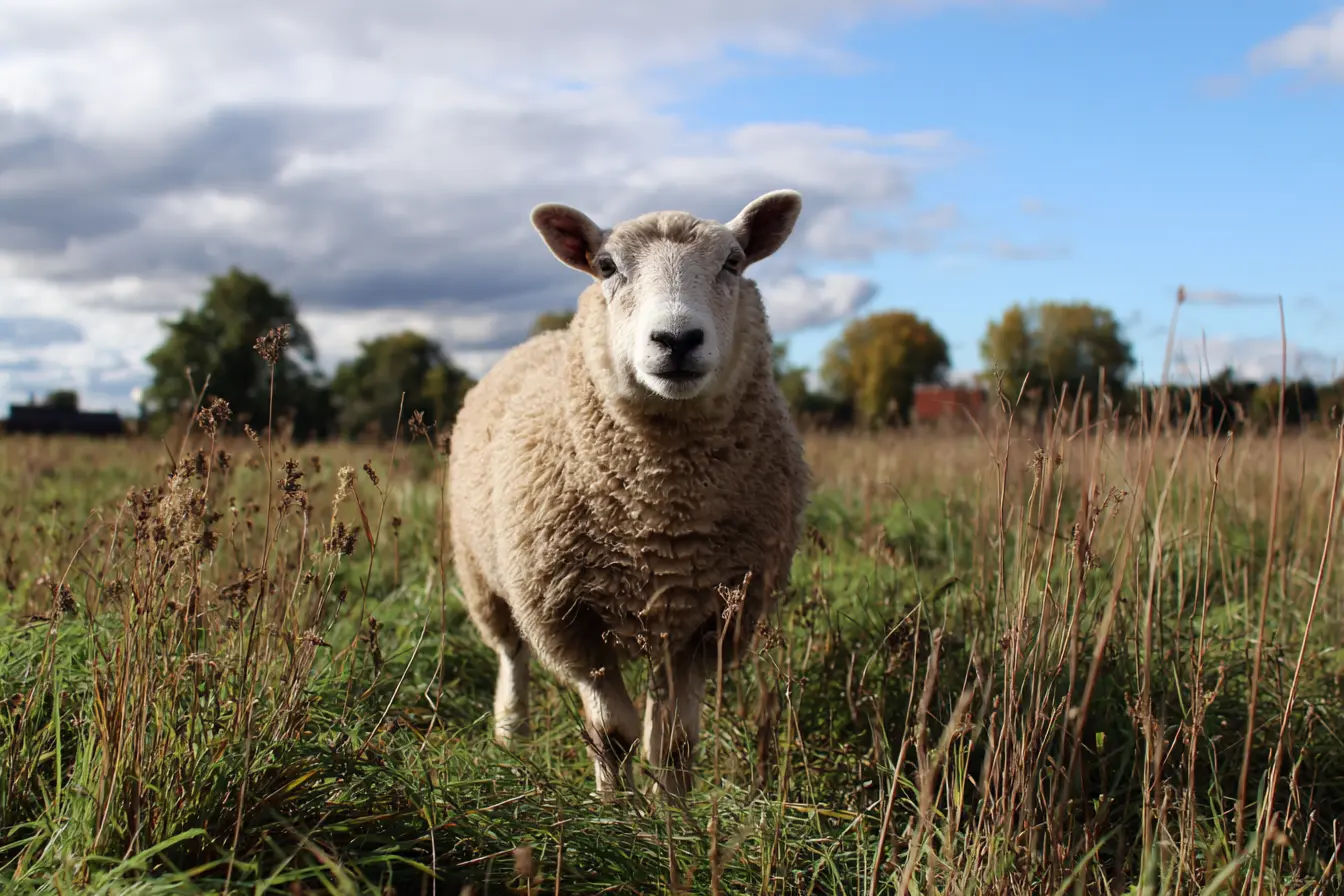
Charollais sheep (often spelled Charolais in France) are one of the most popular terminal sire breeds in the UK, valued for their exceptional growth rates, easy lambing, and ability to produce high-quality prime lambs. Originating from France and now firmly established in British sheep systems, Charollais rams are widely used to improve carcass quality and finishing speed in both commercial and small-scale flocks.
This guide provides a detailed overview of Charollais sheep, covering their history, key characteristics, housing, feeding, health care, breeding, and general management.
A Brief History of Charollais Sheep
Charollais sheep originate from the Charolles region of central France, where they were traditionally bred as a meat sheep. The breed was developed through selective breeding of local sheep to produce fast-growing lambs with well-muscled carcasses.
Charollais sheep were introduced to the UK in the 1970s and quickly gained popularity due to their excellent terminal sire traits. Over time, the breed was further refined to suit UK farming conditions, resulting in a sheep that combines French meat characteristics with British hardiness and management needs.
Today, Charollais are one of the leading terminal sire breeds in the UK sheep industry.
Key Characteristics of Charollais Sheep
Charollais sheep are bred primarily for meat production and efficiency.
Appearance: Creamy white to light pink skin, fine head with a slightly dished profile, and a clean, wool-free face and legs.
Horns: Naturally polled (hornless) in both rams and ewes.
Size: Medium to large breed. Rams typically weigh 100–130kg, while ewes weigh 65–85kg.
Temperament: Calm, alert, and generally easy to handle.
Hardiness: Adaptable and well suited to a wide range of lowland and marginal systems.
Carcass Quality: Excellent muscling, high killing-out percentage, and well-shaped loin and gigot.
Growth Rate: Fast-finishing lambs, ideal for prime lamb production.
Housing for Charollais Sheep
Charollais sheep are adaptable but benefit from good shelter, particularly in more intensive systems.
Shelter Requirements
Natural Shelter: Hedgerows and banks usually provide sufficient protection.
Field Shelters: Useful in exposed or wet conditions.
Winter Housing: Commonly used during lambing or finishing lambs indoors.
Fencing
Standard Sheep Fencing: Generally sufficient.
Electric Fencing: Effective for rotational grazing and pasture control.
Handling Facilities: Well-designed handling systems are recommended, particularly for rams.
Feeding Charollais Sheep
As a high-performance meat breed, Charollais sheep require good nutritional management.
Diet
Pasture: Perform best on good-quality grass.
Winter Forage: Hay or silage is required when grass growth is limited.
Concentrates: Often used for finishing lambs and supporting pregnant or lactating ewes.
Minerals: Provide a sheep-specific mineral supplement suited to local deficiencies.
Water
Fresh, clean water must be available at all times.
Breeding Charollais Sheep
Charollais sheep are primarily used as a terminal sire rather than a maternal breed.
Breeding Characteristics
Age to Breed: Rams can be used from around 12–18 months once fully mature.
Gestation Period: Approximately 147 days.
Lambing Ease: Known for producing lambs with narrow shoulders and small heads, resulting in easy lambing.
Crossbreeding: Commonly crossed with Mule, Lleyn, Welsh Mountain, and other maternal ewes.
Care of Lambs
Lambs are vigorous and quick to suckle.
Rapid early growth allows for early finishing.
Well suited to grass-based or forage-led finishing systems.
Health Care for Charollais Sheep
Routine health management is essential to support productivity and longevity.
Vaccinations
Work with your vet to establish an appropriate vaccination programme, commonly including:
Clostridial diseases
Pasteurellosis
Parasite Control
Use faecal egg counts to guide worming decisions.
Flystrike prevention is important during warmer months.
Monitor for liver fluke in wet grazing areas.
Hoof Care
Foot Trimming: Required periodically, particularly in lowland systems.
Foot Health: Maintain dry conditions to reduce the risk of lameness.
Common Health Issues
Lameness: Requires prompt treatment to maintain growth rates.
Flystrike: Particularly in dense fleece or housed systems.
Condition Loss in Rams: Rams require careful feeding during the breeding season.
Wool and Fleece Management
Wool is a secondary product for Charollais sheep.
Shearing: Typically once per year.
Fleece Type: Medium fleece, usually white.
Wool Uses: Generally used for low-grade wool products or insulation.
Behaviour and Handling
Charollais sheep are well suited to modern farming systems.
Docile Nature: Calm and manageable, even at larger sizes.
Ease of Handling: Respond well to routine and good handling facilities.
Adaptability: Performs well in both grass-based and more intensive systems.
Why Choose Charollais Sheep?
Charollais sheep offer clear advantages for meat-focused systems:
Excellent Terminal Sire: Produces fast-growing, well-muscled lambs.
Easy Lambing: Reduces labour and lambing losses.
Early Finishing: Lambs reach market weight quickly.
Versatility: Performs well across a wide range of maternal ewe types.
Strong Market Demand: Produces lambs that meet modern market specifications.
Conclusion
Charollais sheep are a highly efficient and reliable terminal sire breed, perfectly suited to modern lamb production systems. Their combination of easy lambing, rapid growth, and excellent carcass quality makes them a firm favourite with commercial producers across the UK.
With good nutrition, sensible health care, and appropriate management, Charollais sheep can deliver consistent and profitable results. By choosing Charollais, producers are investing in a proven breed that excels in producing high-quality prime lambs for today’s market.
Quick questions
- What should I know about charollais sheep?
- Charollais sheep are a popular terminal sire breed in the UK, known for their fast growth, easy lambing, and high-quality meat production. Originating from France, these sheep have adapted well to British farming environments. Vet Verified can help you compare UK veterinary practices by location, species, services and opening hours before you call.
- When should I contact a vet about charollais sheep?
- Contact a veterinary practice if your pet seems unwell, symptoms are getting worse, you are unsure what to do, or the situation may be urgent. Vet Verified helps you compare practice details, but a vet should advise on your pet's current care.
- Can Vet Verified help me find a vet?
- Yes. Use Vet Verified to compare UK veterinary practices by location, species, services and opening hours, then call directly to confirm current availability.
Find a vet
Find a veterinary practice
Compare UK veterinary practices related to this topic. Call the practice to confirm its current services and availability.
Find a vet