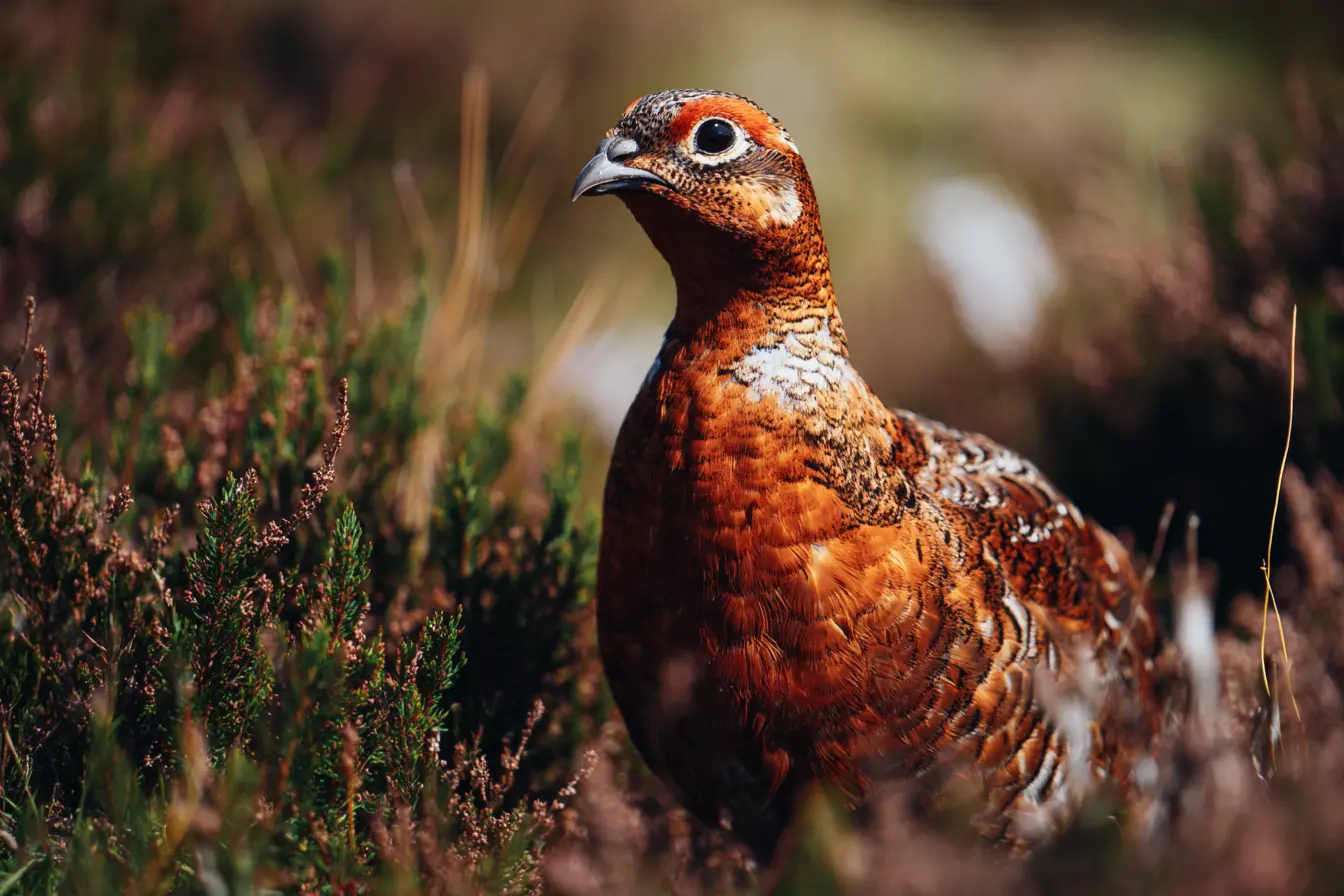
Grouse are among the most iconic game birds of the British uplands. Known for their beauty, resilience, and association with heather moorlands, grouse are both ecologically and economically important. Keeping grouse, whether for conservation, game management, or study, requires deep understanding of their habitat, diet, breeding cycle, and legal protection. This guide provides a detailed overview of everything you need to know about keeping grouse in the United Kingdom.
Understanding Grouse
Grouse are medium-sized birds that belong to the family Tetraonidae. They are native to the UK and perfectly adapted to upland environments, particularly heather moorland and rough grassland. There are four native species found in Britain:
Red Grouse (Lagopus lagopus scotica) – The most common and the only bird species unique to the British Isles.
Black Grouse (Lyrurus tetrix) – A declining but protected species known for its distinctive lekking displays.
Capercaillie (Tetrao urogallus) – A large woodland grouse found in parts of Scotland, now endangered and strictly protected.
Ptarmigan (Lagopus muta) – A high-altitude species living in the Scottish Highlands, perfectly adapted to cold mountain conditions.
Of these, the Red Grouse is the primary species managed and, in some cases, semi-kept under controlled moorland management for shooting or conservation.
Legal and Ethical Considerations
Grouse are wild birds, and in almost all cases, it is illegal to capture, confine, or rear them without specific authorisation. The Wildlife and Countryside Act 1981 provides strict protection, particularly for species like the Black Grouse and Capercaillie. The Red Grouse, while not protected in the same way, is managed under game laws and must only be shot within the open season.
Grouse Shooting Seasons
Red Grouse: 12 August to 10 December (the famous "Glorious Twelfth")
Black Grouse: 20 August to 10 December (though shooting is now rare due to conservation concerns)
It is illegal to keep or breed grouse in captivity without a licence from the Animal and Plant Health Agency (APHA) or relevant authority. Conservation projects working with grouse populations must adhere to strict welfare and ecological standards.
Habitat Requirements
Grouse are highly specialised birds that depend on natural habitats rather than artificial enclosures. Their success is closely tied to the health of the moorland ecosystem.
Red Grouse Habitat
Red Grouse thrive on heather-dominated moorland. The ideal environment includes:
Heather at mixed stages of growth to provide both cover and food.
Areas of rough grassland and bog for insect life and nesting material.
Open spaces for flying and territorial displays.
Controlled predator levels and minimal human disturbance.
Traditional moorland management includes rotational burning or cutting of heather to maintain a patchwork of young shoots for feeding and older stands for shelter and nesting.
Black Grouse Habitat
Black Grouse prefer the interface between moorland and woodland. They need:
Mixed heather and grass for feeding.
Scattered trees and shrubs for cover.
Wetland areas and invertebrate-rich ground for chicks.
Open clearings for lekking (courtship displays).
Conservation projects often aim to restore such transitional habitats to encourage population recovery.
Feeding and Nutrition
Wild grouse feed mainly on natural vegetation, so providing an artificial diet is rarely practical or necessary except in conservation or rehabilitation settings.
Red Grouse Diet: Primarily young heather shoots, berries, mosses, and seeds. In summer, chicks eat insects such as beetles and caterpillars for protein.
Black Grouse Diet: Buds, shoots, seeds, and insects; they also feed on grasses and leaves from shrubs and trees.
In captive or rehabilitative care, grouse may be fed on specialist game bird feed with added greens and berries to mimic their natural diet.
Breeding and Rearing Grouse
Grouse are ground-nesting birds that breed annually in spring. Their breeding success depends heavily on habitat quality and predator control.
Breeding Behaviour
Mating occurs between March and May.
Red Grouse are monogamous, while Black Grouse males display in communal leks to attract females.
Nests are shallow scrapes lined with grass and heather.
The female lays 6 to 10 eggs, which she incubates for about 25 days.
Chick Development
Chicks are precocial, meaning they are mobile and feeding within hours of hatching. Their survival depends on the availability of insects and shelter. Around 50% of chicks may not survive to adulthood, largely due to weather, predation, or poor habitat.
In controlled conservation environments, eggs or chicks may occasionally be raised under licence. This requires:
Temperature-controlled brooders (around 35°C initially)
Access to insect-based starter feed
Gradual exposure to natural conditions
Release into suitable habitat once feathered and self-sufficient
Health and Disease Management
Grouse are susceptible to several diseases, especially when populations are dense or when natural ecosystems are disturbed.
Common Health Issues
Strongyle Worms: Parasitic worms that can cause "grouse disease" and reduce breeding success. Controlled through medicated grit or habitat management.
Louping Ill Virus: Transmitted by ticks, affecting the nervous system. Managed through tick control measures and maintaining healthy sheep populations.
Coccidiosis: A gut parasite affecting chicks; controlled through hygiene and healthy vegetation cover.
Gamekeepers often provide medicated grit on moors to help control parasitic worms, though this must be used responsibly to prevent environmental contamination.
Predator Control
Responsible predator management is a key part of moorland management. Predators such as foxes, stoats, crows, and raptors can heavily impact grouse populations, especially during nesting season. Legal, humane methods of predator control may be used, following government guidelines and ethical standards.
Conservation and Moorland Management
Conservation of grouse habitats benefits a wide range of wildlife, including curlews, lapwings, and mountain hares. Key conservation measures include:
Restoring heather moorland through controlled burning and re-seeding.
Managing grazing pressure from deer and sheep.
Creating wet flushes and insect-rich feeding areas for chicks.
Preventing illegal persecution of protected predators.
Projects such as the Black Grouse Recovery Project and RSPB’s capercaillie conservation work focus on habitat restoration and sustainable moorland management.
Handling and Observation
Grouse should only be handled by trained professionals or under licence. They are easily stressed, and improper handling can lead to injury or death. In research or conservation, birds are sometimes trapped using walk-in traps for tagging or monitoring before being released promptly.
Observation from a distance, using binoculars or hides, is the best way to enjoy these birds without disturbance.
Ethical and Environmental Responsibility
Keeping grouse is not the same as keeping domestic poultry. These are wild birds with complex ecological relationships. Any management, breeding, or conservation effort must prioritise biodiversity, sustainability, and ethical treatment. Interventions should always aim to support wild populations rather than domesticate them.
Conclusion
Grouse are emblematic of Britain’s upland landscapes, representing both natural beauty and the delicate balance between human management and wildlife conservation. Keeping or managing grouse requires a deep understanding of their ecology, adherence to legal frameworks, and a commitment to protecting the moorlands they depend on. With careful, ethical management, these remarkable birds can continue to thrive as part of the unique British countryside for generations to come.
Quick questions
- What should I know about grouse?
- Grouse are vital birds in the British uplands, found mainly in heather moorlands. Vet Verified can help you compare UK veterinary practices by location, species, services and opening hours before you call.
- When should I contact a vet about grouse?
- Contact a veterinary practice if your pet seems unwell, symptoms are getting worse, you are unsure what to do, or the situation may be urgent. Vet Verified helps you compare practice details, but a vet should advise on your pet's current care.
- Can Vet Verified help me find bird vets?
- Yes. Use Vet Verified to compare bird vets across the UK, then check practice profiles and call directly to confirm current availability.
Find a vet
Find a veterinary practice
Compare UK veterinary practices related to this topic. Call the practice to confirm its current services and availability.