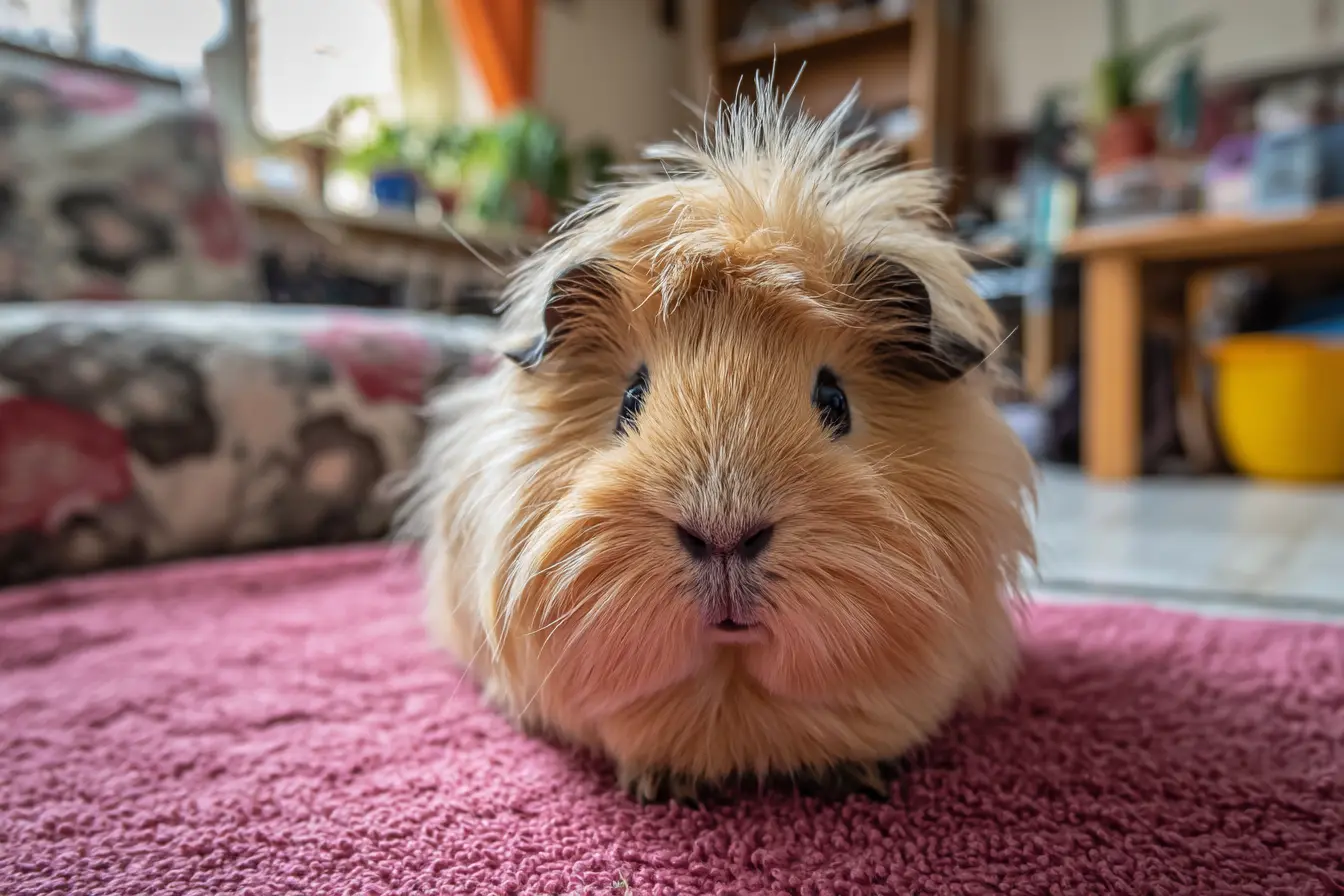
Silkie guinea pigs, also known as Sheltie guinea pigs, are a stunning long-haired breed, admired for their smooth, flowing coats and calm temperaments. With hair that grows backwards from the head and drapes elegantly over the body, Silkies are often described as one of the most beautiful guinea pig breeds. They are gentle, affectionate pets, but their grooming needs make them better suited to dedicated keepers.
In this post, we’ll explore everything you need to know about Silkie guinea pigs, from their origins and appearance to housing, diet, grooming, health, and whether they might be the right breed for you.
What Are Silkie Guinea Pigs?
Silkie guinea pigs are a long-haired breed of Cavia porcellus. The breed was first developed in the United States during the 1970s through a cross between Peruvian guinea pigs (known for long hair that grows from a central part) and self (short-haired) guinea pigs. The result was a guinea pig with long, smooth hair that flows backwards from the head rather than forward over the face.
Unlike Peruvians, Silkies do not have hair covering their face, giving them a neat and elegant appearance. This makes them easier to manage than Peruvians, though they still require regular grooming.
Key Characteristics
Size: 20–25 cm in length, weighing 700–1,200 g (females are smaller than males)
Lifespan: 5–7 years on average
Temperament: Calm, gentle, affectionate, and usually more relaxed than some short-haired breeds
Appearance: Long, smooth hair that flows backwards over the body, leaving the face uncovered
Colours/Patterns: Wide variety, including solid, bicolour, tricolour, agouti, and more
Their serene look and gentle nature make them particularly appealing as pets and show animals.
Social Needs
Like all guinea pigs, Silkies are social animals that thrive in groups. They should never be kept alone.
Best Practices:
Keep in pairs or small groups. Same-sex groups or neutered pairs are safest for non-breeders.
Females usually live together harmoniously, while males may need careful introductions.
They rely on both guinea pig companionship and daily interaction with humans to stay happy.
A solitary Silkie will become lonely and unhealthy.
Housing and Environment
Silkies require spacious, clean housing that allows them to move freely while protecting their long coats from excessive dirt.
Enclosure Requirements:
Indoor cage size: At least 120 cm x 60 cm for a pair (larger is always better).
Outdoor hutches: Must be predator-proof, waterproof, and insulated, with access to a secure run.
Bedding: Fleece liners, paper-based bedding, or kiln-dried wood shavings (aspen). Avoid pine and cedar (toxic).
Nesting material: Hay is essential, though care should be taken to prevent knots in the coat.
Temperature: Keep between 18–24°C, avoiding dampness, draughts, and excessive heat.
Enrichment:
Hideouts, tunnels, and chew toys.
Regular floor time in a safe, enclosed area.
Outdoor grazing in suitable weather, with coat checks afterwards to remove debris.
Silkies benefit from more frequent cage cleaning than short-haired breeds, as their coats can drag in bedding and waste.
Diet and Nutrition
Silkies, like all guinea pigs, require a diet rich in fibre and vitamin C.
Core Diet:
Hay: Unlimited timothy, meadow, or orchard hay, crucial for digestion and dental health.
Pellets: Guinea pig pellets fortified with vitamin C.
Vegetables: Daily portions of leafy greens and vegetables such as kale, spinach, romaine lettuce, bell peppers, cucumber, and carrots.
Fruits: Occasional treats like apple, strawberry, or blueberry.
Supplements: Vitamin C supplementation if diet is insufficient.
Foods to Avoid:
Iceberg lettuce (poor nutritional value).
Onions, garlic, and leeks (toxic).
Potato, rhubarb, and tomato leaves (toxic).
Processed food, seeds, or nuts.
Fresh, clean water should always be available in bottles or bowls.
Grooming Needs
Silkie guinea pigs require regular grooming to keep their coats in good condition. Their hair is long but less prone to matting than a Peruvian’s, as it flows back rather than covering the face and dragging forward.
Grooming Guide:
Brushing: Brush every 2–3 days with a soft-bristled brush or wide-toothed comb. Daily brushing is recommended for show-quality Silkies.
Trimming: Trim hair around the rear to prevent soiling and discomfort. Some keepers keep pets in a “pet cut” (shorter coat) for easier maintenance.
Bathing: Only when necessary. Use guinea pig-safe shampoo and ensure they are dried thoroughly.
Nail trimming: Every 4–6 weeks.
Health checks: Regularly inspect skin for parasites or irritation.
Grooming not only prevents tangles and hygiene issues but also strengthens the bond between you and your guinea pig.
Handling and Behaviour
Silkies are known for their calm and gentle temperaments. They are often more relaxed than energetic breeds like Abyssinians, making them good lap pets once they trust you.
Handling Tips:
Support their body with both hands.
Be gentle to avoid tugging on their long hair.
Start with short sessions to build confidence.
Use grooming and lap time as bonding opportunities.
They enjoy human interaction but, like all guinea pigs, may be shy at first.
Unique Traits
Long, smooth coat: Grows backwards, leaving the face clear.
Elegant appearance: Often described as one of the most beautiful guinea pig breeds.
Calm personality: Gentle and relaxed, making them ideal for quiet households.
Moderate grooming needs: Require more care than short-haired breeds but less than Peruvians.
Health and Common Issues
Silkies are generally healthy, but their coats require extra vigilance.
Common Health Concerns:
Vitamin C deficiency (scurvy): Prevent with a vitamin C-rich diet.
Respiratory infections: Linked to poor ventilation, damp bedding, or stress.
Dental problems: Overgrown teeth caused by lack of hay.
Skin issues: Parasites such as mites or lice may hide in long fur.
Coat soiling: Long hair can trap dirt or waste without regular grooming.
Good husbandry, a balanced diet, and regular health checks are essential.
Is a Silkie Guinea Pig Right for You?
Silkies are ideal for:
Keepers who appreciate long-haired breeds and can commit to grooming.
Families with older children who can help with regular care.
People looking for a calm, gentle guinea pig with a striking appearance.
Enthusiasts interested in showing guinea pigs.
They may not be suitable for:
Very young children or households seeking a low-maintenance pet.
First-time keepers unprepared for grooming demands.
People with limited time for daily or weekly coat care.
Conclusion
Silkie guinea pigs are elegant, gentle, and affectionate companions, adored for their long, flowing coats and calm personalities. While they require more grooming than short-haired breeds, they are less demanding than Peruvians, making them a good choice for those who want a long-haired guinea pig without the most extreme maintenance.
For dedicated keepers ready to commit to regular brushing, trimming, and coat care, the Silkie guinea pig is a beautiful and rewarding pet that offers companionship, charm, and a touch of glamour.
Quick questions
- What should I know about silkie guinea pigs?
- Silkie guinea pigs, also called Sheltie guinea pigs, are admired for their long, smooth coats and gentle temperaments, making them ideal pets for those willing to commit to grooming. Vet Verified can help you compare UK veterinary practices by location, species, services and opening hours before you call.
- When should I contact a vet about silkie guinea pigs?
- Contact a veterinary practice if your pet seems unwell, symptoms are getting worse, you are unsure what to do, or the situation may be urgent. Vet Verified helps you compare practice details, but a vet should advise on your pet's current care.
- Can Vet Verified help me find a vet?
- Yes. Use Vet Verified to compare UK veterinary practices by location, species, services and opening hours, then call directly to confirm current availability.
Find a vet
Find a veterinary practice
Compare UK veterinary practices related to this topic. Call the practice to confirm its current services and availability.
Find a vet