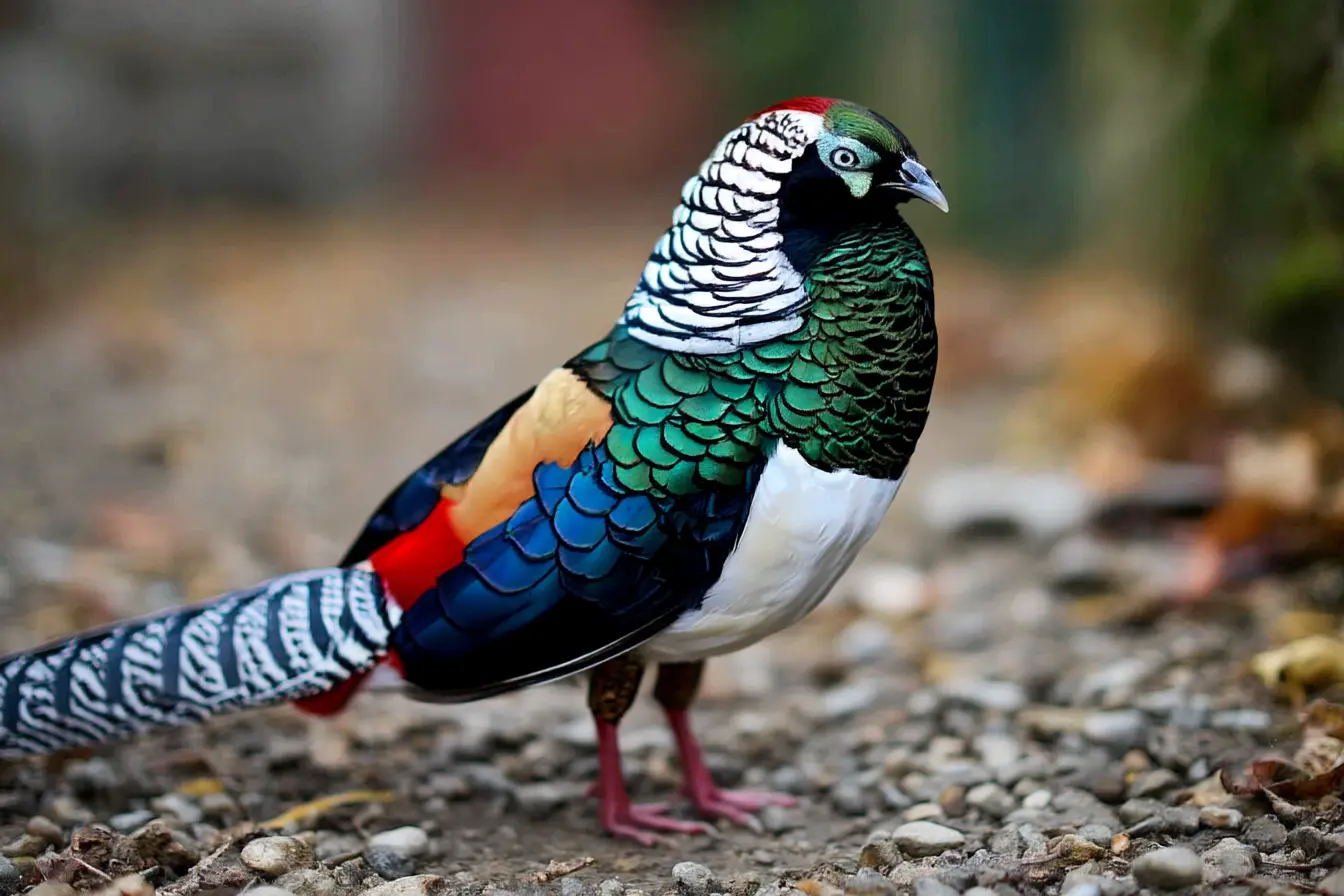
Lady Amherst’s Pheasant is one of the most exotic and visually striking birds kept in the United Kingdom. Known for its extraordinary plumage and graceful movements, it has long been a favourite among avicultural enthusiasts and ornamental bird keepers. Closely related to the Golden Pheasant, it shares many of the same care requirements but stands out for its unique beauty and elegance.
This guide provides everything prospective owners need to know about keeping Lady Amherst’s Pheasants, from housing, feeding, and breeding to health and legal responsibilities.
Understanding Lady Amherst’s Pheasant
The Lady Amherst’s Pheasant (Chrysolophus amherstiae) is native to the dense mountain forests of southwestern China and Myanmar. It was first brought to Britain in the 19th century by Sarah, Countess Amherst, after whom the species was named. Small feral populations once existed in the UK, particularly in southern England, though they have now largely disappeared.
Key Characteristics
Size: 100–120 cm in length (males have long, ornate tails)
Weight: Around 600–700 grams
Lifespan: 10–15 years in captivity
Temperament: Calm but shy; males may become territorial during breeding
Habitat: Forests with dense undergrowth and open clearings
Diet: Grains, greens, insects, and berries
Appearance
The male Lady Amherst’s Pheasant is one of the most striking birds in the world. It features a metallic green and blue back, a white ruff edged in black, and a silver head with red, green, and yellow plumage. Its tail is long and patterned with alternating black and white bars. The female is brown, finely mottled, and much less colourful, allowing her to blend into her surroundings when nesting.
Legal Considerations
Keeping Lady Amherst’s Pheasants in the UK does not require a licence, as they are not protected under British wildlife law. However, keepers must comply with the Animal Welfare Act 2006, ensuring that all birds receive proper housing, nutrition, and care.
If you intend to breed and sell these birds commercially, you may need to register your premises with the Animal and Plant Health Agency (APHA). Always check for updates to animal welfare or aviculture regulations.
Acquiring Birds
Lady Amherst’s Pheasants are widely available from reputable breeders and ornamental bird suppliers across the UK. When purchasing birds, choose healthy, well-reared individuals with:
Bright, clear eyes and alert posture
Smooth, glossy feathers
Clean feet and vent area
No signs of laboured breathing or lethargy
Juvenile birds (poults) are easier to acclimatise than adults and tend to adapt well to new environments. Always ask breeders about the birds’ parentage, diet, and any vaccinations or treatments given.
Housing and Enclosures
Lady Amherst’s Pheasants are hardy and can be kept outdoors year-round in most parts of the UK. They require secure, spacious enclosures that provide protection, shade, and opportunities for natural behaviour.
Aviary Design
Minimum size: 4–6 metres long, 2–3 metres wide, and 2–2.5 metres high per pair.
Frame: Strong wood or metal, covered with welded mesh (no larger than 25 mm).
Roof: Partially covered to provide shelter from rain and strong sunlight.
Flooring: Grass or soil substrate for scratching and foraging.
Perches: Wooden or natural branches at different heights for roosting.
Vegetation: Add bamboo, conifers, or ornamental shrubs to create cover.
Lady Amherst’s Pheasants prefer shaded, quiet environments and will feel most secure if the aviary includes dense planting and visual barriers. They can fly, so a fully enclosed structure or roof netting is essential to prevent escape.
Location
Place the aviary in a sheltered area, protected from wind and excessive noise.
Avoid low-lying ground that may flood.
Ensure good drainage to prevent mud and dampness.
Clean, dry conditions are essential for preventing foot problems and respiratory disease.
Feeding and Nutrition
Lady Amherst’s Pheasants are omnivorous and require a varied, balanced diet to stay healthy and maintain their bright plumage.
Daily Feeding
Base feed: Quality game bird or pheasant pellets (16–18% protein).
Grains: Wheat, maize, and barley.
Greens: Lettuce, spinach, cabbage, dandelion, and clover.
Fruits and vegetables: Small pieces of apple, carrot, or berries.
Protein supplements: Mealworms or boiled egg during breeding season.
Always provide clean, fresh water in heavy or raised dishes to prevent tipping. Offer grit to aid digestion and oyster shell for calcium, especially for breeding hens.
Feeding Routine
Feed once or twice daily at regular times. Scatter some grain on the ground to encourage natural foraging and activity. Remove any uneaten food daily to maintain hygiene and deter pests.
Breeding and Reproduction
Lady Amherst’s Pheasants are relatively easy to breed in captivity under the right conditions. They reach sexual maturity at around one year of age.
Breeding Season
Typically runs from March to July.
Males display elaborate courtship dances, fanning their cape and tail.
One male can be kept with two or three hens.
Nesting
Hens build shallow ground nests in secluded areas, often beneath shrubs or thick vegetation. Provide nesting boxes or small piles of hay, straw, or dry leaves to encourage natural nesting behaviour.
Egg Laying and Incubation
Average clutch: 10–12 eggs per season.
Incubation period: 23–24 days.
Temperature: 37.5°C.
Humidity: 50–55% during incubation, increased to 65% for hatching.
Turn eggs three to four times daily until day 21.
Hens may sit and hatch eggs naturally, but artificial incubation ensures greater consistency. After hatching, chicks should be transferred to a warm brooder.
Raising Chicks
Brooder temperature: 35°C, reduced by 3°C each week.
Bedding: Dry wood shavings or straw.
Feed: High-protein game bird crumb (28–30% protein).
Water: Shallow dishes to prevent drowning.
Once fully feathered (around six weeks), chicks can move to outdoor pens.
Health and Welfare
Lady Amherst’s Pheasants are generally robust but require good husbandry to remain healthy.
Common Health Issues
Coccidiosis: A gut parasite; prevent with clean housing and medicated feed if necessary.
Worms: Regular worming recommended every 3–4 months for outdoor birds.
External parasites: Mites and lice can be prevented with dust baths and regular inspection.
Respiratory illness: Avoid damp bedding and poor ventilation.
Feather pecking: Caused by overcrowding or boredom; ensure sufficient space and enrichment.
Hygiene and Biosecurity
Clean aviaries weekly and disinfect feeders and drinkers.
Replace soiled bedding regularly.
Prevent wild birds and rodents from accessing feed.
Quarantine new birds before introducing them to existing stock.
Healthy birds are alert, active, and well-feathered. Watch for changes in appetite or behaviour as early signs of illness.
Behaviour and Temperament
Lady Amherst’s Pheasants are shy but calm birds. They prefer quiet surroundings and can become stressed by sudden noises or excessive handling. Over time, they may grow accustomed to their keeper’s presence and can be observed easily once settled.
Males may become territorial during breeding season, so avoid housing more than one cock in the same pen unless the space is very large. They are generally peaceful with other species when kept in separate but adjoining enclosures.
Winter Care
These pheasants are hardy and can tolerate cold UK winters, provided they have shelter and dry conditions.
Offer a dry, insulated roost with straw or wood shavings.
Ensure feed and water are not frozen.
Increase high-energy grains during colder months.
Protect from wind and snow with solid panels or windbreaks.
Avoid confining them indoors for long periods, as access to natural light is essential for good health.
Record Keeping
Maintain detailed records of breeding, health treatments, and behaviour. Include:
Dates of egg laying and hatching.
Parent pairings.
Feed and worming schedules.
Mortality and illness reports.
Good record keeping helps track progress and maintain healthy, genetically diverse stock.
Conservation and Ornamental Value
While no longer found in the wild in the UK, Lady Amherst’s Pheasant remains popular in private collections and aviaries for its aesthetic appeal and historical association with Britain’s avicultural heritage.
Captive breeding contributes to maintaining viable populations of this species worldwide. As ornamental birds, they are excellent ambassadors for promoting appreciation of wildlife and avian conservation.
Conclusion
Keeping Lady Amherst’s Pheasants is a rewarding experience for those who appreciate beauty, tranquillity, and responsible bird care. Their exquisite plumage, gentle temperament, and relatively low maintenance make them a superb choice for ornamental aviaries or small collections.
By providing secure housing, balanced nutrition, and thoughtful management, these magnificent birds will flourish, bringing colour, grace, and a touch of the exotic to your garden or estate for many years to come.
Quick questions
- What should I know about lady amherst's pheasant?
- Lady Amherst's Pheasant is a visually striking bird popular in the UK for its beauty and ease of care. This comprehensive guide covers everything from housing and feeding to breeding and legalities. Vet Verified can help you compare UK veterinary practices by location, species, services and opening hours before you call.
- When should I contact a vet about lady amherst's pheasant?
- Contact a veterinary practice if your pet seems unwell, symptoms are getting worse, you are unsure what to do, or the situation may be urgent. Vet Verified helps you compare practice details, but a vet should advise on your pet's current care.
- Can Vet Verified help me find exotic vets?
- Yes. Use Vet Verified to compare exotic vets across the UK, then check practice profiles and call directly to confirm current availability.
Find a vet
Find a veterinary practice
Compare UK veterinary practices related to this topic. Call the practice to confirm its current services and availability.
Search by species
- Exotic vets Find UK veterinary practices that list care for exotic pets. Compare opening hours, services, facilities and verified profiles, then contact a practice directly.
- Bird vets Find UK veterinary practices that list care for birds. Compare opening hours, services, facilities and verified profiles, then contact a practice directly.