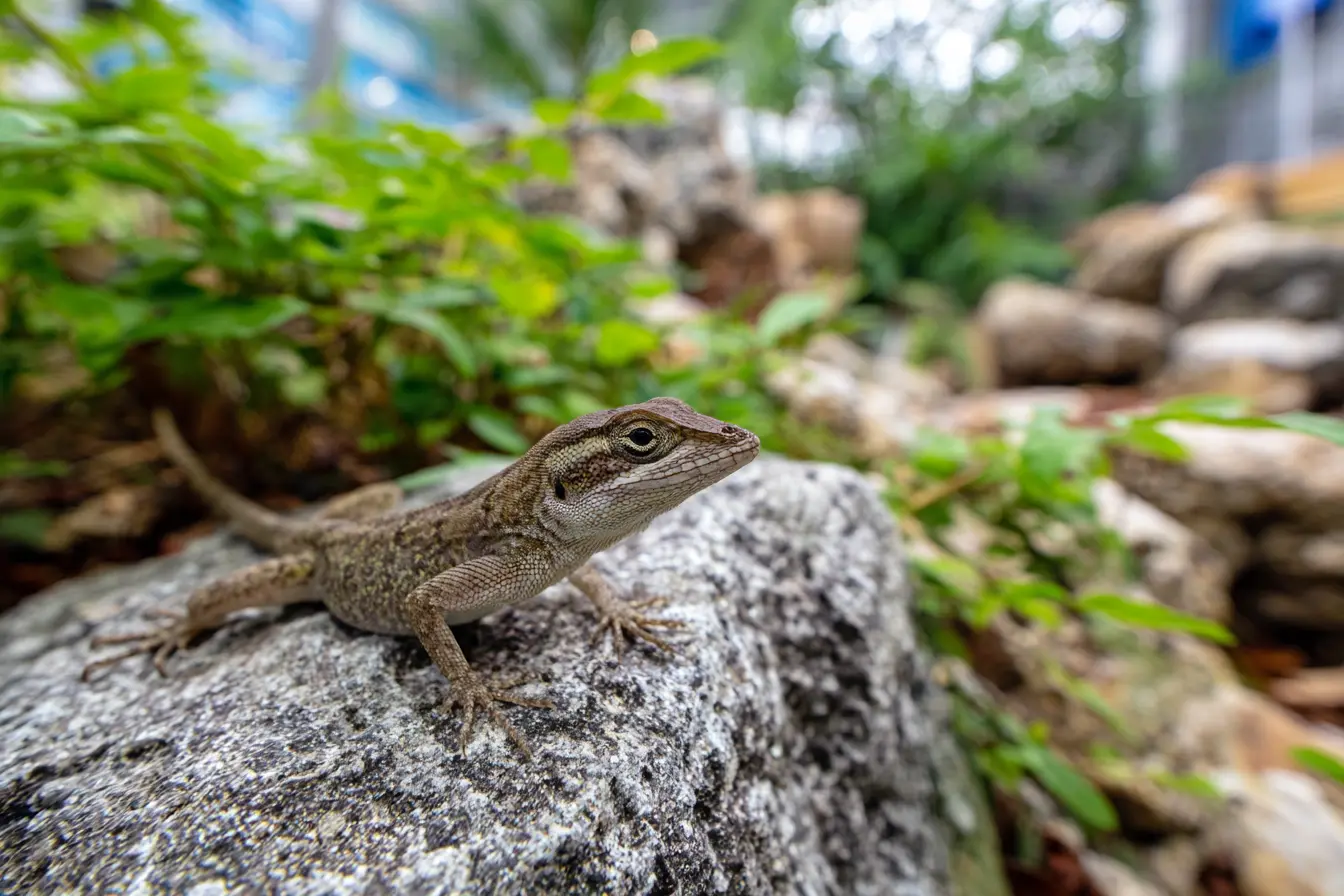
The Brown Anole (Anolis sagrei) is one of the most adaptable and widely distributed anole species in the world. Often overlooked in favour of more brightly coloured relatives, this small but charismatic lizard more than makes up for it with bold behaviour, fascinating displays, and remarkable hardiness.
Native to the Caribbean but now established across much of the southern United States and beyond, the Brown Anole is a textbook example of a successful reptilian colonist. Active, expressive, and relatively straightforward to care for, it makes an engaging display species for keepers interested in anole behaviour and naturalistic vivariums.
Origins and Natural Habitat
The Brown Anole originates from Cuba, the Bahamas, and surrounding Caribbean islands. Through accidental and intentional introductions, it has become firmly established in Florida, much of the southeastern USA, parts of Central America, and even areas of Asia and the Pacific.
In the wild, Brown Anoles thrive in disturbed habitats as well as natural ones. They are commonly found in gardens, parks, forest edges, stone walls, fences, and buildings. Unlike many anoles, they are largely terrestrial and low-perching, spending much of their time close to the ground on tree trunks, rocks, and leaf litter.
Highly adaptable, they tolerate a wide range of temperatures and humidity levels, which contributes to their success as an introduced species.
Appearance and Temperament
Physical Traits
Size: 12–20 cm in total length, including the tail
Colouration: Brown, grey, or tan, often with darker chevrons or mottling along the back
Colour change: Can darken or lighten slightly depending on mood, temperature, and environment
Dewlap: Males possess a large, bright red or orange-red dewlap bordered with yellow
Build: Compact and muscular, with strong limbs and a robust head
Behaviour and Temperament
Brown Anoles are bold, alert, and highly territorial. Males are particularly expressive, frequently performing push-ups, head-bobs, and dramatic dewlap extensions to ward off rivals or court females.
In captivity, they are confident display animals once settled. They are not aggressive towards keepers but are quick and easily stressed by handling. Like most anoles, they are best appreciated through observation rather than interaction.
Housing Requirements
Brown Anoles thrive in a well-ventilated, naturalistic vivarium that provides both vertical and horizontal space.
Enclosure Size
Single adult: Minimum 45 cm x 45 cm x 60 cm
Pair or trio (1 male, 2 females): 60 cm x 45 cm x 90 cm
While they are less arboreal than many anoles, vertical space remains important for display and security.
Heating and Temperature Gradient
Basking spot: 30–32°C
Ambient daytime temperature: 24–28°C
Night-time: Drop to 20–22°C
Provide heat using a low-wattage basking bulb positioned over a branch or rock near the upper third of the enclosure.
Lighting and UVB
UVB lighting (5–7%) is essential for long-term health and calcium metabolism. Brown Anoles are diurnal and rely on UV exposure to thrive.
Bright, white daylight lighting is strongly recommended alongside UVB, as it encourages natural activity and enhances display behaviour. Maintain a 12-hour day/night cycle.
Humidity and Water
Maintain humidity between 60–80%.
Mist the enclosure daily, preferably in the morning
Provide a shallow water dish, though most drinking occurs from droplets on leaves
Good ventilation is essential to prevent stagnant air and respiratory issues.
Substrate and Furnishings
Substrate: Coconut fibre, soil-based bioactive mix, or leaf litter
Decor: Branches, cork bark, rocks, and climbing structures at varying heights
Plants: Pothos, philodendron, ficus, and bromeliads work well
Hides: Dense foliage and ground-level cover for security
A planted vivarium encourages natural behaviour and reduces stress.
Diet and Feeding
Brown Anoles are insectivorous and enthusiastic hunters.
Feeding Schedule
Juveniles: Daily
Adults: Every other day
Food Items
Crickets
Small roaches
Fruit flies (especially for juveniles)
Small locusts
Occasional waxworms or mealworms as treats
All prey should be gut-loaded and dusted with supplements.
Supplementation
Calcium without D3: At most feeds
Calcium with D3: Once or twice weekly
Multivitamin: Once weekly
Offer food during daylight hours when the lizards are most active.
Handling and Interaction
Handling is not recommended except when absolutely necessary. Brown Anoles are fast and may drop their tails if restrained.
If handling is unavoidable:
Move slowly and calmly
Avoid grabbing from above
Support the body gently without squeezing
With time, many individuals become comfortable feeding and displaying in the keeper’s presence.
Common Health Concerns
Metabolic Bone Disease (MBD)
Caused by inadequate UVB or calcium. Prevented with proper lighting and supplementation.
Dehydration
Ensure consistent misting and access to clean water.
Stress and Tail Loss
Often caused by overcrowding or excessive handling. Provide ample space and visual barriers.
Parasites
Wild-caught specimens may carry parasites. Veterinary screening is recommended.
Lifespan and Breeding
Brown Anoles typically live 4–6 years in captivity, though some individuals live longer with excellent care.
Breeding is straightforward. Males actively court females with dewlap displays and head-bobbing. Females lay single eggs every 1–2 weeks, burying them in moist substrate. Eggs hatch after 4–6 weeks at around 27–29°C.
Hatchlings are tiny and should be fed fruit flies or pinhead insects.
Observation and Enrichment
Despite their modest size, Brown Anoles offer rich behavioural interest.
Enrichment ideas include:
Multiple basking and display sites
Live plants and leaf litter
Varying feeding locations
Occasional enclosure rearrangement
Their constant displays and territorial interactions make them engaging to observe.
Conclusion
The Brown Anole is a hardy, expressive, and endlessly interesting lizard that proves beauty is not always about bright colours. With its bold personality, dramatic displays, and adaptability, it is an excellent choice for keepers interested in naturalistic vivariums and behavioural observation.
While not a species for handling, the Brown Anole rewards attentive care with confidence, activity, and a glimpse into the dynamic social world of anoles.
Quick questions
- What should I know about brown anole?
- The Brown Anole (Anolis sagrei) is a small, adaptable lizard found in the Caribbean and now across parts of the USA, Central America, and beyond. Vet Verified can help you compare UK veterinary practices by location, species, services and opening hours before you call.
- When should I contact a vet about brown anole?
- Contact a veterinary practice if your pet seems unwell, symptoms are getting worse, you are unsure what to do, or the situation may be urgent. Vet Verified helps you compare practice details, but a vet should advise on your pet's current care.
- Can Vet Verified help me find exotic vets?
- Yes. Use Vet Verified to compare exotic vets across the UK, then check practice profiles and call directly to confirm current availability.
Find a vet
Find a veterinary practice
Compare UK veterinary practices related to this topic. Call the practice to confirm its current services and availability.