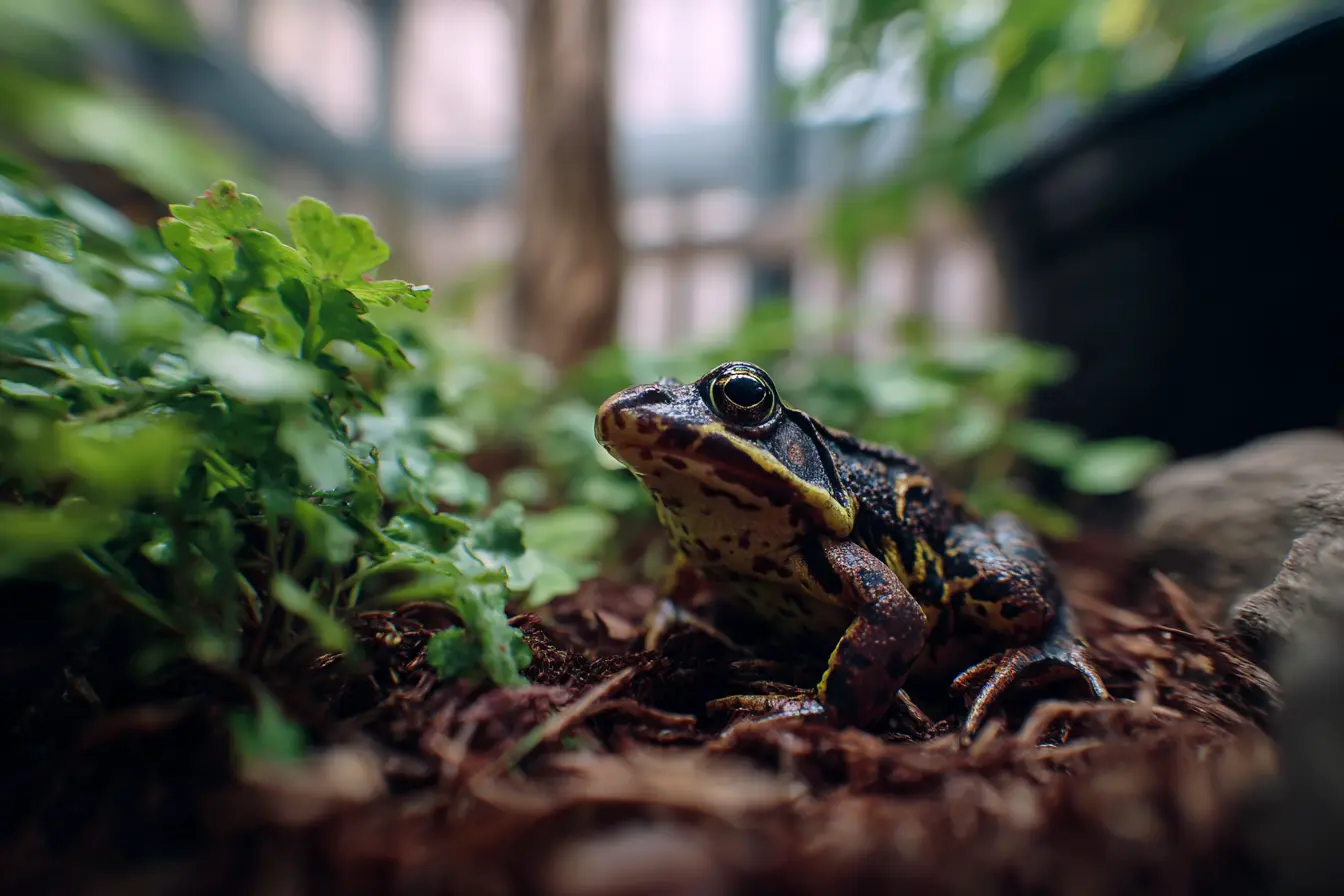
Frogs are a diverse and fascinating group of amphibians, and no two species live, or behave, in quite the same way. For prospective owners, understanding the different types of frogs is essential before deciding which species is right for you.
Some frogs spend their lives climbing plants, others lie buried waiting for prey, while some never leave the water at all. Each lifestyle comes with its own care requirements, enclosure designs, and challenges.
This guide explores the main behavioural and ecological types of frogs commonly kept in captivity, helping you make an informed and responsible choice.
Arboreal Frogs (Tree Frogs)
Arboreal frogs live primarily in trees, shrubs, and other elevated vegetation. They are adapted for climbing and spend much of their time above ground.
Key Characteristics
Long limbs with adhesive toe pads
Lightweight bodies
Excellent climbers
Often bright green or vividly coloured
Typical Behaviour
Active climbers, especially at night
Often perch on glass, leaves, and branches
Males may call loudly during breeding season
Enclosure Requirements
Plenty of branches, vines, and plants
High humidity with good ventilation
Shallow water dishes rather than deep pools
Common Examples
Red-eyed tree frog
Grey tree frog
Reed frogs
Best For
Keepers who enjoy active, visible frogs and don’t mind regular misting and climbing setups.
Terrestrial Frogs
Terrestrial frogs live mostly on the ground and rarely climb. They are generally heavier-bodied and less agile than arboreal species.
Key Characteristics
Stocky bodies
Shorter limbs
Limited climbing ability
Often cryptic or earth-toned colouring
Typical Behaviour
Spend time on or under the substrate
Move deliberately rather than jumping constantly
Many are nocturnal
Enclosure Requirements
Wide, ground-based terrariums
Deep, moisture-retaining substrate
Hides and leaf litter
Moderate humidity
Common Examples
African bullfrog
Great Plains toad
Best For
Owners who prefer simpler layouts and frogs that are calm and less active.
Ambush Predators (Sit-and-Wait Frogs)
Ambush frogs are a specialised group of terrestrial frogs that rely on camouflage and patience rather than movement.
Key Characteristics
Very large mouths
Rounded, heavy bodies
Often remain buried for long periods
Extremely fast feeding response
Typical Behaviour
Sit partially buried with only eyes exposed
Explosive lunges at prey
Minimal daily movement
Enclosure Requirements
Deep, soft substrate for burrowing
Minimal decor to avoid injury during feeding
Stable temperatures and humidity
Solitary housing only
Common Examples
Horned frogs
Best For
Keepers who enjoy dramatic feeding behaviour and low-activity display animals.
Semi-Arboreal Frogs
Semi-arboreal frogs split their time between climbing and ground-level activity.
Key Characteristics
Moderate toe pads
Strong limbs
Adaptable behaviour
Often robust and hardy
Typical Behaviour
Climb occasionally but also rest on the ground
Often visible during the day
Curious and bold personalities
Enclosure Requirements
Combination of height and floor space
Sturdy branches and hides
Larger water bowls
Moderate to high humidity
Common Examples
Dumpy tree frog
Best For
Owners wanting a versatile frog that doesn’t rely solely on vertical space.
Aquatic Frogs
Aquatic frogs spend their entire lives in water and should never be kept in terrestrial setups.
Key Characteristics
Webbed feet
Flattened bodies
Reduced or absent climbing ability
Must surface regularly to breathe
Typical Behaviour
Active swimmers
Surface frequently for air
Use scent and movement more than sight
Enclosure Requirements
Fully aquatic aquarium
Clean, warm water
Gentle filtration
No land areas
Common Examples
African clawed frog
Best For
Aquarium keepers who prefer water-based setups and can commit to routine water maintenance.
Burrowing and Fossorial Frogs
Burrowing frogs spend much of their time underground, emerging only during feeding or breeding periods.
Key Characteristics
Short, powerful limbs
Compact bodies
Adapted for digging
Often surface after misting or rain simulation
Typical Behaviour
Hidden most of the time
Sudden activity after environmental changes
Quiet and secretive
Enclosure Requirements
Stable humidity
Minimal disturbance
Secure enclosure
Common Examples
African burrowing frog
Rain frogs
Best For
Owners who are patient and enjoy low-visibility, naturalistic animals.
Diurnal vs Nocturnal Frogs
In addition to habitat type, frogs also differ in activity patterns.
Diurnal Frogs
Active during the day
Often brightly coloured
Examples include dart frogs and mantellas
Nocturnal Frogs
Active at night
Usually more cryptic in colour
Most tree frogs and terrestrial species fall into this category
This affects lighting, feeding schedules, and how often you’ll see your frog active.
Which Frog Type Is Right for You?
Before choosing a frog, consider:
Available space
Willingness to mist or maintain water
Noise tolerance (calling males can be loud)
Preference for active vs sedentary animals
Experience level
No frog is truly “low maintenance”, all require commitment and correct care, but matching the frog type to your lifestyle is the best way to ensure success.
Conclusion
Frogs are not a one-size-fits-all pet. From tree-dwelling climbers to buried ambush predators and fully aquatic swimmers, each type offers a completely different keeping experience.
By understanding the main categories of frogs and their natural behaviours, prospective owners can make informed, ethical choices and create environments where their frogs don’t just survive, they thrive.
Quick questions
- What should I know about frog care?
- Frogs come in many types, each with unique habits and needs. Arboreal frogs live in trees and need high terrariums, while terrestrial frogs prefer the ground and simpler setups. Vet Verified can help you compare UK veterinary practices by location, species, services and opening hours before you call.
- When should I contact a vet about frog care?
- Contact a veterinary practice if your pet seems unwell, symptoms are getting worse, you are unsure what to do, or the situation may be urgent. Vet Verified helps you compare practice details, but a vet should advise on your pet's current care.
- Can Vet Verified help me find exotic vets?
- Yes. Use Vet Verified to compare exotic vets across the UK, then check practice profiles and call directly to confirm current availability.
Find a vet
Find a veterinary practice
Compare UK veterinary practices related to this topic. Call the practice to confirm its current services and availability.