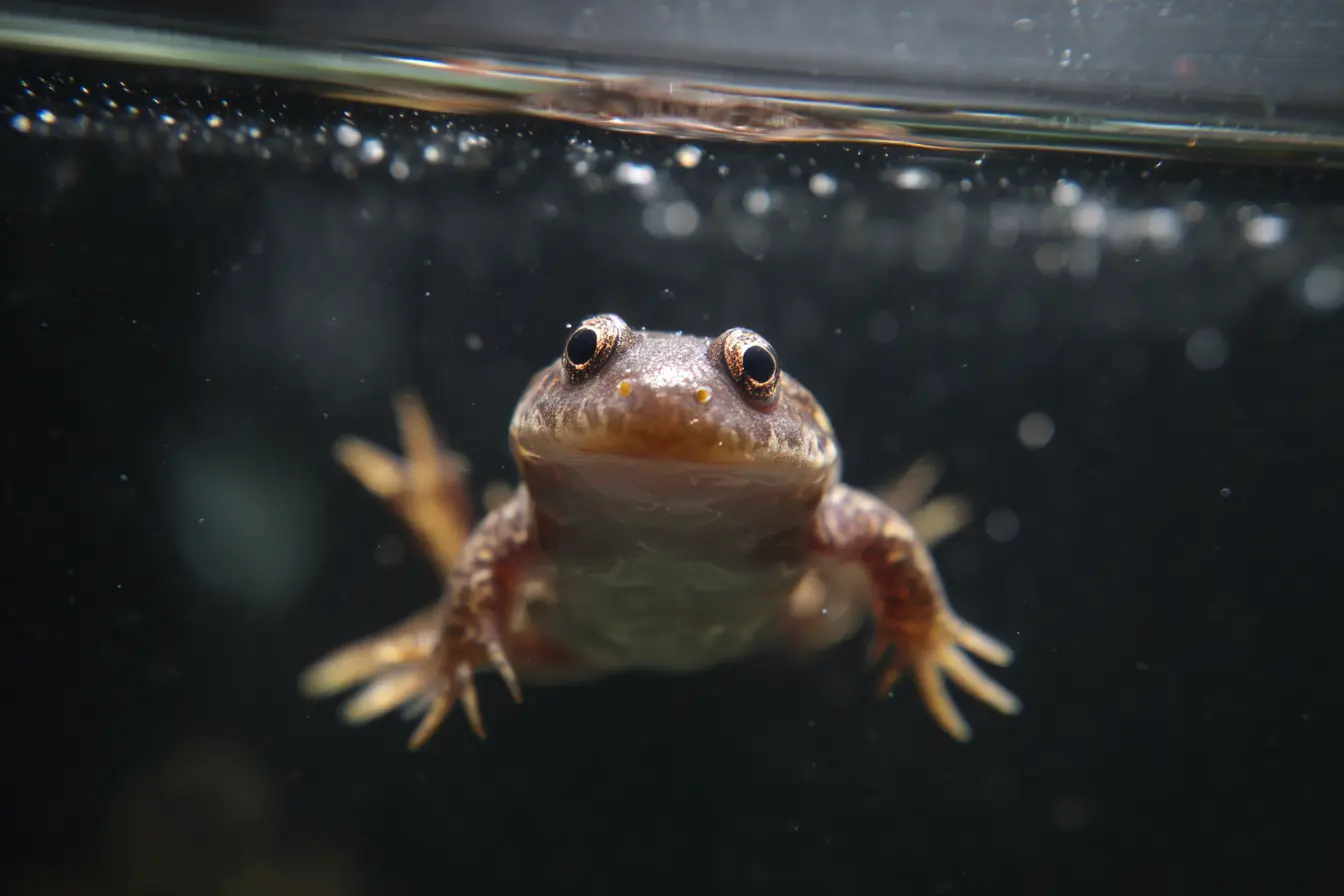
The dwarf clawed frog (Hymenochirus spp.) is a small, fully aquatic amphibian native to central Africa and one of the most commonly kept frogs in the UK. Often sold as an “easy” or “beginner” pet, these frogs are charming, active, and fascinating to observe, but they still have specific care needs that must be met for long-term health.
This guide explores the biology, behaviour, and correct husbandry of the dwarf clawed frog, helping you provide a safe and enriching aquatic environment.
Physical Characteristics
Size
Adult dwarf clawed frogs typically reach 3–5 cm (1.2–2 inches) in length.
Females are noticeably larger and broader than males.
Their small size makes them suitable for modestly sized aquariums.
Lifespan
With proper care, dwarf clawed frogs can live 5–8 years in captivity.
Poor water quality or incorrect feeding is the most common cause of early death.
Colouration and Skin Texture
Colour varies from light brown and olive to grey, often with darker mottling.
The underside is pale or cream-coloured.
Skin is smooth and delicate, adapted for life entirely in water.
Sexual Dimorphism
Females are larger and more rounded.
Males have small glands behind the forearms and may vocalise with soft buzzing or clicking sounds.
During breeding, males become more active and vocal.
Natural Range and Habitat
Dwarf clawed frogs originate from slow-moving streams, ponds, and flooded forest areas in central Africa. These environments are typically warm, shallow, and densely vegetated, with soft substrates and minimal water flow.
They are entirely aquatic and must never be kept on land, unlike many other frog species. They rely on lungs for breathing and must surface regularly for air.
Legal and Ethical Considerations
Dwarf clawed frogs are legal to keep in the UK and are widely available through aquatic and reptile retailers. Always ensure frogs are captive-bred, as wild-caught individuals are more prone to stress, disease, and poor survival rates.
Never release pet frogs into the wild, as this can harm native ecosystems and is illegal.
Housing and Aquarium Setup
A well-maintained aquarium is essential for dwarf clawed frog health. Despite their size, they are active swimmers and benefit from space.
Aquarium Size
A minimum of 40 litres is recommended for a pair or small group.
Larger tanks are preferable and easier to keep stable.
These frogs are social and do best in groups of at least two.
Substrate
Use fine sand or smooth, rounded gravel that cannot be swallowed.
Avoid sharp gravel or small stones, which can cause impaction.
Bare-bottom tanks are acceptable but offer less enrichment.
Decor and Enrichment
Provide live or silk plants for cover and resting spots.
Include caves, driftwood, or smooth ornaments to explore.
Ensure all decorations have no sharp edges.
Water Depth and Flow
Water depth should be shallow enough for easy surfacing — ideally no more than 30–35 cm.
Avoid strong currents; sponge filters or low-flow internal filters are best.
Frogs should be able to rest near the surface if needed.
Temperature and Water Parameters
Temperature: 22–26°C (72–79°F)
pH: 6.5–7.5
Ammonia and nitrite: 0 ppm
Nitrate: below 20 ppm
Use a heater and thermometer to maintain stable temperatures. Sudden changes can be fatal.
Lighting
No UVB is required.
Moderate aquarium lighting is sufficient for plant growth and natural day–night rhythms.
Avoid overly bright lighting with no shaded areas.
Diet and Feeding
Dwarf clawed frogs are carnivorous and rely heavily on scent and movement to locate food, as their eyesight is poor.
Suitable Food Items
Frozen bloodworms (a staple)
Frozen daphnia
Frozen brine shrimp
Tubifex worms (in moderation)
Specialised aquatic frog pellets (high quality only)
Live food can be offered occasionally, but frozen food is safer and more reliable.
Feeding Schedule
Feed adults 2–3 times per week.
Juveniles should be fed more frequently, every other day.
Offer small amounts and remove uneaten food promptly.
Feeding Tips
Use feeding tongs or a turkey baster to target-feed.
Ensure all frogs are eating, especially in group setups.
Avoid overfeeding, which quickly degrades water quality.
Behaviour and Tank Mates
General Behaviour
Dwarf clawed frogs are curious, active, and entertaining to watch.
They frequently surface for air and may “dance” near the glass.
Males may vocalise at night with a gentle humming sound.
Social Behaviour
Best kept with their own species.
Can be outcompeted for food by fish.
They may nip at slow-moving fish or be stressed by active tank mates.
Suitable Tank Mates
Ideally none.
If mixed tanks are attempted, only very peaceful, small fish should be considered, though species-only tanks are strongly recommended.
Handling
Handling should be avoided entirely.
Their skin is extremely sensitive and absorbs chemicals easily.
Never remove them from water unless absolutely necessary.
If movement is required, use a soft net or container filled with tank water.
Health and Common Problems
Common Health Issues
Poor water quality leading to bacterial infections.
Bloating from overfeeding or constipation.
Fungal infections on skin.
Stress and starvation in community tanks.
Preventative Care
Perform regular partial water changes (20–30% weekly).
Never clean filters with tap water, use tank water only.
Quarantine new frogs before introducing them.
Monitor behaviour and appetite closely.
Breeding the Dwarf Clawed Frog
Breeding is possible in captivity but not always intentional.
Breeding Triggers
Slight temperature increases.
Frequent feeding with protein-rich foods.
Stable, clean water conditions.
Reproduction
Males clasp females in amplexus.
Eggs are scattered freely and float or stick to plants.
Adults may eat eggs if not separated.
Tadpole Care
Eggs hatch within 2–3 days.
Tadpoles are very small and fragile.
Feed infusoria or powdered fry food initially.
Metamorphosis takes around 6–8 weeks.
Conservation Notes
Dwarf clawed frogs are not currently threatened in the wild, but habitat degradation and the spread of amphibian diseases pose ongoing risks. Responsible ownership and good biosecurity help protect both captive and wild amphibian populations.
Conclusion
The dwarf clawed frog is a delightful, fully aquatic amphibian that offers endless interest despite its small size. While often marketed as low-maintenance, these frogs thrive only when given clean water, appropriate food, and a peaceful environment.
With correct care, a species-only aquarium, and consistent maintenance, dwarf clawed frogs can live long, healthy lives and provide a fascinating window into amphibian behaviour. For aquarists looking to explore amphibian keeping without a terrestrial setup, the dwarf clawed frog is an excellent choice.
Quick questions
- What should I know about dwarf clawed frog?
- Dwarf clawed frogs are popular aquatic pets in the UK, known for their charm and activity. Native to central Africa, they require specific care for long-term health. They range in size from 3 to 5 cm, with females being larger. Vet Verified can help you compare UK veterinary practices by location, species, services and opening hours before you call.
- When should I contact a vet about dwarf clawed frog?
- Contact a veterinary practice if your pet seems unwell, symptoms are getting worse, you are unsure what to do, or the situation may be urgent. Vet Verified helps you compare practice details, but a vet should advise on your pet's current care.
- Can Vet Verified help me find exotic vets?
- Yes. Use Vet Verified to compare exotic vets across the UK, then check practice profiles and call directly to confirm current availability.
Find a vet
Find a veterinary practice
Compare UK veterinary practices related to this topic. Call the practice to confirm its current services and availability.