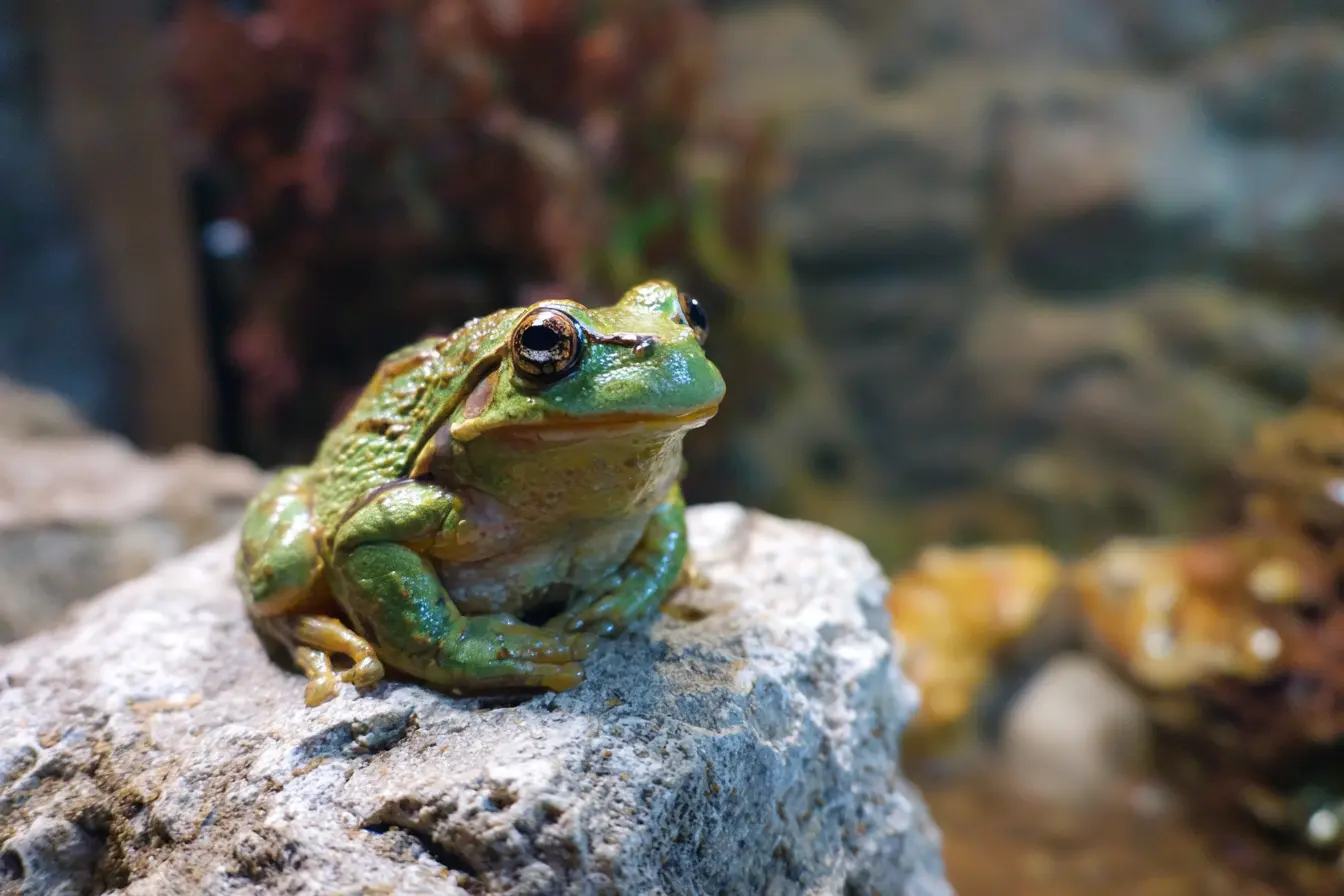
Terrestrial reptiles and amphibians spend most (or all) of their time on the ground. Unlike arboreal species, they prioritise floor space, hiding places, and the right substrate, over height. Many terrestrial animals also burrow, bask, and explore along the enclosure floor, so a successful setup must focus on security, stable temperatures, correct humidity, and an appropriate thermal gradient.
This guide takes you through everything you need to know to plan, build, and maintain a terrestrial terrarium, whether you are preparing for a frog, toad, gecko, skink, or another ground-dwelling species.
Understanding Terrestrial Needs
Terrestrial animals typically:
Move horizontally more than vertically
Spend time under cover (hides, leaf litter, logs, plants)
Thermoregulate using warm and cool zones
Often dig, burrow, or partially bury themselves
Rely on stable humidity and access to clean water
A good terrestrial terrarium prioritises:
Floor space
A reliable heat gradient
Correct substrate depth and texture
Hiding and visual barriers
Easy cleaning and long-term maintenance
Choosing the Right Enclosure
Size and Footprint
For terrestrial species, the footprint matters most.
Choose the largest enclosure you can reasonably maintain.
A good general minimum for many small-to-medium terrestrial species is 60 × 45 × 45 cm, though requirements vary.
Larger and more active species may need 90 cm+ in length.
As a rule, aim for:
Enough length to create a clear warm end and cool end
Enough depth (front-to-back) to allow natural movement and furnishing
Enough height for substrate depth and decor, even if climbing is limited
Materials
Glass terrariums: excellent visibility; can lose heat more readily in colder rooms.
PVC or wooden vivariums: hold heat well; ideal for species needing stable warmth.
Plastic tubs: useful for quarantine and temporary housing, but not ideal long-term display enclosures.
Ventilation
Terrestrial setups still need fresh airflow.
Poor ventilation increases the risk of stagnant air, mould, and respiratory problems.
Balance ventilation with humidity needs: higher ventilation reduces humidity, so moisture-loving species may need substrate and misting adjustments.
Security
Many terrestrial species are surprisingly strong or determined.
Use a secure lid or sliding doors with a proper lock.
Ensure cable holes and vents cannot be used as escape routes.
Planning Your Layout
Before adding substrate, plan the terrarium’s structure:
Decide where the warm end will be (heat source placement matters).
Leave enough space for a large hide and water bowl.
Create visual barriers so the animal can move without feeling exposed.
Terrestrial animals are often prey species in the wild. Feeling secure is a major factor in stress reduction, feeding response, and overall health.
Substrate: The Foundation of the Setup
Substrate is one of the most important choices you will make. It affects:
Humidity
Burrowing behaviour
Hygiene
Foot health
Risk of impaction
Substrate Depth
Most terrestrial animals benefit from enough depth to dig:
Light burrowers: 5–8 cm
Strong burrowers: 10–20 cm (species dependent)
Common Substrate Options
For Moderate Humidity / General Terrestrial Species
Coconut fibre
Organic topsoil (fertiliser-free)
Soil/sand blends (species-specific)
Reptile-safe soil mixes
For Humid, Moisture-Loving Terrestrial Species (Many Frogs and Toads)
Coconut fibre mixed with sphagnum moss
Soil with leaf litter and bark
Bioactive substrate blends designed for tropical setups
For Arid Terrestrial Species (Some Lizards and Geckos)
Specialist arid substrates (clay/sand mixes designed for vivariums)
Compacted soil blends for burrowing
Substrates to Avoid
Calci-sand (can cause impaction and irritation)
Wood shavings (especially pine/cedar due to oils)
Sharp or dusty sand
Gravel (unsafe and not naturalistic for most species)
Drainage (When Needed)
Terrestrial enclosures do not always require drainage layers, but they help if:
Humidity is high
You are heavily misting
The terrarium is bioactive and planted
If you add a drainage layer:
Use clay balls or gravel (3–5 cm)
Add mesh to separate soil from the drainage layer
Avoid letting the substrate become waterlogged
Hides, Cover, and Visual Barriers
Terrestrial species require hiding opportunities to feel safe.
Hides
Provide at least two:
One on the warm end
One on the cool end
A hide should be:
Snug enough to feel secure
Large enough to fit the animal comfortably
Easy to clean
Additional Cover
Cork bark flats
Leaf litter
Live or artificial plants
Branches and logs (even for terrestrial animals, low climbing and anchoring is enriching)
Moist Hide (Species-Dependent)
Some reptiles benefit from a humid hide to support shedding. Many amphibians benefit from consistently damp retreats.
Water Provision
Water Bowl
Provide a stable, shallow water bowl suitable for the species.
Amphibians often soak; many reptiles drink occasionally but still need access.
Replace water daily.
Dechlorination
If you are keeping amphibians, always use dechlorinated water. Chlorine and chloramine can irritate sensitive skin.
Temperature: Creating a Heat Gradient
A terrestrial terrarium should never be one uniform temperature.
The Goal
Warm end: for basking and digestion
Cool end: for retreat and thermoregulation
Heating Options
Heat Lamps
Create natural basking areas and surface warmth.
Must be controlled with a thermostat where appropriate and monitored carefully.
Ceramic Heat Emitters
Provide heat without light.
Useful for night-time warmth.
Deep Heat Projectors
Provide more “sun-like” radiant warmth.
Often preferred for reptiles that bask.
Heat Mats
Use externally under or on the side of the enclosure.
Best for gentle background warmth, not primary basking for most species.
Must be thermostat-controlled.
Thermostats and Monitoring
Always use thermostats for heat sources.
Use at least two digital thermometers (warm end and cool end).
An infrared thermometer is helpful for checking surface temperatures.
Humidity: Getting It Right
Humidity needs differ massively between species, but the principles are consistent.
Humidity Control Methods
Substrate choice and depth
Misting (light, controlled, not constant soaking)
Partial covering of ventilation (carefully, without blocking airflow)
Live plants and leaf litter
Water bowl placement
Avoiding Common Humidity Problems
Too wet: leads to mould, bacteria, skin issues, and respiratory illness.
Too dry: causes dehydration, shedding problems (in reptiles), and skin stress.
Aim for stable humidity that matches the species rather than chasing a constant high percentage.
Lighting and UVB
Day–Night Cycle
Even nocturnal species benefit from a consistent day–night rhythm.
Provide a 12-hour cycle (adjust seasonally if desired).
UVB
Whether you need UVB depends on the animal:
Many reptiles benefit strongly from appropriate UVB.
Many amphibians can benefit from low-level UVB, though they are more sensitive to excessive exposure.
If using UVB:
Choose the correct strength for the species.
Provide shaded areas so the animal can self-regulate.
Replace bulbs according to manufacturer guidance.
Plant Lighting (Optional)
If keeping live plants, use an LED grow light suitable for terrarium use.
Furnishings and Enrichment
Terrestrial does not mean “empty box”.
Good enrichment includes:
Leaf litter (excellent for amphibians, invertebrates, and bioactive setups)
Low branches and logs
Multiple hides and varied textures
Rearranging decor occasionally (gently) to stimulate exploration
A bioactive cleanup crew for planted ecosystems (optional)
Enrichment supports natural behaviours and reduces stress.
Bioactive vs Traditional Terrestrial Setups
Traditional (Non-Bioactive)
Pros:
Easier to set up
Easier to deep-clean
Often cheaper upfront
Cons:
Requires more frequent substrate changes
Less naturalistic
Limited plant life unless potted
Bioactive
Pros:
Natural waste processing (springtails/isopods)
Better humidity stability
Naturalistic appearance and behaviour
Cons:
Requires planning and time to establish
Not a “no-maintenance” option
Needs correct balance of moisture, plants, and cleanup crew
Bioactive systems can be excellent for many terrestrial amphibians and some reptiles, but they are not essential.
Cycling and Settling the Terrarium
Before introducing an animal:
Run heating and lighting for several days (ideally 1–2 weeks).
Check temperature gradients at different times of day.
Monitor humidity patterns after misting and during drying.
Ensure everything is stable and predictable.
This prevents stressful surprises and helps you identify issues early.
Introducing Your Animal
When you bring the animal home:
Keep handling minimal.
Provide quiet, low-traffic conditions.
Offer food after a settling period (species dependent).
Observe carefully for normal behaviour, appetite, and waste.
Stress is one of the most common causes of early problems in new setups.
Cleaning and Maintenance
Daily
Check temperatures and humidity
Replace water
Remove visible waste
Ensure the animal looks alert and normal
Weekly
Spot-clean substrate and decor
Clean the water bowl thoroughly
Wipe down glass if needed
Monthly (or as Needed)
Deep-clean non-bioactive setups
Replace substrate partially or fully (depending on species and cleanliness)
Inspect heating and lighting equipment
Bioactive setups require different maintenance: pruning plants, monitoring cleanup crew, and controlling moisture to prevent mould.
Common Mistakes to Avoid
Using the wrong substrate (too dry, too dusty, or unsafe if swallowed)
No heat gradient (one temperature throughout)
Too few hides (animal feels exposed and stressed)
Over-misting and waterlogged substrate
No thermostat on heat sources
Overhandling (especially amphibians)
Setting up and adding the animal immediately without testing conditions
Conclusion
A well-designed terrestrial terrarium balances space, security, substrate, heat gradients, and stable humidity. When these basics are correct, terrestrial species become more confident, feed reliably, and display natural behaviours, from burrowing and basking to exploring and hunting.
By planning the enclosure carefully, choosing appropriate substrate and furnishings, and monitoring conditions consistently, you can create a safe, enriching home where your terrestrial animal does not just survive, but thrives.
Quick questions
- What should I know about terrestrial terrarium?
- Learn how to create a proper terrestrial terrarium for reptiles and amphibians with this guide. Focus on floor space, secure hiding spots, and the right materials like glass, PVC or wooden enclosures. Vet Verified can help you compare UK veterinary practices by location, species, services and opening hours before you call.
- When should I contact a vet about terrestrial terrarium?
- Contact a veterinary practice if your pet seems unwell, symptoms are getting worse, you are unsure what to do, or the situation may be urgent. Vet Verified helps you compare practice details, but a vet should advise on your pet's current care.
- Can Vet Verified help me find exotic vets?
- Yes. Use Vet Verified to compare exotic vets across the UK, then check practice profiles and call directly to confirm current availability.
Find a vet
Find a veterinary practice
Compare UK veterinary practices related to this topic. Call the practice to confirm its current services and availability.