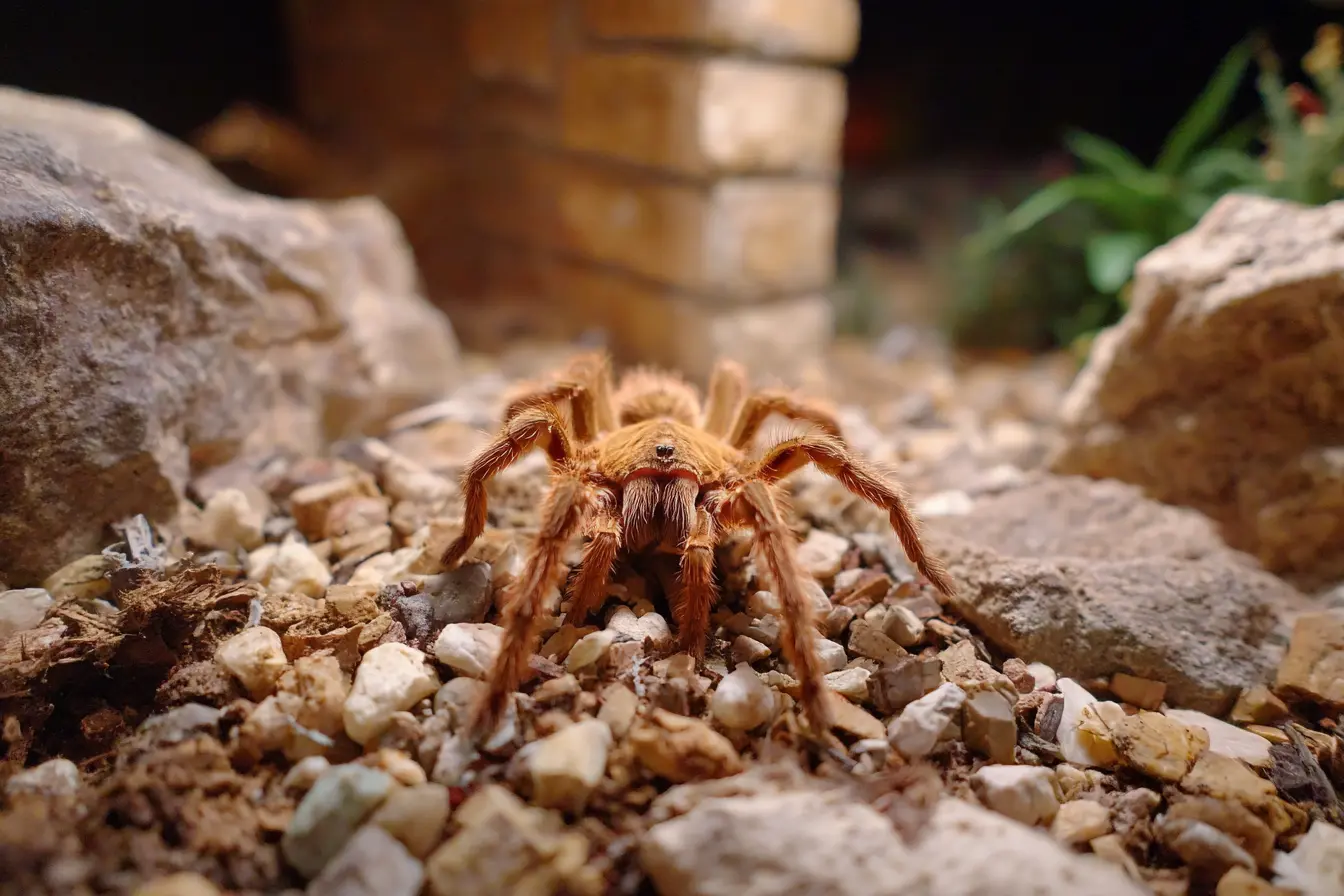
The Asian Fawn tarantula (Chilobrachys huahini), also known as the Thailand Fawn, is a striking Old World species native to the tropical forests of Southeast Asia. Revered by experienced tarantula keepers for its lightning speed, aggressive feeding response, and stunning silk tunnels, the Asian Fawn is not for the faint-hearted. However, for those ready for the challenge, this species offers an incredibly rewarding and fascinating addition to any collection.
Why Choose an Asian Fawn Tarantula?
This fossorial (burrowing) species is best suited to hobbyists with some experience in tarantula keeping. Though not a pet to handle, its behaviour and enclosure-building habits make it highly engaging to observe.
Web Engineering: This species is an obsessive webber, creating thick silk tunnels and vertical walls.
Fast Growth: Asian Fawns grow quickly, making them satisfying to raise from spiderlings to adults.
Striking Appearance: Subtle fawn, tan, and bronze tones give them an understated elegance.
Hardy and Robust: Once established, they thrive with consistent care and minimal interference.
Housing Your Asian Fawn Tarantula
Enclosure
As a burrowing and web-building species, they require a setup that supports digging and silk structures.
Size: A 30x30x30 cm enclosure is sufficient for an adult. Juveniles can be kept in smaller tubs with adequate depth.
Substrate: Provide at least 15 cm of substrate such as coconut fibre, peat moss, or a mix of soil and vermiculite. Pack it down firmly to allow stable burrow construction.
Ventilation: Moderate ventilation is key—just enough airflow to avoid stale humidity, but not so much that the substrate dries out quickly.
Decor and Hiding Spots
Cork Bark or Curved Hides: Offer a starter hide at ground level to encourage burrowing.
Web Anchors: Secure pieces of decor can assist in web-building.
Minimal Clutter: Let the tarantula engineer its space—it will rearrange to suit its needs.
Temperature and Humidity
Native to Thailand’s humid climate, this species thrives under warm, damp conditions.
Temperature: Maintain between 24–28°C. Supplement with a heat mat on the side of the enclosure if necessary, regulated by a thermostat.
Humidity: 70–80% is ideal. Mist one side of the enclosure lightly every few days, allowing for dry areas to prevent oversaturation.
Use a digital thermometer and hygrometer for accurate monitoring.
Feeding Your Asian Fawn Tarantula
Diet
Asian Fawns are aggressive feeders and will readily accept a variety of live prey:
Crickets
Locusts
Mealworms (occasionally)
Feed juveniles every 5 days and adults every 7–10 days. Always remove uneaten food within 24 hours, especially before a moult.
Water
A shallow water dish should always be present and kept clean. Though they gain moisture through prey and humidity, a dish provides a backup hydration source.
Handling Your Tarantula
Handling is strongly discouraged for the Asian Fawn:
Old World Species: They possess no urticating hairs, relying instead on biting as a primary defence.
Extremely Fast and Defensive: Capable of high-speed sprints and sudden aggression when threatened.
Potent Venom: While not lethal, a bite can cause significant pain and swelling.
If enclosure maintenance is needed, use long tongs and disturb the spider as little as possible. Many keepers wait until the spider retreats to its burrow before performing any tasks.
Health and Common Issues
Asian Fawn tarantulas are generally healthy when housed correctly. Watch out for:
Dehydration: Signs include a shrunken abdomen or lethargy.
Fungal Growth or Mould: Caused by overly damp substrate and poor airflow.
Moulting Problems: Ensure high humidity and no disturbances during the moulting process.
Moulting
Signs of an approaching moult include:
Refusal to eat.
Increased reclusiveness.
Darkened or shiny exoskeleton.
Avoid feeding and maintain stable conditions. Wait at least a week after moulting before resuming feeding, allowing the exoskeleton to harden.
Legal and Ethical Considerations
It is legal to own an Asian Fawn tarantula in the UK. However, responsible sourcing and care are essential:
Buy Captive-Bred: Always obtain tarantulas from reputable breeders to support ethical trade.
Long-Term Responsibility: Females can live over 10 years—ensure you are committed to their care.
Cost of Ownership
Asian Fawn tarantulas are relatively affordable, and upkeep costs are minimal:
Tarantula: £25–£50 depending on size and sex.
Enclosure Setup: £40–£80, including substrate, heating, and décor.
Food: £5–£10 per month.
Utilities: Low, primarily heating in winter.
Final Thoughts
The Asian Fawn tarantula is an incredible species for those ready to take on a more challenging but rewarding tarantula. Its webbing, burrowing, and lightning-fast movements provide endless fascination—albeit from a distance.
This is not a display pet or a companion to handle, but with respect and proper care, the Asian Fawn will flourish in captivity and become a centrepiece in any serious keeper’s collection.
Quick questions
- What should I know about asian fawn tarantula?
- The Asian Fawn tarantula (Chilobrachys huahini) or Thailand Fawn is a striking spider from Southeast Asia. Known for its speed and behaviour, it is best suited for experienced tarantula keepers. Vet Verified can help you compare UK veterinary practices by location, species, services and opening hours before you call.
- When should I contact a vet about asian fawn tarantula?
- Contact a veterinary practice if your pet seems unwell, symptoms are getting worse, you are unsure what to do, or the situation may be urgent. Vet Verified helps you compare practice details, but a vet should advise on your pet's current care.
- Can Vet Verified help me find exotic vets?
- Yes. Use Vet Verified to compare exotic vets across the UK, then check practice profiles and call directly to confirm current availability.
Find a vet
Find a veterinary practice
Compare UK veterinary practices related to this topic. Call the practice to confirm its current services and availability.