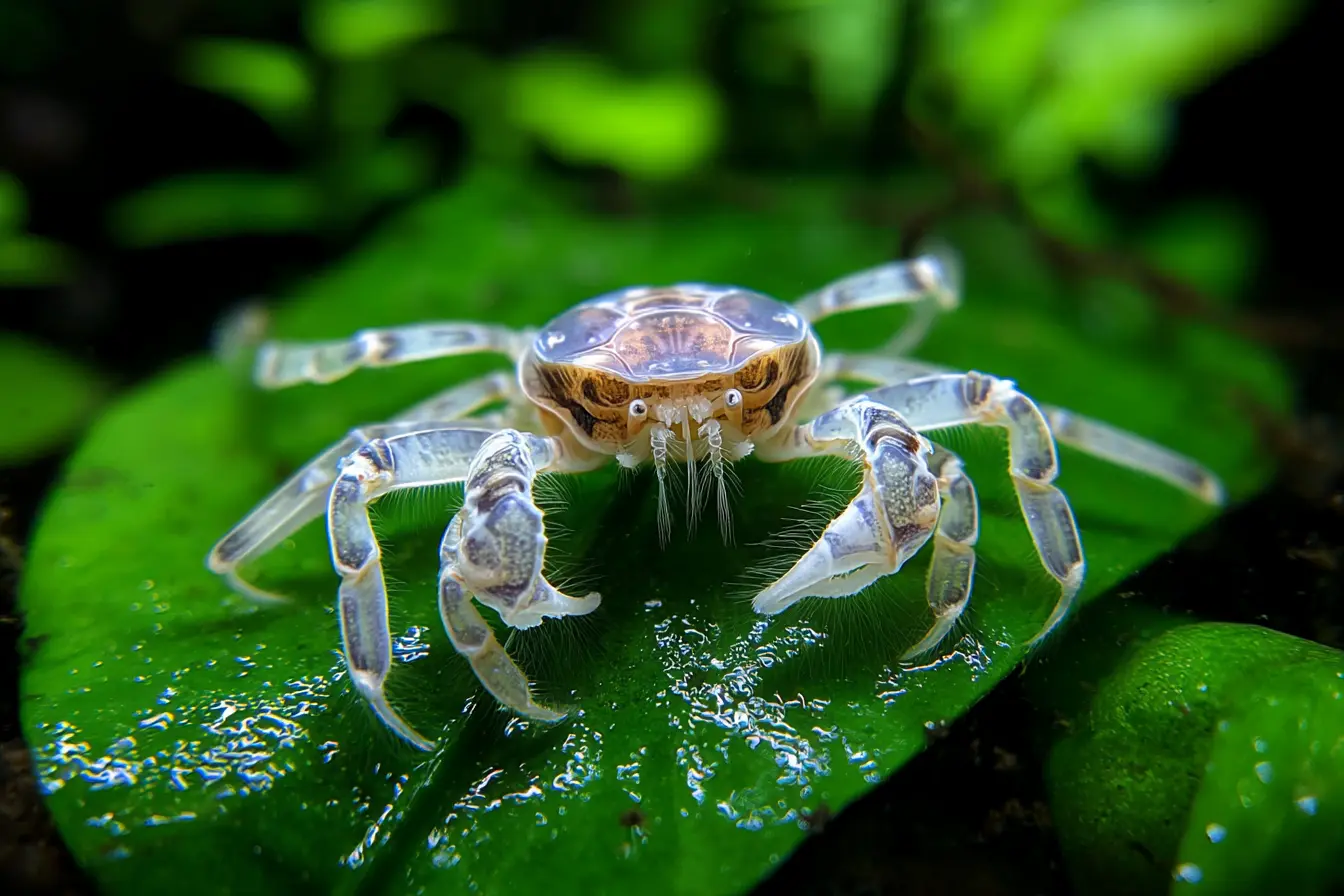
Thai Micro Crabs (Limnopilos naiyanetri) are one of the most delicate and intriguing freshwater invertebrates available in the aquarium hobby. Native exclusively to a single river in Thailand, these tiny, fully aquatic crabs are known for their elusive behaviour, transparent bodies, and peaceful nature. Despite their specialised needs, they are a rewarding species for aquarists who enjoy subtle and fascinating tank inhabitants.
What Are Thai Micro Crabs?
Discovered only in 1991, Thai Micro Crabs are a unique, freshwater-only crab species native to the Tha Chin River near Bangkok, Thailand. They are rarely found in the wild and are considered an endemic species, which makes their presence in the aquarium trade particularly special.
They are:
Tiny: Adults grow to only around 1 cm across
Fully aquatic: They spend their entire lives submerged in freshwater
Peaceful and shy: Best observed in quiet, low-disturbance tanks
Sensitive: Require stable, pristine water conditions to thrive
Enclosure Requirements
Aquarium Size
Given their small size and minimal bioload, Thai Micro Crabs can live in nano aquariums as small as 10 litres. However, larger tanks (20 litres or more) provide more stability and space for plant growth and hiding spots.
Tank Layout
Thai Micro Crabs are fully aquatic and prefer calm, planted environments with lots of cover.
Recommended layout:
Heavily planted with mosses and fine-leaved plants like Java moss, hornwort, and subwassertang
Gentle filtration to avoid strong currents that may stress them
Dim lighting or shaded areas to encourage more activity
Use driftwood, small rocks, and leaf litter to create natural hiding spaces. Their cryptic behaviour means they often go unnoticed even in small tanks.
Substrate
A dark, fine-grained substrate enhances visibility and promotes a natural environment. Sand or smooth gravel is ideal.
Avoid sharp or jagged substrate that might damage their delicate limbs
Detritus and biofilm accumulation in substrate can serve as a food source
Water Conditions
As a delicate species, Thai Micro Crabs require pristine, stable water parameters.
Temperature: 22–26°C
pH: 6.5–7.5
Hardness: Soft to moderately hard (KH 1–8)
Ammonia/Nitrites: 0 ppm — sensitive to even low levels
Filtration: Sponge filters or gentle internal filters
Use dechlorinated or RO water. Perform regular water changes of 20–30% weekly, being careful not to disturb their hiding spots.
Humidity and Air Access
Unlike some crabs, Thai Micro Crabs do not require land or access to air — they are fully aquatic and respire through gills.
Lighting
Low to moderate lighting is best, especially if using live plants. Brighter lights can be diffused with floating plants to create shaded zones where the crabs feel secure.
Diet and Feeding
Thai Micro Crabs are omnivorous scavengers and detritivores. In the wild, they graze on biofilm and micro-organisms.
Ideal Foods:
Biofilm and algae (encourage natural growth)
Powdered invertebrate foods
Micro-pellets or sinking nano pellets
Crushed algae wafers
Blanched vegetables (e.g. spinach, cucumber)
Live or frozen baby brine shrimp or microworms (occasionally)
Feed sparingly — a few times per week — as they feed slowly and excess food can foul the water.
Social Behaviour and Tank Mates
Thai Micro Crabs are peaceful and can be kept in groups of 5 or more. They do not show aggression toward one another.
Tips for compatibility:
Ideal tank mates: Small, peaceful fish like ember tetras, endlers, or celestial pearl danios
Inverts: Can be kept with small shrimp species (e.g. Neocaridina, Caridina) with caution
Avoid: Larger or aggressive fish that may prey on or outcompete them for food
They are extremely shy and easily outcompeted, so choose tank mates carefully.
Moulting
Moulting is critical for growth and health. During this time, crabs are very vulnerable.
Ensure calcium availability in water (e.g. cuttlebone, shrimp-specific mineral supplements)
Maintain stable water parameters and provide safe hiding places
Do not disturb or handle moulting individuals
Discarded exoskeletons are often consumed for nutrient recycling.
Breeding
Breeding Thai Micro Crabs in captivity is very rare and not well-documented. They are believed to release planktonic larvae that may not survive in standard aquaria.
Key considerations:
Males and females are difficult to distinguish
Hatchlings likely require brackish or specialised micro-environments
No consistent captive breeding protocols exist at this time
For now, most Thai Micro Crabs are wild-caught, so sustainable husbandry is crucial.
Common Health Issues
Their fragility means they are prone to issues if water conditions deteriorate.
Watch for:
Lethargy or hiding excessively (beyond their usual shyness)
Discoloured or soft shells
Failed moults
Sudden disappearance (may have died and decomposed unnoticed)
Avoid sudden changes in water parameters and maintain a stable, clean environment.
Lifespan and General Care
Lifespan: Around 1 year in captivity, sometimes longer with optimal care
Activity: Nocturnal and reclusive — sightings may be rare
Maintenance: Weekly water changes, stable parameters, and regular plant trimming
They’re best suited to experienced aquarists or those prepared to create a specialised nano-environment with gentle conditions and lots of patience.
Final Thoughts
Thai Micro Crabs are a captivating choice for nano tank enthusiasts looking for something unique and tranquil. While their care can be demanding due to their sensitivity and elusive nature, they offer a rewarding glimpse into the subtle beauty of aquatic microfauna.
Their small size, peaceful demeanour, and biofilm-grazing habits make them ideal for naturalistic, shrimp-style setups. With appropriate conditions and a watchful eye, these tiny crabs can bring a sense of mystery and delicacy to your freshwater aquarium.
Quick questions
- What should I know about thai micro crabs?
- Thai Micro Crabs are tiny, fully aquatic crabs native to a single river in Thailand. Vet Verified can help you compare UK veterinary practices by location, species, services and opening hours before you call.
- When should I contact a vet about thai micro crabs?
- Contact a veterinary practice if your pet seems unwell, symptoms are getting worse, you are unsure what to do, or the situation may be urgent. Vet Verified helps you compare practice details, but a vet should advise on your pet's current care.
- Can Vet Verified help me find exotic vets?
- Yes. Use Vet Verified to compare exotic vets across the UK, then check practice profiles and call directly to confirm current availability.
Find a vet
Find a veterinary practice
Compare UK veterinary practices related to this topic. Call the practice to confirm its current services and availability.