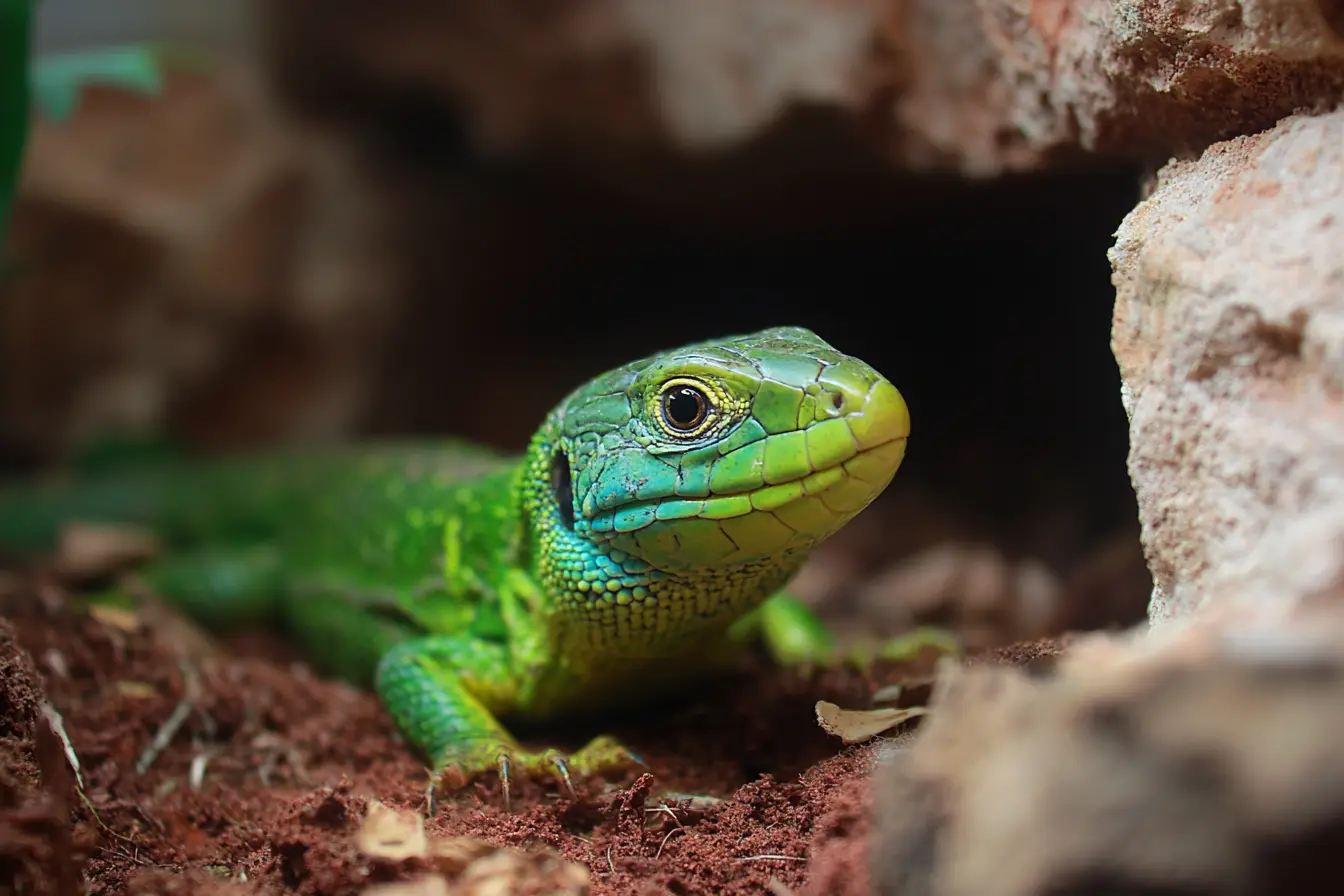
The Balkan green lizard (Lacerta trilineata) is one of Europe’s most striking reptiles, admired for its vivid green colouring, lively behaviour, and graceful movements. Found throughout the Balkans and parts of southern Europe, this species is a symbol of the region’s warm, sunlit landscapes.
Active, alert, and full of personality, the Balkan green lizard makes an exceptional display species for experienced keepers. Its beauty, combined with its fascinating natural behaviours, makes it a favourite among reptile enthusiasts who appreciate Europe’s native wildlife.
Origins and Natural Habitat
The Balkan green lizard is distributed across southeastern Europe, from Greece and Bulgaria to Croatia, Albania, North Macedonia, and parts of southern Italy. It thrives in a wide range of habitats, including grasslands, scrublands, woodland edges, and rocky hillsides.
These lizards are often seen basking in the sun on rocks or low shrubs during the day, retreating into burrows or dense vegetation when threatened. They prefer warm, dry environments but can also be found near rivers and streams where insect prey is abundant.
In the wild, their active lifestyle and territorial nature make them key members of their ecosystems, helping to control insect populations and serving as prey for birds of prey and snakes.
Appearance and Temperament
Physical Traits
Size: Adults typically reach 30–40 cm in total length, with the tail making up over half
Colouration: Brilliant green body with small black speckles; males develop bright turquoise-blue throats during the breeding season
Build: Slender but muscular, built for agility and quick bursts of speed
Eyes: Large and expressive, giving the lizard excellent vision for detecting movement and predators
Behaviour and Temperament
Balkan green lizards are diurnal, basking in the morning sun before actively hunting insects throughout the day. They are quick, intelligent, and highly alert to changes in their environment.
While shy in the wild, captive-bred individuals can become confident and bold, often exploring their enclosure and approaching food eagerly. They are best kept as display animals, as they can be sensitive to stress and are easily startled when handled.
Housing Requirements
Providing a spacious, sunlit enclosure that mimics the lizard’s Mediterranean environment is essential for its health and wellbeing.
Enclosure Size
A single adult: Minimum 90 cm x 45 cm x 45 cm
Pair or small group: 120 cm x 60 cm x 60 cm or larger
A well-ventilated glass or wooden vivarium works well. These lizards are active climbers and runners, so horizontal space and sturdy decor are vital.
Heating and Temperature Gradient
Basking spot: 32–35°C
Ambient daytime temperature: 26–28°C
Cool end: 22–24°C
Night-time: Can drop to around 18–20°C
Provide heat using a basking lamp or ceramic heater controlled by a thermostat. The basking zone should include rocks or logs for natural heat absorption.
Lighting and UVB
Strong UVB lighting (10–12%) is essential. The Balkan green lizard is a sun-loving species that relies heavily on UVB exposure for vitamin D3 synthesis and calcium metabolism.
Maintain a 12–14 hour light cycle to mimic Mediterranean daylight. Bright, full-spectrum lighting enhances their natural colouration and encourages activity.
Humidity and Water
Maintain humidity between 40–60%. These lizards prefer a relatively dry environment but benefit from a light misting in the morning to simulate dew and aid hydration.
Provide a shallow water bowl for drinking and occasional soaking, and replace the water daily.
Substrate and Furnishings
Substrate: A mix of soil, sand, and fine gravel works well to replicate natural conditions
Decor: Include flat rocks for basking, cork bark for hiding, and live or artificial plants for cover
Hides: Provide at least two hides - one on the warm side and one on the cool side
Ensure plenty of basking areas and open ground for running, as these lizards are highly active. A naturalistic setup not only looks appealing but promotes natural behaviours and reduces stress.
Diet and Feeding
The Balkan green lizard is an insectivore, thriving on a varied diet of invertebrates.
Feeding Schedule
Feed daily during the active season, reducing to every other day during cooler months.
Food Items
Crickets
Roaches
Mealworms or waxworms (occasional treats)
Silkworms, locusts, and other gut-loaded insects
All insects should be dusted with calcium and vitamin supplements. Use calcium with D3 two to three times per week and a multivitamin once weekly.
Variety is crucial, offering a range of prey helps maintain health and stimulates natural hunting instincts.
Feeding Tips
Feed during the day when the lizard is alert and basking. Offer prey in a shallow dish or let insects roam the enclosure to encourage natural foraging. Remove uneaten prey after a few hours to prevent stress.
Handling and Interaction
Balkan green lizards are beautiful to observe but not ideal for frequent handling. They are fast, agile, and can easily become stressed if restrained.
If handling is necessary:
Approach slowly and confidently
Allow the lizard to walk onto your hand rather than grabbing it
Avoid holding by the tail, as it can detach if the lizard feels threatened
With consistent, calm care, they may become accustomed to your presence and even take food from tweezers.
Common Health Concerns
Shedding Issues
Low humidity can cause incomplete shedding. Provide a humid hide and mist lightly during shedding cycles.
Nutritional Deficiencies
Lack of UVB or improper supplementation can lead to metabolic bone disease. Always provide strong lighting and proper diet.
Respiratory Infections
Caused by cool or damp conditions. Maintain proper temperatures and ensure good ventilation.
Parasites
Wild-caught individuals are prone to internal and external parasites. Choose captive-bred specimens whenever possible and schedule regular health checks.
Lifespan and Breeding
Balkan green lizards can live 8–12 years in captivity with good care.
Breeding occurs in spring and early summer. Males display vibrant blue throats and may perform head-bobbing or chasing behaviours to court females. Females lay 6–12 eggs in sandy soil or moist substrate, which incubate for 6–8 weeks at 28–30°C. Hatchlings are small, fast, and independent, feeding on fruit flies and tiny crickets.
Observation and Enrichment
This species is endlessly entertaining to watch. Their active behaviour and sharp awareness make them one of Europe’s most captivating reptiles. Provide enrichment through:
Rearranging decor occasionally
Offering climbing opportunities
Releasing live insects for natural hunting
A well-designed, sunlit terrarium will allow their full spectrum of behaviours, from basking and exploring to digging and chasing prey.
Conclusion
The Balkan green lizard is a radiant and dynamic reptile that captures the spirit of the Mediterranean landscape. With its brilliant emerald colouring, inquisitive nature, and lively activity, it is a true gem among European lizards.
Although not ideal for beginners due to its speed and sensitivity, dedicated keepers who can provide warmth, space, and a naturalistic setup will find this species deeply rewarding.
For those who love vibrant, sun-loving reptiles with bold personalities, the Balkan green lizard is a living piece of Mediterranean sunshine, an energetic reminder of the wild beauty of southeastern Europe.
Quick questions
- What should I know about balkan green lizard?
- The Balkan green lizard, found across southeastern Europe, is known for its bright green colour and lively nature. It thrives in sunlit habitats and plays a vital role in its ecosystem by controlling insect populations. Vet Verified can help you compare UK veterinary practices by location, species, services and opening hours before you call.
- When should I contact a vet about balkan green lizard?
- Contact a veterinary practice if your pet seems unwell, symptoms are getting worse, you are unsure what to do, or the situation may be urgent. Vet Verified helps you compare practice details, but a vet should advise on your pet's current care.
- Can Vet Verified help me find exotic vets?
- Yes. Use Vet Verified to compare exotic vets across the UK, then check practice profiles and call directly to confirm current availability.
Find a vet
Find a veterinary practice
Compare UK veterinary practices related to this topic. Call the practice to confirm its current services and availability.
Search by species
- Exotic vets Find UK veterinary practices that list care for exotic pets. Compare opening hours, services, facilities and verified profiles, then contact a practice directly.
- Bird vets Find UK veterinary practices that list care for birds. Compare opening hours, services, facilities and verified profiles, then contact a practice directly.