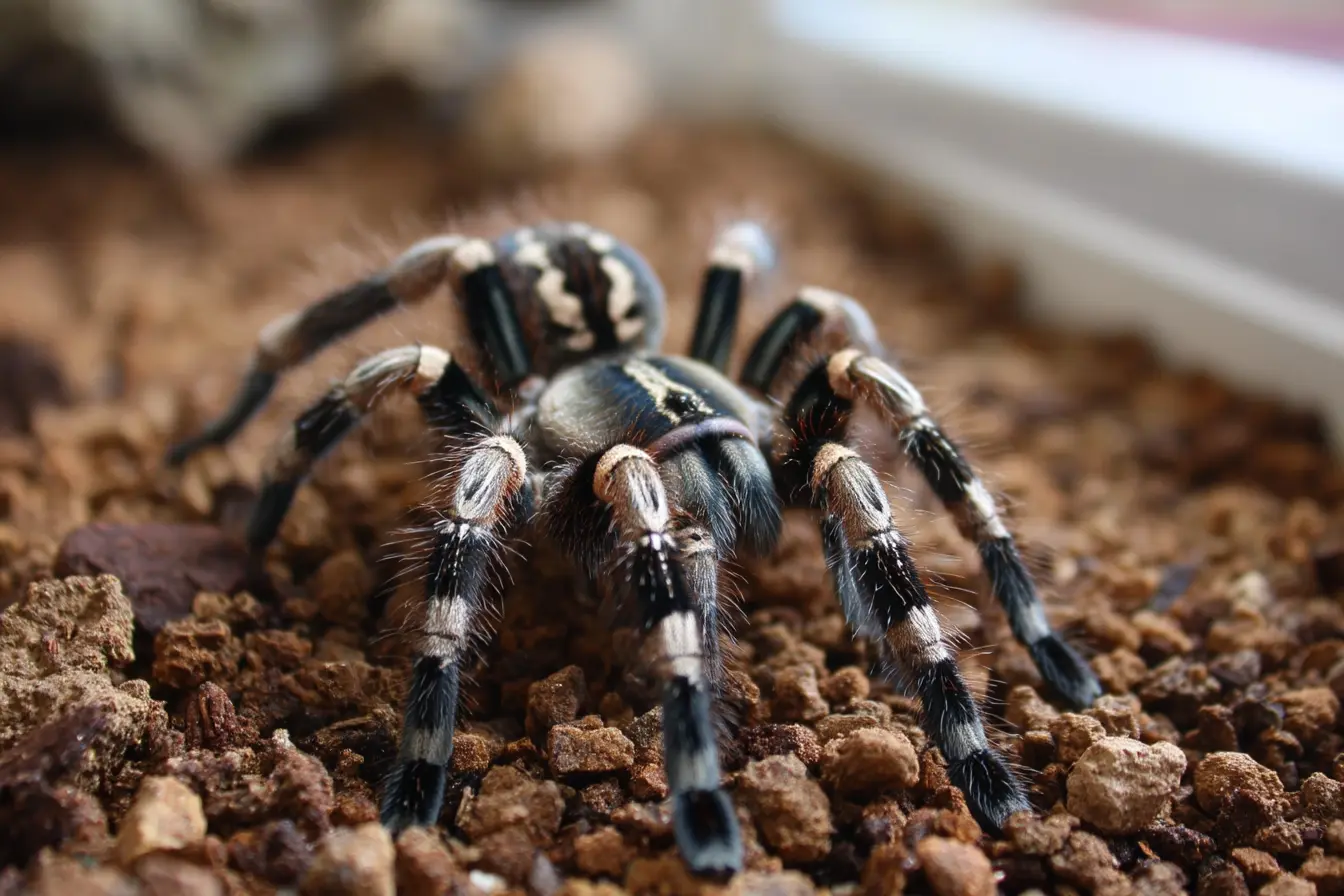
The Bengal Ornamental Tarantula (Poecilotheria miranda) is a striking arboreal species known for its intricate patterns, rapid movements, and potent venom. Native to India, this species inhabits trees and forested areas, where it spends most of its life off the ground in vertical retreats.
Highly sought after for its beauty and size, the Bengal Ornamental is best suited to experienced keepers. Its speed, defensive nature, and medically significant venom require careful, respectful handling at all times.
What Is a Bengal Ornamental Tarantula?
The Bengal Ornamental is part of the Poecilotheria genus, often referred to as “Pokies” in the hobby. These tarantulas are known for their flattened bodies, long legs, and bold, contrasting patterns.
They are:
Large: Leg spans of 15–18 cm in adults
Arboreal: Tree-dwelling and vertically oriented
Fast: Capable of extremely rapid movement
Defensive: Will rely on speed first, but can bite if threatened
Unlike New World tarantulas, they do not possess urticating hairs and instead rely on venom for defence.
Enclosure Requirements
Tank Size
As an arboreal species, height is more important than floor space.
Spiderlings: Small, tall vials or tubs
Juveniles: 20–30 cm tall enclosures
Adults: Minimum 30 x 30 x 45 cm enclosure
Always prioritise vertical space to allow natural climbing and retreat-building behaviour.
Enclosure Type
A secure, well-ventilated arboreal setup is essential.
Suitable enclosures include:
Glass terrariums with front-opening doors
Acrylic arboreal enclosures
Modified plastic tubs with vertical orientation
Front-opening enclosures are strongly recommended to reduce escape risk during maintenance.
Substrate
Substrate plays a minor role but helps maintain humidity.
Recommended options:
Coco fibre
Topsoil (chemical-free)
Soil mixes
A depth of 5–8 cm is sufficient.
Keep substrate slightly moist, especially in one area, to support humidity.
Temperature and Humidity
Poecilotheria miranda thrives in warm, humid conditions.
Temperature: 24–28°C
Humidity: 70–80%
Maintain humidity through light misting and a water dish. Good cross-ventilation is essential to prevent mould and stagnant air.
Lighting
No special lighting is required.
Avoid direct sunlight
Ambient room lighting is sufficient
They are primarily nocturnal and will avoid bright conditions.
Decor and Hiding Spots
Providing vertical structure is critical for this species.
Include:
Cork bark tubes or slabs placed vertically
Branches or driftwood for climbing
Elevated anchor points for webbing
The spider will typically create a retreat behind bark or within a vertical hide.
A well-structured enclosure reduces stress and encourages natural behaviour.
Diet and Feeding
Bengal Ornamentals are strong, responsive feeders.
Suitable Prey:
Crickets
Locusts
Occasional mealworms
Feeding Schedule:
Spiderlings: Every 3–4 days
Juveniles: Once or twice weekly
Adults: Every 7–10 days
Prey should be appropriately sized, generally no larger than the spider’s abdomen.
Remove uneaten prey promptly, especially during premoult.
Provide a small water dish at all times.
Behaviour and Temperament
This species is not suitable for handling.
Typical behaviour:
Extremely fast movement
Prefers to flee into its retreat
Defensive if cornered
Important considerations:
Venom is medically significant
Bites can cause intense pain, muscle cramps, and systemic symptoms
No urticating hairs—defence relies on speed and venom
Always use tools (such as long tweezers) and exercise caution during maintenance.
Moulting
Moulting is a vital process for growth.
Signs of premoult:
Refusal of food
Duller colouration
Increased hiding
During moulting:
The spider may seal itself inside its retreat
Do not disturb
After moulting:
Wait 7–10 days before feeding
Allow fangs to harden
Stable humidity is important to prevent complications.
Breeding
Breeding Poecilotheria miranda is possible but should be attempted only by experienced keepers.
Males mature faster and have shorter lifespans
Females produce egg sacs containing many spiderlings
Careful pairing is required to avoid cannibalism
Spiderlings grow relatively quickly under proper conditions.
Common Health Issues
This species is generally hardy but sensitive to poor conditions.
Watch for:
Dehydration
Lethargy
Failed moults
Mould or poor ventilation issues
Maintaining proper airflow and humidity balance is key.
Lifespan and General Care
Females: 10–12 years
Males: 3–4 years
Growth rate: Moderate to fast
Routine care involves maintaining clean conditions, monitoring humidity, and feeding consistently.
Safety Considerations
Due to their speed and venom, extra precautions are necessary:
Never handle
Always secure the enclosure before opening
Perform maintenance slowly and deliberately
Keep away from children and pets
Respect for the animal is essential for safe keeping.
Conclusion
The Bengal Ornamental Tarantula is a visually stunning and highly engaging species that rewards experienced keepers with fascinating arboreal behaviour and striking patterns.
However, it is not a beginner species. Its speed, defensive nature, and medically significant venom demand careful handling and proper setup. For those prepared to meet its needs, Poecilotheria miranda is a truly exceptional addition to a tarantula collection.
Quick questions
- What should I know about bengal ornamental tarantula?
- The Bengal Ornamental Tarantula is a visually striking arboreal species native to India, known for its rapid movements and potent venom. This species is suited for experienced keepers due to its speed and defensive nature. Vet Verified can help you compare UK veterinary practices by location, species, services and opening hours before you call.
- When should I contact a vet about bengal ornamental tarantula?
- Contact a veterinary practice if your pet seems unwell, symptoms are getting worse, you are unsure what to do, or the situation may be urgent. Vet Verified helps you compare practice details, but a vet should advise on your pet's current care.
- Can Vet Verified help me find exotic vets?
- Yes. Use Vet Verified to compare exotic vets across the UK, then check practice profiles and call directly to confirm current availability.
Find a vet
Find a veterinary practice
Compare UK veterinary practices related to this topic. Call the practice to confirm its current services and availability.