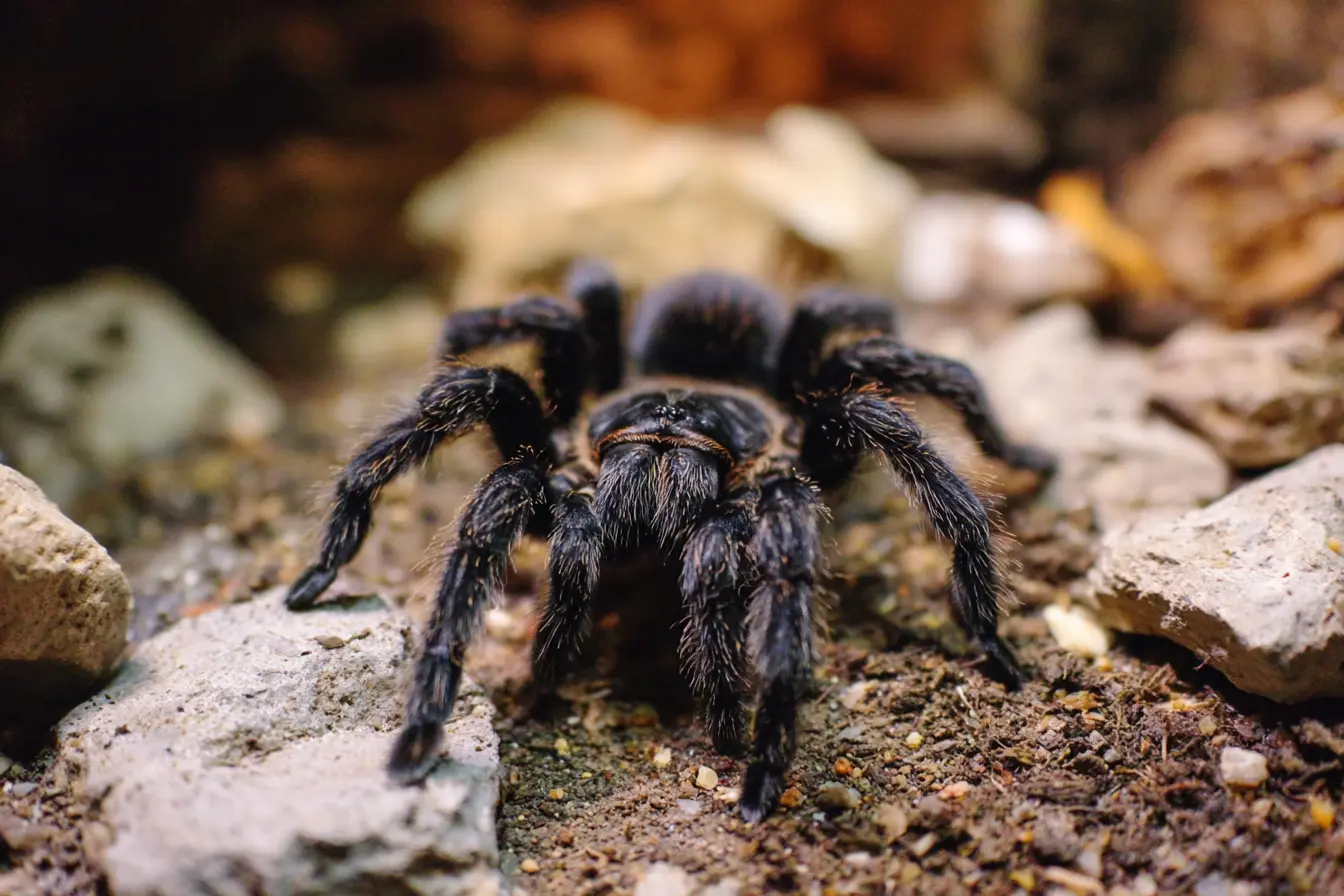
The Black Emilia Tarantula (Tliltocatl vagans, formerly Brachypelma vagans) is a hardy, terrestrial New World species known for its deep black colouration, bold feeding response, and relatively simple care requirements. Native to Central America, particularly Mexico and Belize, this species inhabits dry forests and scrublands where it spends much of its time in burrows.
Popular with both intermediate keepers and confident beginners, the Black Emilia is valued for its resilience, striking appearance, and straightforward husbandry.
What Is a Black Emilia Tarantula?
The Black Emilia is a medium-to-large terrestrial tarantula characterised by its velvety black body and robust build. While not as brightly coloured as some related species, its uniform dark appearance gives it a distinctive and imposing look.
They are:
Medium to large: Adults reach 12–15 cm leg span
Terrestrial: Ground-dwelling with burrowing tendencies
Hardy: Tolerant of a range of conditions
Defensive (mild): More likely to flick hairs than bite
As a New World species, they possess urticating hairs used as a primary defence.
Enclosure Requirements
Tank Size
Black Emilias require more floor space than height.
Spiderlings: Small vials or tubs
Juveniles: 15–20 cm enclosures
Adults: Minimum 30 x 30 x 30 cm enclosure
A good rule is to provide at least 2–3 times the spider’s leg span in floor space.
Enclosure Type
A secure terrestrial enclosure with good ventilation is essential.
Suitable options include:
Glass terrariums
Plastic tubs with cross ventilation
Acrylic enclosures
Ensure the lid is secure, as tarantulas can climb and push weak lids.
Substrate
Substrate depth is important for comfort and potential burrowing.
Recommended substrates:
Coco fibre (coir)
Topsoil (chemical-free)
Soil/sand mixes
Provide at least 8–12 cm of substrate for juveniles and adults.
Keep the substrate mostly dry with a slightly moist corner.
Temperature and Humidity
The Black Emilia prefers relatively dry conditions compared to tropical species.
Temperature: 22–26°C
Humidity: 60–70%
Humidity can be maintained by lightly moistening part of the substrate and keeping a water dish available.
Good ventilation is key to preventing mould and stagnant air.
Lighting
No special lighting is required.
Ambient room light is sufficient
Avoid direct sunlight
Tarantulas are nocturnal and prefer dim environments.
Decor and Hiding Spots
Providing a hide is important, even if the spider does not always use it.
Include:
Cork bark hide
Half logs or artificial caves
Leaf litter for cover
Avoid tall decorations, as falls can be dangerous for heavy-bodied tarantulas.
Diet and Feeding
Black Emilias are enthusiastic feeders.
Suitable Prey:
Crickets
Locusts
Mealworms (occasionally)
Feeding Schedule:
Spiderlings: Every 3–5 days
Juveniles: Once or twice weekly
Adults: Every 7–10 days
Prey should be no larger than the spider’s abdomen.
Always remove uneaten prey after 24 hours, particularly during premoult.
Fresh water should always be available in a shallow dish.
Behaviour and Temperament
The Black Emilia is generally calm but can be defensive.
Typical behaviour:
Hair flicking when disturbed
Occasional threat postures
Moderate activity, especially at night
They are not typically aggressive but should not be handled unnecessarily.
Handling risks:
Urticating hair irritation
Potential bites
Risk of injury from falls
Observation is the safest and most rewarding way to enjoy this species.
Moulting
Moulting is essential for growth.
Signs of premoult:
Refusal to eat
Darkening abdomen
Reduced activity
During moulting:
The spider may lie on its back
Do not disturb
After moulting:
Wait 7–10 days before feeding
Fangs must fully harden
Stable conditions and access to water support successful moults.
Breeding
Breeding Tliltocatl vagans is achievable with experience.
Males mature faster and live shorter lives
Females produce egg sacs with numerous spiderlings
Spiderlings are hardy and grow steadily
As with all tarantulas, proper research is essential before attempting breeding.
Common Health Issues
Black Emilias are hardy but can still encounter issues.
Watch for:
Dehydration
Lethargy
Failed moults
Mite infestations
Most problems are linked to incorrect humidity, poor ventilation, or lack of water.
Lifespan and General Care
Females: 15–20 years
Males: 3–5 years
Growth rate: Moderate
Routine care includes maintaining clean conditions, providing fresh water, and feeding appropriately.
Tank Mates
Tarantulas should always be housed alone.
Cannibalistic behaviour is common
Cohabitation leads to stress or injury
This species is strictly solitary.
Conclusion
The Black Emilia Tarantula is a robust, attractive, and relatively easy-to-care-for species that suits keepers looking for a hardy terrestrial tarantula with a bold presence.
While not the most colourful species, its deep black appearance and reliable feeding response make it a standout addition to any collection. With proper care, respect, and stable conditions, Tliltocatl vagans can thrive for many years and provide a rewarding keeping experience.
Quick questions
- What should I know about black emilia tarantula?
- The Black Emilia Tarantula (Tliltocatl vagans) is a hardy and striking black tarantula from Central America. Vet Verified can help you compare UK veterinary practices by location, species, services and opening hours before you call.
- When should I contact a vet about black emilia tarantula?
- Contact a veterinary practice if your pet seems unwell, symptoms are getting worse, you are unsure what to do, or the situation may be urgent. Vet Verified helps you compare practice details, but a vet should advise on your pet's current care.
- Can Vet Verified help me find exotic vets?
- Yes. Use Vet Verified to compare exotic vets across the UK, then check practice profiles and call directly to confirm current availability.
Find a vet
Find a veterinary practice
Compare UK veterinary practices related to this topic. Call the practice to confirm its current services and availability.