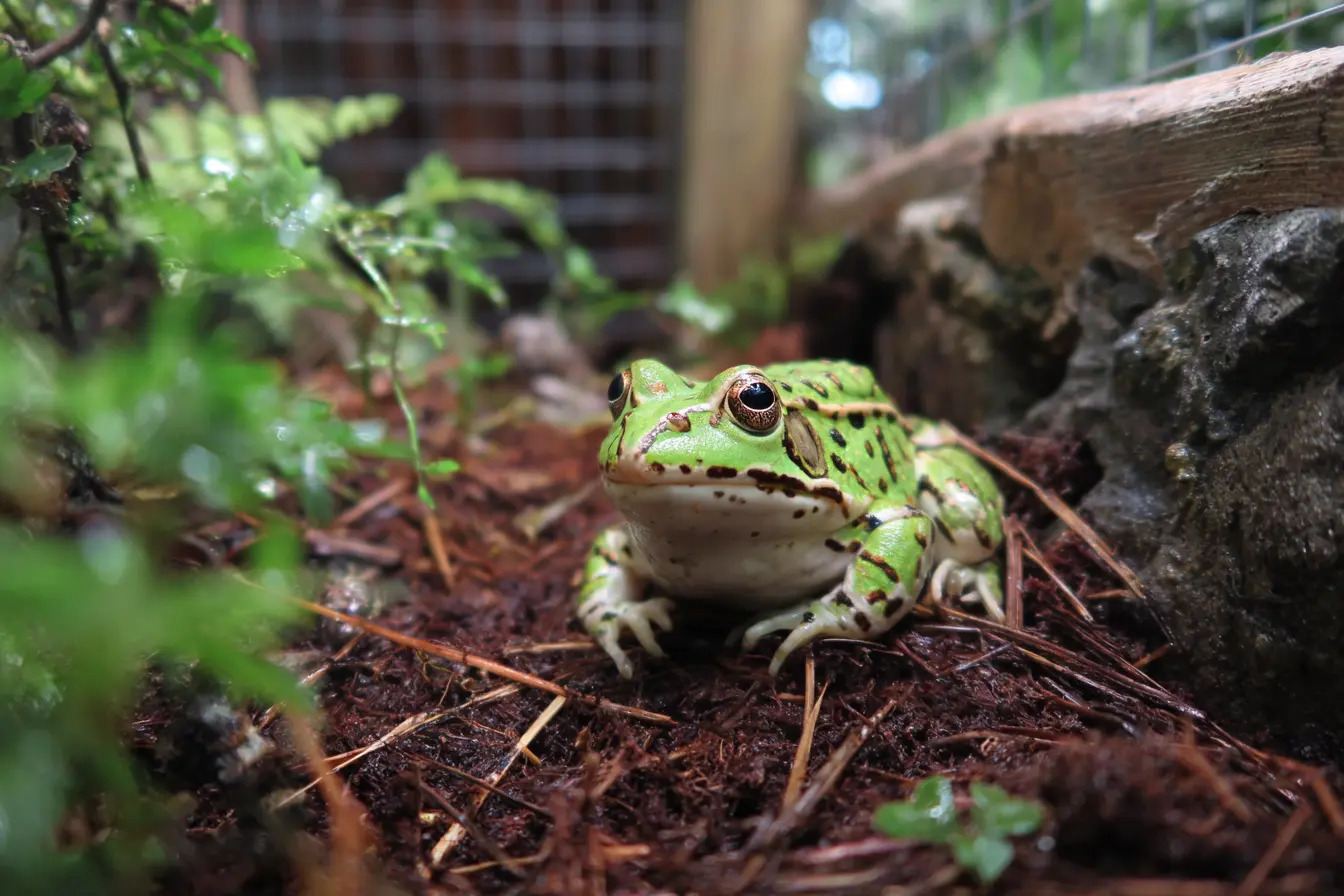
Raising terrestrial juvenile amphibians is a rewarding challenge, offering a chance to observe the early development of your animals. Once amphibians metamorphose from aquatic larvae into land-dwelling juveniles, their care requirements change significantly. Juveniles are more delicate than adults and need an environment tailored to their stage of development.
In this guide, we’ll cover how to set up a safe, secure, and healthy enclosure for terrestrial juvenile amphibians, focusing on temperature, humidity, space, and diet.
Understanding Juvenile Requirements
Terrestrial juvenile amphibians are smaller, more fragile, and more sensitive to environmental fluctuations than adults. They require:
Easy access to hiding spaces to reduce stress
High humidity to prevent dehydration
Frequent small meals to support rapid growth
Safe substrate to avoid impaction or injury
By providing these basics, you help ensure proper development and reduce the risk of illness or death.
Enclosure Size and Setup
Juveniles are generally more comfortable in smaller enclosures than adults. Too much space can make it harder for them to find food and can cause stress. A simple plastic terrarium, glass tank, or converted tub works well.
A 20 litre (5 gallon) tank is usually sufficient for a few juveniles, but this depends on species and expected adult size. The enclosure should allow for horizontal space with plenty of ground area and secure ventilation.
Substrate
Choose a substrate that holds moisture but does not pose a risk of impaction. Good options include:
Coconut fibre
Organic soil without fertilisers or pesticides
Paper towels for very young or sensitive juveniles
Sphagnum moss can be used in patches to help maintain humidity but should not cover the entire enclosure. Avoid loose substrates like sand or gravel, which can cause digestive blockages if ingested.
Hides and Decor
Juveniles are shy and prone to stress, so multiple hiding spots are essential. Use:
Pieces of cork bark
Small, half-log hides
Leaf litter
Clumps of live moss
Hides should be small and snug to provide a feeling of security. Climbing structures can be provided for semi-arboreal species, but avoid high perches to prevent falls.
Temperature and Humidity
Proper temperature and humidity are crucial during the juvenile stage.
Target temperature ranges:
Temperate species: 18–22°C (64–72°F)
Tropical species: 22–26°C (72–79°F)
Maintain humidity levels between 70–90%, depending on species. Mist the enclosure lightly once or twice daily and ensure there is always a damp section of substrate. Use a thermometer and hygrometer to monitor conditions accurately.
If needed, use a small heat mat on the side of the enclosure or a ceramic heat emitter to maintain temperature. Avoid heat lamps that can dry out the air.
Water Access
Juvenile amphibians can dehydrate quickly. Always provide a shallow water dish with clean, dechlorinated water. The water should be easy to access with sloped edges to prevent drowning.
In addition, regular misting ensures they can absorb moisture through their skin.
Feeding Juvenile Amphibians
Juveniles require frequent feeding of small, appropriately sized live prey.
Offer food daily or every other day. Suitable prey includes:
Flightless fruit flies
Pinhead crickets
Springtails
Isopods
Small chopped earthworms
Black soldier fly larvae (small stage)
All feeder insects should be gut-loaded for 24 hours before feeding. Dust prey with calcium powder twice per week and a multivitamin supplement every 1–2 weeks.
Monitor appetite and avoid overfeeding to prevent obesity. Uneaten prey should be removed to prevent stress.
Cleaning and Maintenance
Juveniles are more sensitive to poor hygiene, so clean regularly:
Spot clean daily, removing waste and uneaten food
Replace water daily
Deep clean and replace substrate every 2–4 weeks
For bioactive setups, monitor the health of the microfauna and refresh leaf litter and plants as necessary.
Common Mistakes to Avoid
Allowing humidity to drop too low leading to dehydration
Using unsafe substrate increasing the risk of impaction
Overcrowding which can cause competition and stress
Using enclosures that are too large making food difficult to find
Neglecting supplementation leading to deficiencies
Conclusion
Setting up the correct environment for terrestrial juvenile amphibians is key to their long-term success and health. By focusing on a safe, secure, and appropriately sized enclosure with stable humidity and temperature, you can raise strong, healthy juveniles that transition smoothly into adulthood.
Attention to detail during this early stage will reward you with healthy, vibrant amphibians and a deeper understanding of their natural behaviours and development.
Quick questions
- What should I know about environment for terrestrial juvenile amphibians?
- Learn how to care for terrestrial juvenile amphibians with the right setup and environment. After metamorphosis, juveniles need a secure enclosure that offers easy access to hides, high humidity, and frequent feeding. Vet Verified can help you compare UK veterinary practices by location, species, services and opening hours before you call.
- When should I contact a vet about environment for terrestrial juvenile amphibians?
- Contact a veterinary practice if your pet seems unwell, symptoms are getting worse, you are unsure what to do, or the situation may be urgent. Vet Verified helps you compare practice details, but a vet should advise on your pet's current care.
- Can Vet Verified help me find exotic vets?
- Yes. Use Vet Verified to compare exotic vets across the UK, then check practice profiles and call directly to confirm current availability.
Find a vet
Find a veterinary practice
Compare UK veterinary practices related to this topic. Call the practice to confirm its current services and availability.