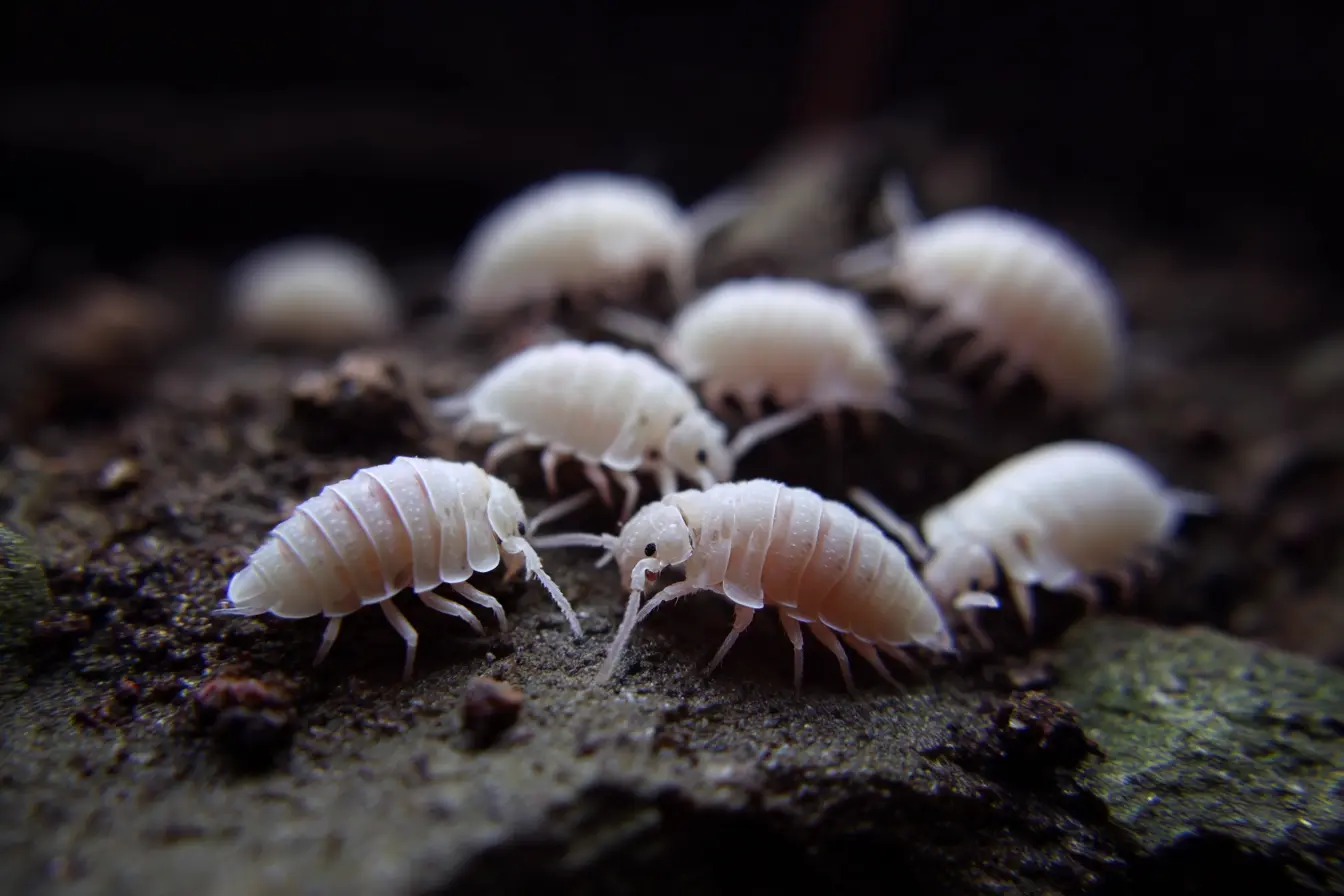
Dwarf White Isopods (Trichorhina tomentosa) are tiny, soil-dwelling crustaceans widely used in bioactive enclosures and microfauna cultures. Despite their small size and understated appearance, they are incredibly useful, acting as efficient decomposers that help maintain healthy, self-sustaining ecosystems.
Originating from tropical regions, these isopods thrive in warm, humid environments and reproduce rapidly under the right conditions. They are ideal for both standalone cultures and as part of a clean-up crew in reptile, amphibian, and invertebrate enclosures.
What Are Dwarf White Isopods?
Dwarf White Isopods are small terrestrial crustaceans that spend most of their lives within the substrate. Unlike larger, more visible isopod species, they are rarely seen on the surface and prefer to burrow and remain hidden.
They are:
Very small: Typically 2–4 mm in length
Fossorial: Spend most of their time underground
Fast breeding: Capable of establishing large colonies quickly
Detritivores: Feed on decaying organic matter
Their pale white colouration and constant activity make them highly effective at breaking down waste.
Enclosure Requirements
Culture Size
Dwarf White Isopods can be kept in relatively small containers.
Starter cultures: Small tubs (1–3 litres)
Established colonies: Larger tubs for expansion
They are often introduced directly into bioactive enclosures rather than maintained separately.
Enclosure Type
Simple plastic tubs work perfectly.
Ideal setup includes:
Secure lid with ventilation holes
Cross-ventilation to prevent stagnation
Opaque or semi-opaque containers (they prefer darkness)
Avoid overly dry or fully sealed containers.
Substrate
Substrate is the most important factor for success.
Recommended mix:
Coco fibre or peat-free compost
Decaying hardwood leaves
Rotten wood (soft, pesticide-free)
Sphagnum moss
Depth should be at least 5–8 cm to allow burrowing and moisture retention.
The substrate acts as both habitat and food source.
Temperature and Humidity
As a tropical species, they require consistently warm and humid conditions.
Temperature: 20–26°C
Humidity: 70–90%
Keep one side of the enclosure more moist than the other to create a humidity gradient.
Decor and Microhabitat
Even in small cultures, structure is beneficial.
Provide:
Leaf litter across the surface
Pieces of bark or wood
Moss patches
These elements help retain moisture and create microclimates.
Diet and Feeding
Dwarf White Isopods are detritivores and will consume a wide range of organic material.
Staple Diet:
Decaying leaves
Rotting wood
Organic substrate
Supplemental Foods:
Vegetable scraps (e.g. courgette, carrot, cucumber)
Fish flakes or shrimp pellets (protein source)
Dried leaves (oak, beech)
Feed small amounts regularly and remove uneaten fresh food before it moulds excessively.
Calcium Source:
Crushed eggshell
Cuttlebone
Limestone
Calcium is essential for exoskeleton development.
Behaviour and Colony Growth
Dwarf White Isopods are highly active within the substrate.
Typical behaviour:
Constant burrowing
Rapid reproduction
Avoidance of light
They reproduce via live birth (not eggs), which contributes to their fast colony growth.
Under optimal conditions, populations can double quickly.
Use in Bioactive Setups
One of the main reasons keepers use Dwarf White Isopods is for bioactive enclosures.
They help by:
Breaking down waste (faeces, shed skin, uneaten food)
Aerating the substrate
Supporting microbial health
They are particularly useful in:
Reptile enclosures
Amphibian setups
Invertebrate habitats
Due to their small size, they are less likely to be eaten compared to larger isopods.
Tank Mates
In standalone cultures, they are typically kept alone.
In bioactive setups, they coexist well with:
Springtails
Other microfauna
They are generally too small to bother other animals and rarely cause issues.
Breeding
Breeding happens readily without intervention.
Females carry young in a brood pouch
Juveniles are miniature versions of adults
No special setup is required
Maintaining stable warmth, humidity, and food availability is enough to sustain a thriving colony.
Common Issues
Dwarf White Isopods are hardy but can encounter problems.
Watch for:
Dry substrate (leading to die-off)
Foul smells (overfeeding or poor ventilation)
Mould outbreaks (usually harmless, but excessive growth indicates imbalance)
Maintaining a balance of moisture, airflow, and food is key.
Lifespan and General Care
Lifespan: Approximately 1–2 years
Colony growth: Rapid and continuous
Maintenance: Low
Regularly topping up leaf litter and monitoring moisture levels is usually sufficient.
Pros and Cons
Advantages:
Excellent clean-up crew
Fast breeding
Low maintenance
Ideal for bioactive setups
Considerations:
Rarely visible (not a display species)
Can overpopulate in small enclosures
May outcompete slower microfauna
Conclusion
Dwarf White Isopods are one of the most practical and efficient additions to any bioactive setup. While they may not be visually striking, their ecological role is invaluable.
For keepers looking to create a self-sustaining enclosure or maintain a reliable microfauna culture, Trichorhina tomentosa is an excellent choice. With minimal care requirements and rapid reproduction, they provide long-term benefits to both the enclosure and its inhabitants.
Quick questions
- What should I know about dwarf white isopods?
- Dwarf White Isopods (Trichorhina tomentosa) are small soil-dwelling crustaceans known for their role in bioactive enclosures. Originally from tropical regions, they help maintain ecosystems by decomposing organic matter. Vet Verified can help you compare UK veterinary practices by location, species, services and opening hours before you call.
- When should I contact a vet about dwarf white isopods?
- Contact a veterinary practice if your pet seems unwell, symptoms are getting worse, you are unsure what to do, or the situation may be urgent. Vet Verified helps you compare practice details, but a vet should advise on your pet's current care.
- Can Vet Verified help me find exotic vets?
- Yes. Use Vet Verified to compare exotic vets across the UK, then check practice profiles and call directly to confirm current availability.
Find a vet
Find a veterinary practice
Compare UK veterinary practices related to this topic. Call the practice to confirm its current services and availability.