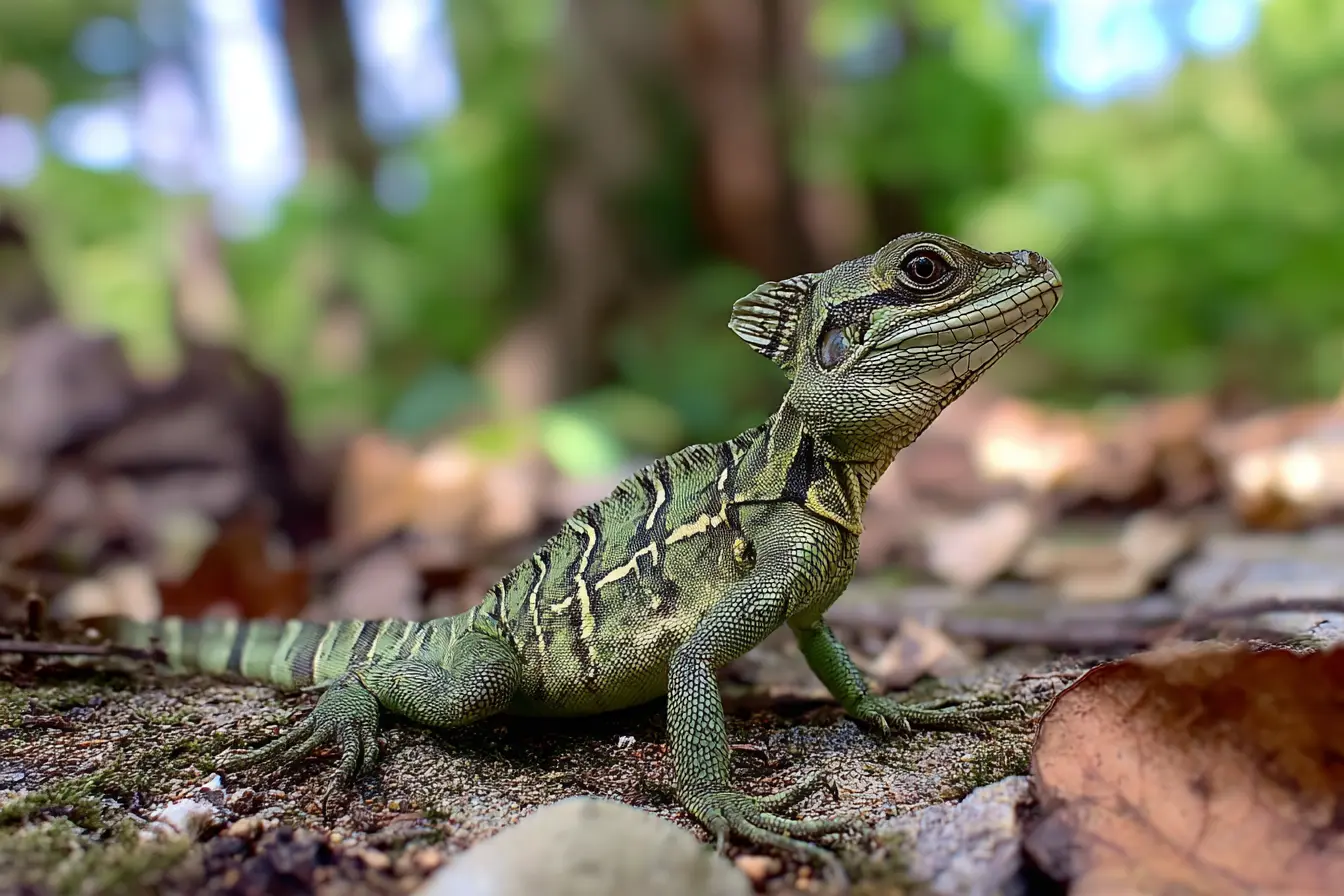
The Brown Basilisk (Basiliscus vittatus), often nicknamed the “Jesus lizard”, is a dramatic and athletic reptile famed for its ability to sprint across the surface of water. With its alert expression, powerful limbs, and bold striping, this species brings movement, intelligence, and real presence to a large tropical vivarium.
Native to Central America and parts of Mexico, the Brown Basilisk is an active, semi-arboreal lizard that thrives near water. While hardy and fascinating, it is a demanding species that requires space, structure, and careful environmental control. It is best suited to experienced keepers who enjoy observing natural behaviour rather than handling.
Origins and Natural Habitat
Brown Basilisks are found from southern Mexico through Central America into parts of northern South America. They inhabit tropical forests, riverbanks, mangroves, plantations, and areas of dense vegetation close to water.
In the wild, they spend much of their time basking on branches overhanging rivers and streams. When threatened, they will leap into the water and either swim or run across the surface using their long toes and fringed scales. This close association with water is central to their captive care.
Appearance and Temperament
Physical Traits
Size: 60–75 cm total length, including the tail
Build: Slender but powerful, with long limbs and toes
Colouration: Brown or olive with cream or yellow striping along the body
Crest: Males develop small head and dorsal crests, less dramatic than those of Green Basilisks
Tail: Extremely long and laterally compressed, used for balance and swimming
Behaviour and Temperament
Brown Basilisks are alert, fast, and nervous by nature. They rely on speed and distance rather than aggression and will flee if they feel threatened.
In captivity, they are intelligent and aware of their surroundings but remain easily stressed by excessive handling or cramped enclosures. With time and consistency, they often become confident display animals, basking openly and feeding in view of their keeper.
They are not suitable for regular handling and should be regarded as an observation species.
Housing Requirements
This species requires a large, vertically oriented tropical vivarium with access to water, strong lighting, and plenty of climbing opportunities.
Enclosure Size
Single adult: Minimum 180 cm x 90 cm x 180 cm
Pair or group (1 male, 2 females): Larger is strongly recommended
Height and floor space are equally important. Many keepers opt for custom-built enclosures or dedicated reptile rooms.
Heating and Temperature Gradient
Basking spot: 32–35°C
Ambient daytime temperature: 26–29°C
Cool area: 24–25°C
Night-time: Drop to 22–24°C
Use a bright basking lamp positioned above a sturdy branch or platform. Basilisks require warmth to fuel their high activity levels.
Lighting and UVB
Strong UVB lighting (10–12%) is essential for calcium metabolism and long-term health. As diurnal, sun-loving lizards, Brown Basilisks benefit greatly from intense, full-spectrum lighting.
Provide bright daylight illumination alongside UVB and maintain a 12-hour day/night cycle.
Humidity and Water
Maintain humidity between 60–80%.
Daily misting is essential
Provide a large water feature or pool deep enough for swimming
Ensure water is kept clean and changed regularly
Good ventilation is vital to prevent stagnant, overly damp conditions.
Substrate and Furnishings
Substrate: Soil-based tropical mix, coconut fibre, or bioactive substrate
Decor: Thick branches, vines, cork bark, and elevated basking platforms
Plants: Large, sturdy plants such as pothos, philodendron, ficus, or live bamboo
Hides: Dense foliage and shaded areas at multiple levels
The enclosure should feel complex and three-dimensional, with multiple escape routes and perching options.
Diet and Feeding
Brown Basilisks are omnivorous, with dietary needs that change as they mature.
Feeding Schedule
Juveniles: Daily
Adults: Every other day
Food Items
Insects and Protein
Crickets
Locusts
Roaches
Silkworms
Occasional pinky mice or fish (sparingly, for adults only)
Plant Matter
Dark leafy greens (collard, dandelion, endive)
Squash and courgette
Occasional fruit such as mango or papaya
Supplementation
Calcium without D3: At most insect feeds
Calcium with D3: Once weekly
Multivitamin: Once weekly
A balanced omnivorous diet is important to prevent nutritional deficiencies.
Handling and Interaction
Handling should be kept to an absolute minimum. Brown Basilisks are fast, powerful, and prone to panic if restrained, which can result in injury or tail loss.
If handling is unavoidable:
Move slowly and calmly
Support the entire body
Keep sessions brief and controlled
Most keepers focus on building trust through routine and calm presence rather than physical interaction.
Common Health Concerns
Stress-Related Issues
Small or barren enclosures often lead to chronic stress. Space, cover, and visual security are essential.
Metabolic Bone Disease (MBD)
Caused by inadequate UVB or calcium. Prevented with strong lighting and proper supplementation.
Dehydration
Despite their love of water, dehydration can occur without proper humidity and access to clean water.
Injuries
High activity levels mean sharp edges or unstable decor can cause injuries. Ensure furnishings are secure.
Lifespan and Breeding
With good care, Brown Basilisks can live 8–12 years in captivity.
Breeding is possible but requires space and experience. Males display through head-bobbing and body posturing. Females lay clutches of 5–15 eggs in warm, moist substrate. Incubation at around 28–30°C lasts 8–10 weeks.
Observation and Enrichment
Brown Basilisks are among the most engaging reptiles to observe.
Enrichment ideas include:
Multiple basking and jumping routes
Flowing or filtered water features
Seasonal changes in lighting and feeding routines
Occasional rearrangement of branches and plants
Their movement, alertness, and water interaction make them endlessly fascinating.
Conclusion
The Brown Basilisk is a spectacular, athletic lizard that brings the drama of tropical riverbanks into captivity. Its speed, intelligence, and unique water-running ability make it one of the most captivating display reptiles available.
However, it is not a casual pet. Large space, strong lighting, and careful environmental control are non-negotiable. For experienced keepers prepared to meet its needs, the Brown Basilisk is a truly impressive and rewarding species.
Quick questions
- What should I know about brown basilisk?
- Brown Basilisk (Basiliscus vittatus), the "Jesus lizard", is a fast, water-loving reptile best suited to experienced keepers. Vet Verified can help you compare UK veterinary practices by location, species, services and opening hours before you call.
- When should I contact a vet about brown basilisk?
- Contact a veterinary practice if your pet seems unwell, symptoms are getting worse, you are unsure what to do, or the situation may be urgent. Vet Verified helps you compare practice details, but a vet should advise on your pet's current care.
- Can Vet Verified help me find exotic vets?
- Yes. Use Vet Verified to compare exotic vets across the UK, then check practice profiles and call directly to confirm current availability.
Find a vet
Find a veterinary practice
Compare UK veterinary practices related to this topic. Call the practice to confirm its current services and availability.