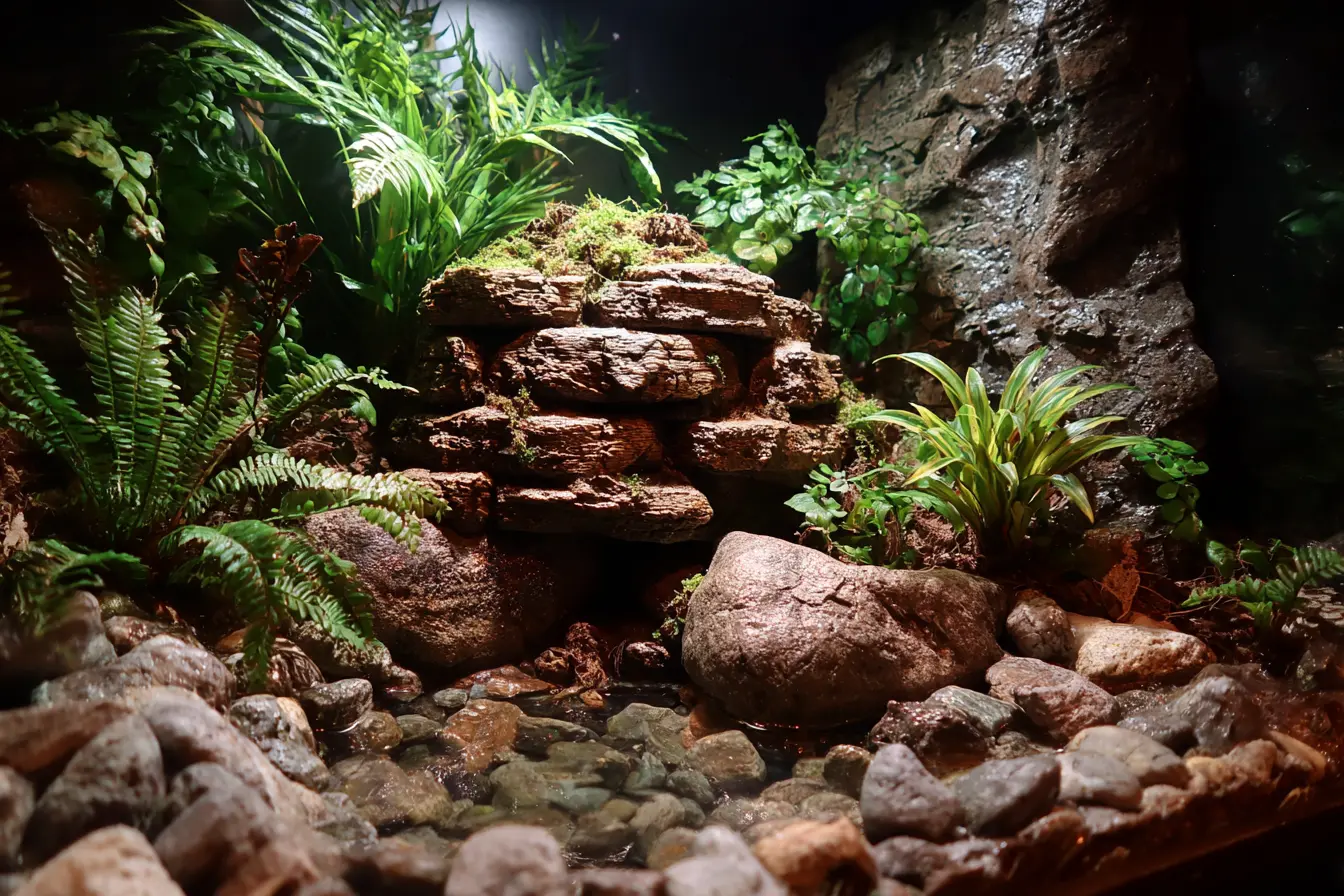
Caring for semi-aquatic juvenile amphibians presents a unique but rewarding challenge. These species, such as juvenile newts, salamanders, and some frogs, require access to both water and land to thrive. Creating a balanced environment that supports their transition from aquatic larvae to partially terrestrial juveniles is crucial for their health and development.
This guide explains how to set up a safe, healthy enclosure for semi-aquatic juvenile amphibians, focusing on enclosure design, water quality, land access, and feeding.
Why a Semi-Aquatic Setup is Important
Juvenile semi-aquatic amphibians often retain some aquatic behaviours while gradually developing terrestrial habits. They need easy access to water for hydration and security but also require land areas for resting, hiding, and feeding.
A proper semi-aquatic setup mimics natural environments like ponds with nearby banks or stream edges, helping juveniles grow strong and stress-free.
Choosing the Right Enclosure
Semi-aquatic juveniles do well in low, wide enclosures that allow for a good balance between land and water.
Recommended sizes:
30 litre (8 gallon) tank for a few juveniles
60 litre (15 gallon) or larger for groups or fast-growing species
Plastic tubs can be used for temporary setups, but glass or acrylic aquariums provide better visibility and control for long-term care.
Designing the Land-Water Layout
A 50:50 split between land and water is a good starting point, though some species may prefer more land or water depending on their habits.
Land Area
Create a gently sloped bank leading from water to land.
Use cork bark, smooth rocks, or a floating platform for easy access.
Land areas should include hiding places like moss, bark, or small plants to reduce stress.
The substrate should retain moisture, such as coconut fibre, sphagnum moss, or organic soil.
Water Area
Keep the water section shallow enough for juveniles to easily reach the surface but deep enough to allow swimming.
Depth of 4–8 cm (1.5–3 inches) is suitable for most juveniles.
Include smooth pebbles or aquatic plants for additional hiding places.
Use dechlorinated water at all times.
Filtration and Water Maintenance
Clean water is essential for juvenile amphibians.
Use a gentle sponge filter or low-flow internal filter to maintain water quality without creating strong currents.
Perform partial water changes (25–50%) twice weekly or more often if water becomes cloudy.
Remove uneaten food promptly to avoid fouling the water.
Good water hygiene helps prevent infections and promotes healthy growth.
Temperature and Humidity
Juvenile amphibians are sensitive to temperature fluctuations and dehydration.
Maintain daytime temperatures between 20–24°C (68–75°F) for temperate species, and up to 26°C (79°F) for tropical species.
Night-time temperatures can drop a few degrees but should remain stable.
Keep humidity levels between 70–90%, achieved through regular misting and a moist land substrate.
Use a reliable thermometer and hygrometer to monitor conditions. Heating can be provided via an under-tank heat mat (on the land side) or a low-wattage heater for tropical setups.
Lighting
Semi-aquatic juveniles do not require intense lighting.
A standard LED or low-level daylight bulb set on a 12-hour cycle is sufficient.
UVB lighting is optional but can benefit plant growth and overall activity levels in some species.
Avoid strong, direct light, which can cause stress.
Feeding Juvenile Amphibians
Juveniles grow rapidly and need frequent feeding with small, live prey.
Feed daily or every other day.
Suitable food includes flightless fruit flies, pinhead crickets, small earthworms, bloodworms, black soldier fly larvae, and daphnia (in the water section).
Ensure prey size is appropriate—generally no larger than the space between the amphibian’s eyes.
Dust food with calcium twice weekly and use a multivitamin once every 1–2 weeks to prevent nutritional deficiencies.
Cleaning and General Maintenance
A clean environment is key for healthy juveniles.
Spot clean land areas daily by removing waste and uneaten food.
Change part of the water regularly to prevent build-up of harmful bacteria.
Replace land substrate every few weeks or as needed, especially if foul odours develop.
For bioactive setups, monitor the balance of clean-up crews like springtails and isopods.
Common Mistakes to Avoid
Allowing water to stagnate leading to bacterial growth.
Inadequate land access resulting in stress or drowning.
Using harsh filtration that causes strong water currents.
Feeding oversized or inappropriate prey items
Neglecting regular spot cleaning leading to rapid enclosure fouling.
Conclusion
Setting up a proper environment for semi-aquatic juvenile amphibians involves creating a careful balance between water and land, maintaining excellent water quality, providing high humidity, and offering a varied diet. With the right setup, these fascinating young amphibians can develop safely, displaying natural behaviours as they grow into healthy adults.
A well-designed semi-aquatic setup ensures not only survival but also healthy development, providing a rewarding and educational experience for keepers.
Quick questions
- What should I know about semi-aquatic juvenile amphibian care?
- This guide shows how to set up a safe home for semi-aquatic juvenile amphibians like newts, salamanders and some frogs. Use a low, wide tank: about 30 litre for a few juveniles and 60 litre or larger for groups. Vet Verified can help you compare UK veterinary practices by location, species, services and opening hours before you call.
- When should I contact a vet about semi-aquatic juvenile amphibian care?
- Contact a veterinary practice if your pet seems unwell, symptoms are getting worse, you are unsure what to do, or the situation may be urgent. Vet Verified helps you compare practice details, but a vet should advise on your pet's current care.
- Can Vet Verified help me find exotic vets?
- Yes. Use Vet Verified to compare exotic vets across the UK, then check practice profiles and call directly to confirm current availability.
Find a vet
Find a veterinary practice
Compare UK veterinary practices related to this topic. Call the practice to confirm its current services and availability.