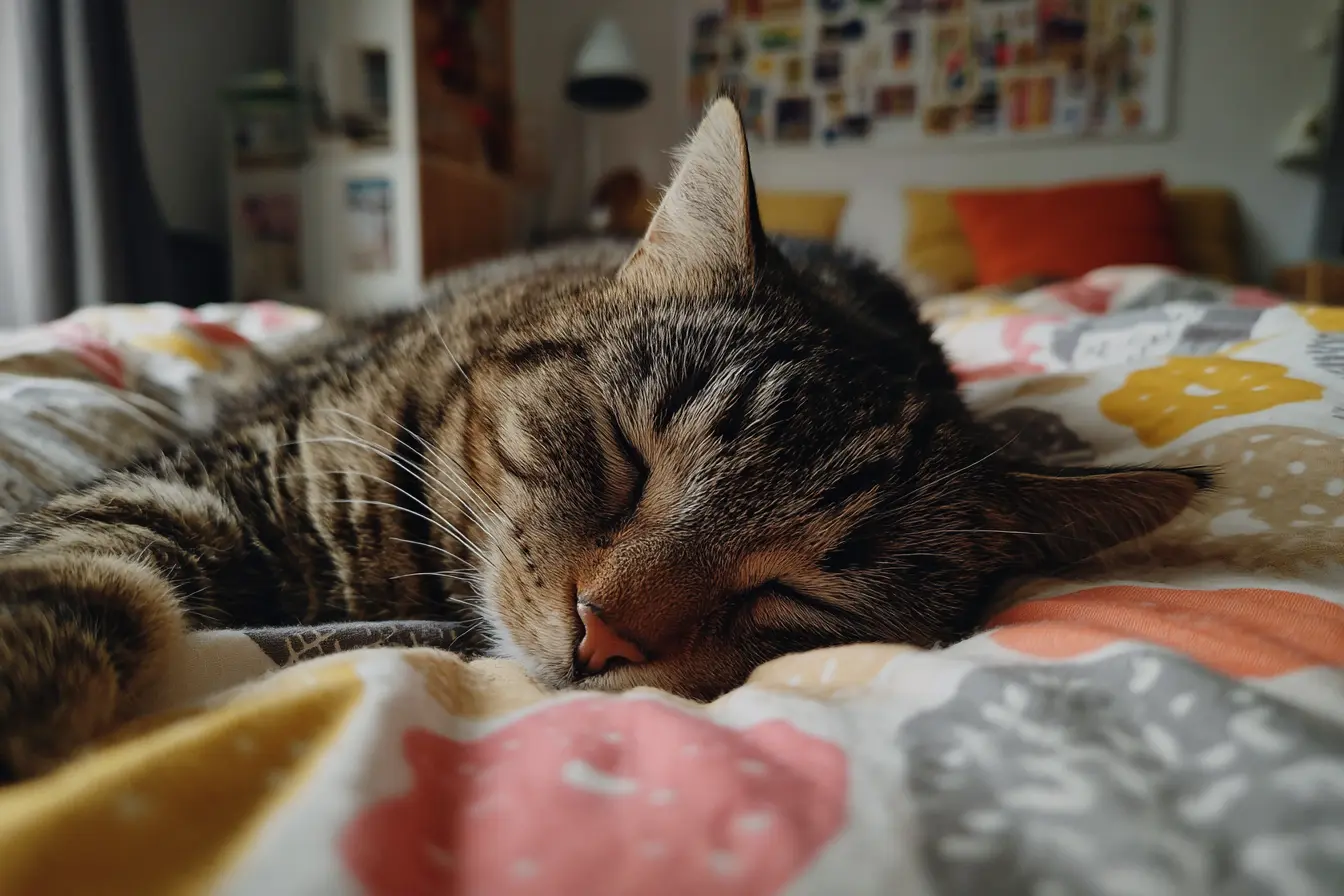
Few sounds are as comforting as the gentle rumble of a cat’s purr. For many owners, it signals contentment, affection and trust. But purring is far more complex than a simple expression of happiness. Cats purr for a variety of reasons; some joyful, some surprising, and some linked to health and survival.
What Exactly Is a Purr?
A purr is a continuous, low-frequency, rhythmic vibration produced by a cat’s laryngeal (voice box) muscles. Unlike a meow, which is a voluntary vocalisation, purring is a repetitive neuromuscular action that occurs during both inhalation and exhalation.
It typically falls within a frequency range of 25 to 150 Hertz (Hz). This frequency range is especially interesting because it overlaps with frequencies known to promote tissue repair and bone growth in mammals.
How Do Cats Physically Produce a Purr?
For years, scientists debated how purring works. The current understanding is that:
A neural oscillator in the brain sends rhythmic signals to the laryngeal muscles.
These muscles rapidly contract and relax, around 25 to 30 times per second.
The vocal cords rapidly open and close.
Air moving over them during both inhalation and exhalation produces the continuous vibration we hear as a purr.
This explains why purring continues uninterrupted while the cat breathes in and out.
Unlike larger cats such as lions and tigers, domestic cats have a fully ossified hyoid bone, which allows continuous purring but prevents true roaring. Big cats that roar typically cannot produce sustained purring in the same way domestic cats do.
When Do Kittens Start Purring?
Kittens can begin purring at just a few days old.
Purring serves crucial early-life functions:
It helps the mother locate her kittens during feeding.
It signals contentment and that the kitten is safe.
It strengthens the bond between mother and kitten.
It provides calming vibrations during nursing.
Mother cats also purr during labour and while nursing, possibly to soothe themselves and their young.
The Many Reasons Cats Purr
While contentment is the most recognised reason, cats purr in a wide range of emotional and physical states.
Contentment and Relaxation
The classic scenario:
Curled up on your lap
Half-closed eyes
Slow blinking
This is the “happy purr”, often steady, soft, and accompanied by relaxed body language.
Bonding and Communication
Cats purr to communicate:
With their mother
With other cats
With humans
Interestingly, cats have developed a specific type of purr, sometimes called a solicitation purr, that blends a purr with a higher-pitched cry. Studies suggest this triggers a nurturing response in humans, similar to a baby’s cry. Many owners notice this when their cat wants feeding.
Self-Soothing During Stress
Cats may purr when:
Recovering from surgery
Frightened
Injured
In unfamiliar environments
In these cases, purring acts as a calming mechanism, much like a human humming when nervous.
Pain or Illness
One of the most misunderstood facts about purring is that cats sometimes purr when they are unwell.
They may purr:
When in pain
During labour
When seriously ill
Near the end of life
This does not mean they are comfortable. It is believed to be:
A coping mechanism
A form of self-soothing
Possibly a self-healing response
For this reason, purring alone should never be taken as proof that a cat feels fine.
Healing and Physical Repair
This is where purring becomes scientifically fascinating.
The 25 to 150 Hz frequency range associated with purring overlaps with frequencies used in therapeutic medicine to promote healing. Research has shown that vibrations within this range may:
Stimulate bone growth
Improve fracture healing
Support tissue repair
Reduce pain and inflammation
Aid muscle recovery
Some researchers believe cats may have evolved purring as a low-energy way to maintain bone density and muscle health during long periods of rest and sleep. Cats sleep for up to 16 hours a day, so this built-in vibration system may help prevent muscle and bone deterioration.
There is also speculation that this may explain why cats often recover from injuries more quickly than expected.
Do All Cats Purr?
Most domestic cats can purr, but not all individuals do so frequently or audibly.
Factors that influence purring include:
Personality
Breed tendencies
Health
Age
Some cats purr very quietly, producing vibrations you can feel but barely hear. Others are remarkably loud and resonant.
Quick questions
- What should I know about purring?
- Cats purr for many reasons, not just when they're happy. This familiar sound is produced by rhythmic signals to a cat's muscles, creating a vibration. Vet Verified can help you compare UK veterinary practices by location, species, services and opening hours before you call.
- When should I contact a vet about purring?
- Contact a veterinary practice if your pet seems unwell, symptoms are getting worse, you are unsure what to do, or the situation may be urgent. Vet Verified helps you compare practice details, but a vet should advise on your pet's current care.
- Can Vet Verified help me find cat vets?
- Yes. Use Vet Verified to compare cat vets across the UK, then check practice profiles and call directly to confirm current availability.
Find a vet
Find a veterinary practice
Compare UK veterinary practices related to this topic. Call the practice to confirm its current services and availability.