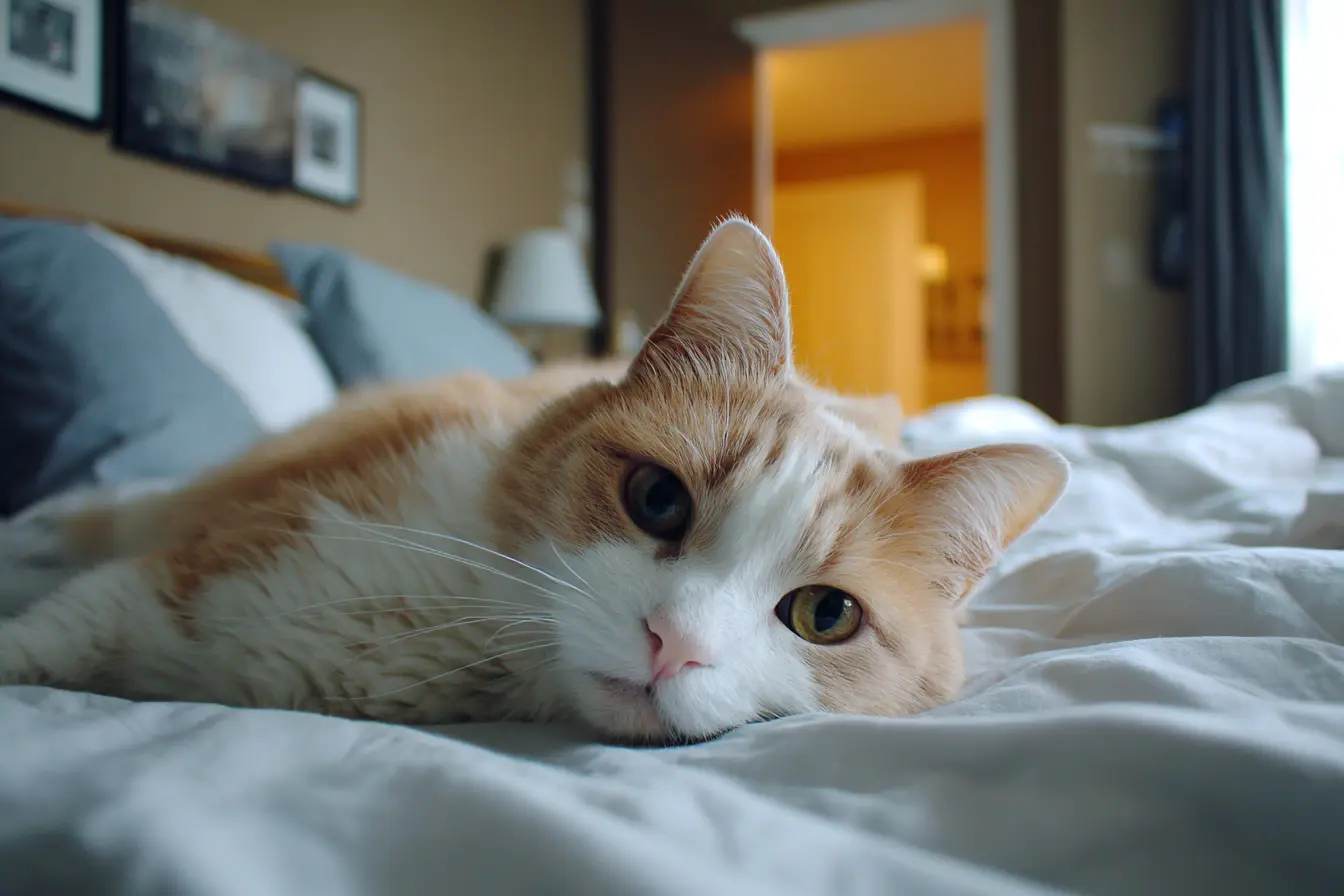
If you share your home with a cat, you have almost certainly experienced kneading. Whether it is on your lap, a blanket, a cushion or even your stomach at 5am, the rhythmic pressing of paws, often accompanied by a blissful expression, is a familiar feline behaviour.
Kneading is sometimes called “making biscuits” because of the way cats push their paws in and out alternately, much like dough being worked by hand. While it looks charming (and occasionally painful), kneading has deep roots in feline biology and behaviour.
What Is Kneading?
Kneading is a repetitive, rhythmic motion in which a cat pushes one paw forward against a soft surface, then alternates with the other paw. Some cats keep their claws retracted, while others extend them fully. Many cats purr while kneading, and some will drool, zone out, or appear deeply relaxed.
The behaviour is usually directed at:
Soft blankets
Cushions
Bedding
Clothing
Their owner’s lap
Other animals
Although kneading is most common on soft surfaces, some cats will knead hard objects or even the air.
The Origins of Kneading: Kittenhood
Kneading begins in early kittenhood. When nursing, kittens knead their mother’s abdomen around the mammary glands. This motion stimulates milk flow and helps them feed more efficiently.
This early association is powerful. Kneading during nursing is linked to:
Warmth
Safety
Nourishment
Physical closeness
Contentment
Because kittens begin kneading within the first weeks of life, the behaviour becomes neurologically embedded during a crucial bonding period.
Many adult cats continue kneading as a form of behavioural carryover from kittenhood.
Why Adult Cats Knead
Although adult cats no longer need milk, kneading persists for several reasons.
Comfort and Contentment
The most common reason for kneading in adult cats is comfort. Many cats knead when they feel:
Relaxed
Safe
Secure
Loved
Content
The behaviour is often accompanied by purring, slow blinking and a relaxed posture. In this context, kneading can be seen as a sign of emotional wellbeing.
When your cat kneads your lap, it is usually a strong indication of trust.
Creating a Comfortable Resting Spot
In the wild, cats would pat down grass, leaves or soft ground to create a comfortable resting place. Kneading may be a retained instinct linked to preparing a sleeping area.
The repetitive pressing action can:
Flatten surfaces
Test softness
Remove small debris
Make the spot more suitable for lying down
You may notice your cat kneads a blanket thoroughly before curling up to sleep.
Scent Marking
Cats have scent glands in their paw pads. When they knead, they may deposit pheromones onto the surface.
This scent marking:
Signals ownership
Reinforces territory
Creates familiarity
Increases feelings of security
When your cat kneads you, they are not only expressing affection, but also marking you as part of their safe territory.
Habit and Behavioural Memory
Some behaviours persist simply because they were reinforced early in life. If kneading was associated with warmth, feeding and safety during kittenhood, the brain may continue to activate that motor pattern during moments of relaxation.
It becomes a deeply ingrained self-soothing behaviour.
Why Do Some Cats Use Their Claws?
One of the less pleasant aspects of kneading is claw extension. Some cats keep their claws sheathed, while others dig in enthusiastically.
This variation depends on:
Individual temperament
Level of relaxation
Surface texture
Claw maintenance
Cats who are deeply relaxed may not fully regulate claw retraction. Additionally, textured fabrics may trigger stronger gripping responses.
Regular nail trimming can make kneading far more comfortable for owners.
Why Do Some Cats Drool While Kneading?
Although not universal, some cats drool during intense kneading sessions. This is often linked to:
Deep relaxation
Strong kittenhood associations
A trance-like state
Because nursing involved saliva production and close physical contact, some adult cats revert to a similar physiological response when kneading.
Mild drooling during kneading is usually normal. Excessive drooling outside this context, however, may warrant a veterinary check.
Do All Cats Knead?
Not all cats knead frequently. Differences can be influenced by:
Personality
Breed tendencies
Socialisation
Stress levels
Cats separated from their mothers very early sometimes display stronger kneading behaviours, possibly because the nursing stage was interrupted.
Other cats simply express comfort in different ways, such as head-butting, slow blinking or curling tightly beside you.
Can Kneading Be a Sign of Stress?
Although kneading is usually positive, context matters.
Occasionally, cats may knead as a self-soothing response during mild anxiety or uncertainty. In these cases, look for accompanying signs such as:
Excessive grooming
Hiding
Reduced appetite
Increased vocalisation
Changes in litter tray habits
If kneading appears obsessive or is paired with other behavioural changes, it may indicate underlying stress.
Why Do Cats Knead Other Animals?
Some cats knead:
Other household cats
Dogs
Even their owners
This behaviour often reflects:
Bonding
Comfort-seeking
Dominance in mild social contexts
Residual nursing behaviour
If the other animal tolerates it, the behaviour is typically harmless.
Managing Kneading Comfortably
Kneading is natural and should not be discouraged. However, there are practical steps you can take to protect both yourself and your belongings.
Keep your cat’s claws trimmed regularly.
Place a thick blanket on your lap during kneading sessions.
Gently reposition your cat if the kneading becomes uncomfortable.
Avoid punishing the behaviour, as this can damage trust.
If claws become embedded, calmly lift your cat’s paw rather than pulling away abruptly, which may cause them to grip tighter.
Is Kneading Ever a Problem?
Kneading itself is rarely problematic. However, consult your vet if you notice:
Sudden changes in behaviour
Signs of pain while kneading
Aggression linked to kneading
Obsessive, repetitive kneading that interferes with daily life
In most cases, kneading is simply a charming remnant of kittenhood.
Conclusion
Kneading is a deeply rooted feline behaviour that begins in early life and often continues into adulthood. What may look like a simple pressing motion is actually layered with meaning; comfort, instinct, scent marking, bonding and self-soothing all play a role.
When your cat kneads you, they are often expressing trust and contentment in a way that connects directly back to their earliest experiences of safety and nourishment.
Understanding why cats knead allows you to appreciate the behaviour for what it truly is: a small but powerful reminder of the emotional depth and evolutionary history that shape our feline companions.
Quick questions
- What should I know about kneading?
- Kneading is a common cat behaviour where cats press their paws on soft surfaces like blankets, cushions and laps. Known as 'making biscuits', it starts in kittenhood as it helps kittens get milk from their mothers. Vet Verified can help you compare UK veterinary practices by location, species, services and opening hours before you call.
- When should I contact a vet about kneading?
- Contact a veterinary practice if your pet seems unwell, symptoms are getting worse, you are unsure what to do, or the situation may be urgent. Vet Verified helps you compare practice details, but a vet should advise on your pet's current care.
- Can Vet Verified help me find dog vets?
- Yes. Use Vet Verified to compare dog vets across the UK, then check practice profiles and call directly to confirm current availability.
Find a vet
Find a veterinary practice
Compare UK veterinary practices related to this topic. Call the practice to confirm its current services and availability.
Search by species
- Dog vets Find UK veterinary practices that list care for dogs. Compare opening hours, services, facilities and verified profiles, then contact a practice directly.
- Cat vets Find UK veterinary practices that list care for cats. Compare opening hours, services, facilities and verified profiles, then contact a practice directly.