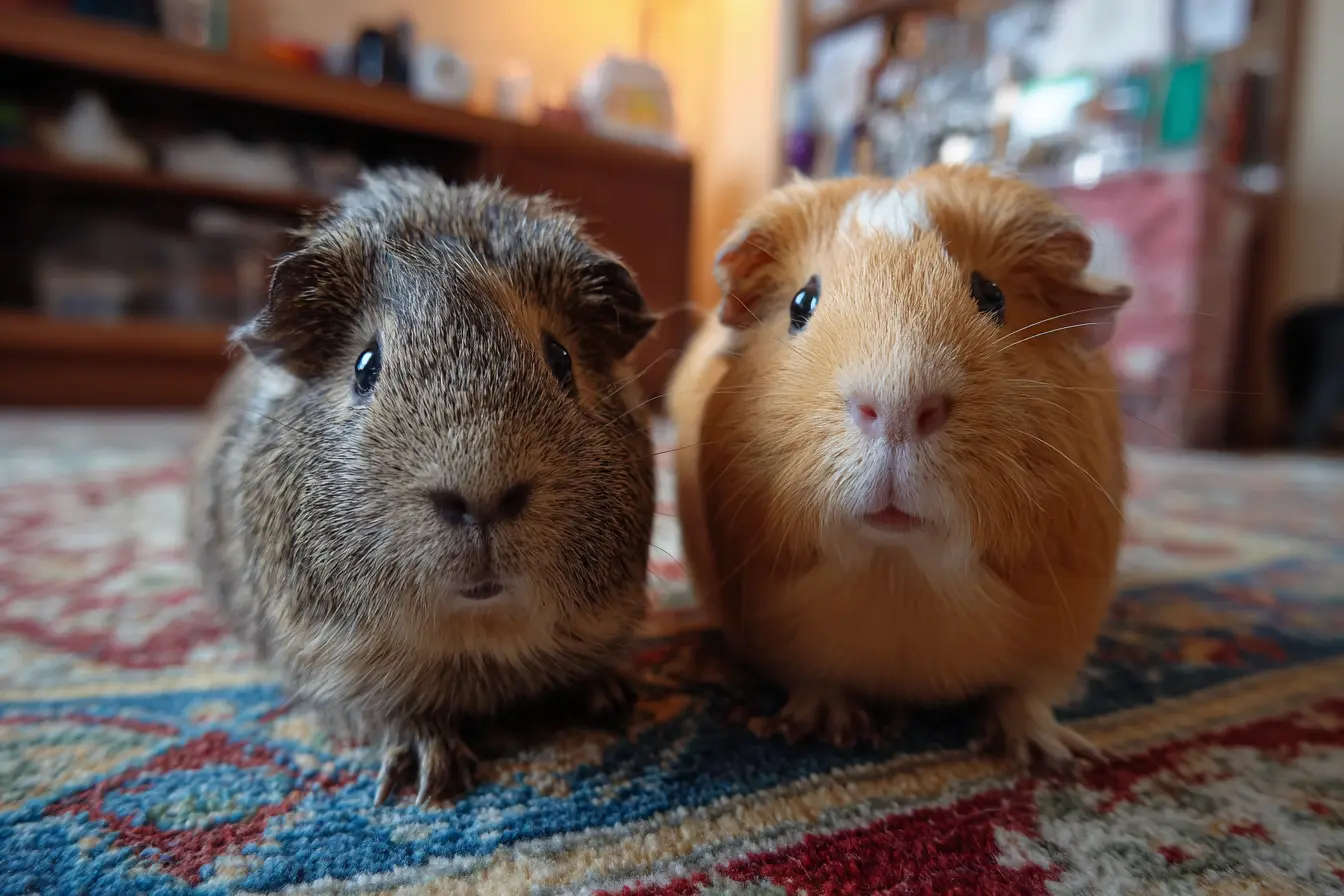
Guinea pigs are beloved for their gentle natures and charming personalities, but for many breeds, especially long-haired and curly-coated varieties, coat maintenance is a vital part of keeping them healthy and comfortable. Matting and tangling can lead to pain, skin irritation, infection, and mobility issues if left unmanaged.
This post covers everything you need to know about why matting occurs, how to prevent it, and how to safely manage tangles when they appear.
Why Does Matting Occur in Guinea Pigs?
Matting happens when loose hairs become twisted, compressed, or caught in bedding or debris, eventually forming dense knots. Guinea pigs cannot groom themselves effectively, so all coat care must come from their owners.
Common Causes of Matting:
Long or curly coats (e.g., Peruvian, Texel, Merino, Lunkarya, Alpaca)
Dirty or damp bedding
Insufficient brushing or trimming
Activity levels — energetic pigs drag long coats through tunnels and hay
Hair around the rear soiling with urine or faeces
Bedding or hay getting caught in curls
Health issues that reduce movement or grooming ability
Short-haired guinea pigs are less prone to matting, but they can still develop knots, particularly around the rump or sides.
Breeds Most Prone to Matting
While all guinea pigs can tangle, certain breeds require far more maintenance:
Long-haired breeds:
Peruvian
Sheltie (Silkie)
Coronet
Curly-coated breeds:
Texel
Merino
Lunkarya
Alpaca
These breeds often need daily or near-daily grooming to keep their coats healthy.
Daily or Regular Grooming Routine
Consistency is the best defence against matting.
Tools You’ll Need:
Wide-toothed comb
Soft-bristle brush
Small safety scissors or blunt-tipped trimming scissors
Detangling spray (small-animal safe, if used at all)
Towels or fleece lap pads
Step-by-Step Grooming:
Start slowly and calmly
Place your guinea pig on a fleece pad or your lap to help them feel secure.
Brush from the ends first
Begin at the tips of the hair and work your way toward the skin to prevent pulling.
Use short, gentle strokes
This reduces discomfort and helps pigs tolerate grooming.
Pay attention to problem areas:
Rear end and underside
Behind the ears
Around the hips
Along the belly
Under long “skirts” of long-haired breeds
Check the skin
Look for redness, dandruff, bald spots, parasites, or sores hidden under the coat.
Reward generously
Use treats and calm petting to create positive associations.
Preventative Trimming
Regular trimming is essential, especially for long-haired or curly guinea pigs.
Types of Trims:
Sanitary trim:
Keeps fur short around the bottom to prevent urine scald, faecal build-up, and flystrike.
Skirt trim:
Shortens long hair around the sides and rear to make everyday care more manageable.
Full coat trim (optional):
Some owners choose to keep long-haired breeds trimmed year-round for easier care.
Trimming reduces the likelihood of tangles and keeps your guinea pig cleaner and more comfortable.
Managing Existing Tangles or Mats
Even with good grooming, mats can still occur. Removing them safely is important, as guinea pig skin is delicate.
How to Remove Tangles:
Hold the base of the hair close to the skin to prevent pulling.
Gently tease out the tangle with your fingers or a wide-toothed comb.
Use detangling spray sparingly (small-animal safe only; never use human products).
Work slowly; avoid tugging or snapping the fur.
How to Remove Severe Mats:
Use blunt-tipped scissors to avoid cutting the skin.
Slide a comb under the mat to act as a barrier before cutting.
Cut small sections at a time rather than trying to remove a large mat at once.
If a mat is very tight or near the skin, seek help from a vet or groomer.
Never use clippers unless trained as they can easily injure guinea pig skin.
Bathing and Coat Hygiene
Bathing is not usually needed for guinea pigs and should be done sparingly. However, it can assist in removing dirt or allergens contributing to mats.
Bathing Tips:
Use only guinea-pig-safe shampoo.
Keep baths infrequent (every few months at most).
Dry thoroughly; long-haired coats may need up to an hour.
Never allow pigs to remain damp; this can cause fungal infections.
Bedding and Environment to Reduce Matting
Choosing the right environment helps prevent tangles.
Best Bedding Options:
Fleece liners
Soft paper bedding
Fleece flippers or pads in high-traffic areas
Avoid:
Wood shavings with curled fibres
Rough bedding types
Damp or dirty bedding
Environmental Tips:
Spot-clean daily
Remove moisture-prone bedding promptly
Provide wide tunnels instead of narrow ones to reduce dragging
Nutrition’s Role in Coat Health
Good nutrition helps hair stay strong and less prone to breakage and tangling.
Essential dietary elements:
Unlimited hay (for fibre, digestion, and coat health)
Daily vitamin C (from high-C vegetables like peppers)
Quality pellets fortified with vitamin C
Fresh water daily
A well-fed guinea pig has healthier skin and stronger hair.
When to Seek Veterinary Help
Consult a vet if you notice:
Bald patches
Persistent scratching
Red or flaky skin
Painful reactions during grooming
Unexplained hair loss
Signs of mites or fungal infections
Underlying conditions can worsen matting and require medical treatment.
Conclusion
Matting and tangling are common issues, particularly in long-haired and curly-coated guinea pig breeds, but with regular grooming, appropriate housing, and attentive care, they are entirely manageable.
A consistent grooming routine, proper trimming, clean living conditions, and good nutrition will keep your guinea pig comfortable, healthy, and mat-free.
With the right approach, even the curliest and longest coats can stay beautiful and manageable allowing your guinea pig to thrive and enjoy a happy, stress-free life.
Quick questions
- What should I know about grooming guinea pigs?
- Guinea pigs, especially long-haired and curly-coated varieties, need regular coat care to prevent matting and tangling, which can cause pain and skin issues. Common causes include long coats, dirty bedding, and lack of grooming. Vet Verified can help you compare UK veterinary practices by location, species, services and opening hours before you call.
- When should I contact a vet about grooming guinea pigs?
- Contact a veterinary practice if your pet seems unwell, symptoms are getting worse, you are unsure what to do, or the situation may be urgent. Vet Verified helps you compare practice details, but a vet should advise on your pet's current care.
- Can Vet Verified help me find a vet?
- Yes. Use Vet Verified to compare UK veterinary practices by location, species, services and opening hours, then call directly to confirm current availability.
Find a vet
Find a veterinary practice
Compare UK veterinary practices related to this topic. Call the practice to confirm its current services and availability.
Find a vet