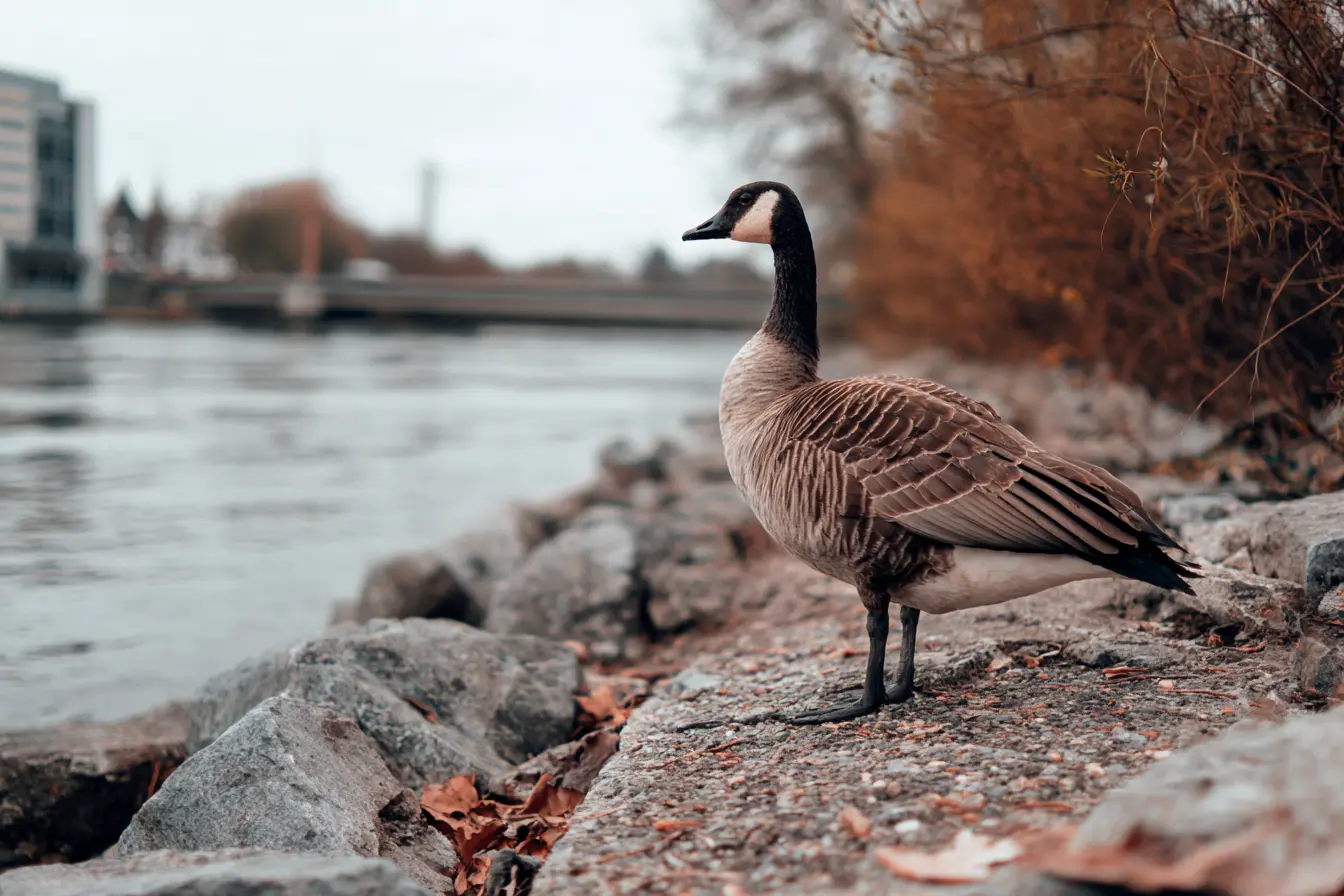
Geese are a familiar sight across the UK’s wetlands, farmland and coastlines. Their loud calls, distinctive V-shaped flight formations and strong seasonal movements make them one of the most recognisable groups of birds. While some species live here year-round, others arrive in vast numbers during autumn and winter, travelling thousands of miles from Arctic breeding grounds.
Here’s a guide to the wild geese you’re most likely to encounter in the UK, along with a few rarer visitors.
Greylag Goose
The greylag goose is the UK’s only native breeding goose species and the ancestor of most domestic geese.
It is large and bulky, with:
Grey-brown plumage
A pale head
A bright orange bill
Pink legs
Greylags are found year-round on lakes, wetlands and farmland. Many populations are resident, although migratory flocks from Iceland bolster numbers in winter.
Canada Goose
Although now widespread, the Canada goose is not native to the UK. It was introduced in the 17th century and has since become firmly established.
It is easily identified by:
A black head and neck
A bold white cheek patch
Brown body plumage
Canada geese are commonly seen on park lakes, reservoirs and urban waterways, often in large, noisy flocks.
Barnacle Goose
The barnacle goose is a winter visitor to the UK, arriving from Arctic regions such as Greenland and Svalbard.
It has striking black, white and grey plumage, with:
A black neck and breast
A white face
Silvery-grey barred wings
Large flocks can be seen on coastal marshes, estuaries and grazing land during winter months.
Brent Goose
The brent goose is a small, dark goose that winters along the UK’s coasts.
There are two main forms seen in Britain:
Dark-bellied brent goose (most common)
Pale-bellied brent goose
They have dark brown plumage, a short neck and a small white neck patch. Brent geese are typically found feeding on eelgrass and coastal vegetation.
Pink-footed Goose
A familiar winter visitor, the pink-footed goose breeds in Iceland and Greenland before migrating to the UK in autumn.
It is medium-sized, with:
Brown-grey plumage
A dark head
Pink legs
A black bill with a pink band
Large flocks gather on farmland and estuaries, particularly in eastern Scotland and eastern England.
White-fronted Goose
The white-fronted goose is named for the white patch at the base of its bill.
Two subspecies are seen in the UK:
Greater white-fronted goose
Greenland white-fronted goose
They have brown plumage with black belly markings and orange legs. These geese are winter visitors, often seen on wetlands and marshes.
Bean Goose
The bean goose is less common but still a regular winter visitor in certain areas.
It resembles the pink-footed goose but typically has:
An orange band on the bill
Orange legs
A darker overall appearance
Bean geese are most often spotted in eastern England and parts of Scotland during winter.
Snow Goose
The snow goose is considered a rare visitor in the UK, although small numbers are occasionally recorded.
They are mostly white, with black wingtips visible in flight. Some individuals may have a blue-grey morph.
Most sightings are thought to involve birds that have strayed from North American populations.
Egyptian Goose
Another non-native species, the Egyptian goose was introduced from Africa and has established breeding populations in parts of England.
It has distinctive features including:
A pale body
Dark eye patches
Chestnut wing patches
Pink legs
Egyptian geese are often seen on park lakes and rivers.
Resident or Migratory?
The UK’s geese fall broadly into two categories:
Resident species, such as:
Greylag goose
Canada goose
Egyptian goose
Winter visitors, including:
Barnacle goose
Brent goose
Pink-footed goose
White-fronted goose
Bean goose
During autumn and winter, large migratory flocks can transform wetlands and farmland into spectacular gatherings of thousands of birds.
Where to See Wild Geese
Wild geese are commonly found in:
Coastal estuaries
Salt marshes
Wetland nature reserves
Agricultural fields
Reservoirs and lakes
Winter is often the best time to observe the greatest variety of species, particularly in eastern and northern parts of the UK.
Conclusion
From the familiar Canada goose on a park lake to the vast winter flocks of pink-footed and barnacle geese along the coast, the UK supports an impressive range of wild geese. Some live here year-round, while others undertake remarkable migrations to spend the colder months on British shores.
Whether you are an experienced birdwatcher or simply enjoy spotting wildlife on a walk, learning to recognise these species adds a new level of appreciation to the changing seasons.
Quick questions
- What should I know about geese?
- Learn about the different types of geese you can see in the UK. Some, like the greylag and Canada goose, live here all year. Others, such as the barnacle and pink-footed goose, visit in winter. Vet Verified can help you compare UK veterinary practices by location, species, services and opening hours before you call.
- When should I contact a vet about geese?
- Contact a veterinary practice if your pet seems unwell, symptoms are getting worse, you are unsure what to do, or the situation may be urgent. Vet Verified helps you compare practice details, but a vet should advise on your pet's current care.
- Can Vet Verified help me find bird vets?
- Yes. Use Vet Verified to compare bird vets across the UK, then check practice profiles and call directly to confirm current availability.
Find a vet
Find a veterinary practice
Compare UK veterinary practices related to this topic. Call the practice to confirm its current services and availability.