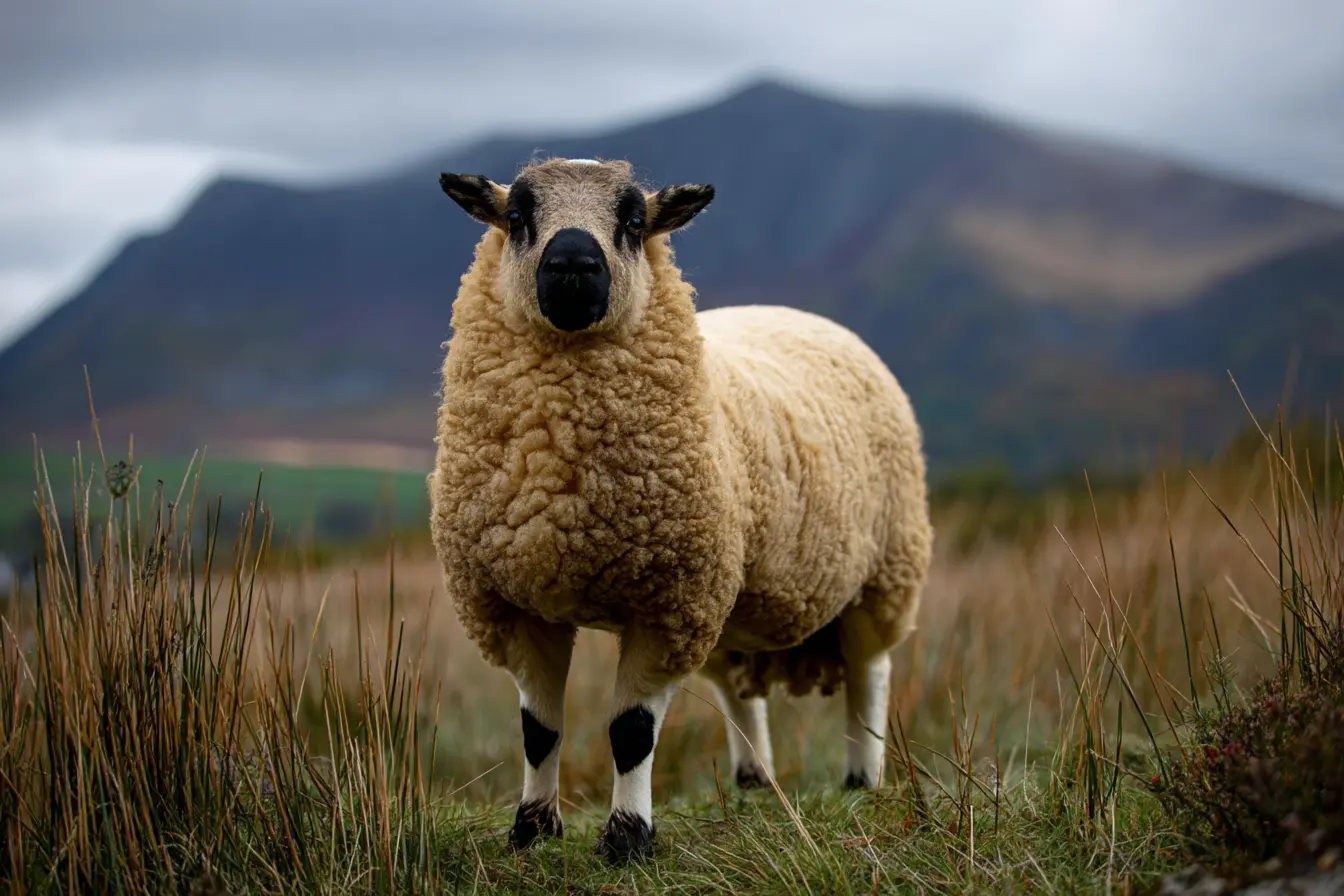
Kerry Hill sheep are one of the most visually striking native sheep breeds in the UK, instantly recognisable by their bold black-and-white markings and upright ears. Originating from the Welsh borders, this hardy and productive breed combines eye-catching appearance with excellent maternal ability, making it popular with commercial farmers, smallholders, and show enthusiasts alike.
This guide provides a detailed overview of Kerry Hill sheep, including their history, key characteristics, housing, feeding, health care, breeding, and general management.
A Brief History of Kerry Hill Sheep
Kerry Hill sheep originate from the village of Kerry, near Newtown in Powys, Wales. The breed developed on the hills and valleys of the Welsh borders, where it was shaped by a climate of high rainfall, cold winds, and varied grazing conditions.
By the 19th century, Kerry Hill sheep had become well established and were widely recognised for their productivity and adaptability. They were exported internationally and gained popularity as a maternal breed due to their hardiness and strong lamb-rearing ability. Today, Kerry Hills remain an important native breed and are frequently seen in both commercial flocks and agricultural shows.
Key Characteristics of Kerry Hill Sheep
Kerry Hill sheep combine visual appeal with practical farming traits.
Appearance: Distinctive white fleece with bold black markings on the face, ears, knees, and feet. They have an alert expression and upright ears.
Horns: Naturally polled (hornless) in both rams and ewes.
Size: Medium-sized breed. Ewes typically weigh 55–70kg, while rams weigh 80–90kg.
Temperament: Alert but generally calm and easy to manage.
Hardiness: Well suited to upland and marginal land, while also performing strongly in lowland systems.
Wool Quality: Medium fleece suitable for carpets, blankets, and general wool products.
Meat Quality: Produces good-quality lamb with well-shaped carcasses and a mild flavour.
Housing for Kerry Hill Sheep
Kerry Hill sheep are adaptable and thrive in a wide range of systems with minimal housing requirements.
Shelter Requirements
Natural Shelter: Hedgerows, banks, and trees usually provide sufficient protection.
Field Shelters: Useful in exposed lowland areas or during prolonged wet weather.
Winter Housing: Not generally required, but may be beneficial for intensive systems or during lambing.
Fencing
Secure Fencing: Kerry Hills are active sheep and require well-maintained fencing.
Fence Height: A minimum of 1.2 metres is recommended.
Electric Fencing: Effective for rotational grazing and pasture control.
Feeding Kerry Hill Sheep
Kerry Hill sheep are efficient grazers and perform well on a variety of pasture types.
Diet
Pasture: Thrive on good-quality grass but can also manage on rougher grazing.
Winter Forage: Hay or silage may be required when grass growth is limited.
Concentrates: Often used for pregnant and lactating ewes to support milk production.
Minerals: Provide access to a sheep-specific mineral lick, tailored to local deficiencies.
Water
Constant access to clean, fresh water is essential in all systems.
Breeding Kerry Hill Sheep
Kerry Hill sheep are highly regarded for their fertility and strong maternal traits.
Breeding Characteristics
Age to Breed: Ewes are usually bred from 18 months of age.
Gestation Period: Approximately 147 days.
Lambing: Generally straightforward, with good lamb survival rates.
Care of Lambs
Lambs are vigorous at birth and quick to suckle.
Ewes have good milk supply and strong maternal instincts.
Outdoor lambing is common and well suited to the breed.
Health Care for Kerry Hill Sheep
Kerry Hill sheep are robust but benefit from routine health management.
Vaccinations
Work with your vet to establish an appropriate vaccination programme, commonly including:
Clostridial diseases
Pasteurellosis
Parasite Control
Use faecal egg counts to guide worming decisions.
Monitor for liver fluke in wet or low-lying grazing areas.
Flystrike prevention is important during warmer months.
Hoof Care
Foot Trimming: Required occasionally, depending on ground conditions.
Foot Health: Generally good, though wet conditions can increase risk of foot rot.
Common Health Issues
Flystrike: Risk increases in warm, humid weather.
Copper Sensitivity: As with all sheep, copper must be carefully managed.
Lameness: Low incidence when grazing and hygiene are well managed.
Wool and Fleece Management
Kerry Hill fleece is practical and easy to manage.
Shearing: Usually once per year.
Fleece Uses: Commonly used for carpets, rugs, and general wool products.
Coloured Markings: Black-and-white patterning makes the breed visually distinctive, especially in show rings.
Behaviour and Handling
Kerry Hill sheep are intelligent and responsive.
Alert Nature: Active but manageable with calm handling.
Handling Systems: Good handling facilities improve efficiency and safety.
Adaptability: Performs well across upland, marginal, and lowland systems.
Why Choose Kerry Hill Sheep?
Kerry Hill sheep offer a strong balance of productivity and appearance:
Striking Appearance: Highly recognisable black-and-white markings.
Strong Maternal Ability: Excellent lamb survival and milk production.
Versatility: Performs well in both upland and lowland systems.
Good Carcass Quality: Suitable for commercial lamb production.
Show Potential: Popular and competitive in agricultural shows.
Conclusion
Kerry Hill sheep are a versatile, hardy, and visually distinctive native breed with a long-standing reputation for productivity and adaptability. Their ability to thrive in varied environments, combined with strong maternal traits and attractive appearance, makes them an excellent choice for both commercial farmers and smallholders.
With sensible grazing management, routine health care, and calm handling, Kerry Hill sheep can flourish with minimal intervention. By choosing Kerry Hills, you are supporting a proven British breed that combines heritage, performance, and visual appeal in equal measure.
Quick questions
- What should I know about kerry hill sheep?
- Kerry Hill sheep are a native British breed from Kerry in Powys, Wales, known for bold black and white markings and upright ears. They are medium sized and hornless, hardy and easy to keep in upland or lowland systems. Vet Verified can help you compare UK veterinary practices by location, species, services and opening hours before you call.
- When should I contact a vet about kerry hill sheep?
- Contact a veterinary practice if your pet seems unwell, symptoms are getting worse, you are unsure what to do, or the situation may be urgent. Vet Verified helps you compare practice details, but a vet should advise on your pet's current care.
- Can Vet Verified help me find a vet?
- Yes. Use Vet Verified to compare UK veterinary practices by location, species, services and opening hours, then call directly to confirm current availability.
Find a vet
Find a veterinary practice
Compare UK veterinary practices related to this topic. Call the practice to confirm its current services and availability.
Find a vet