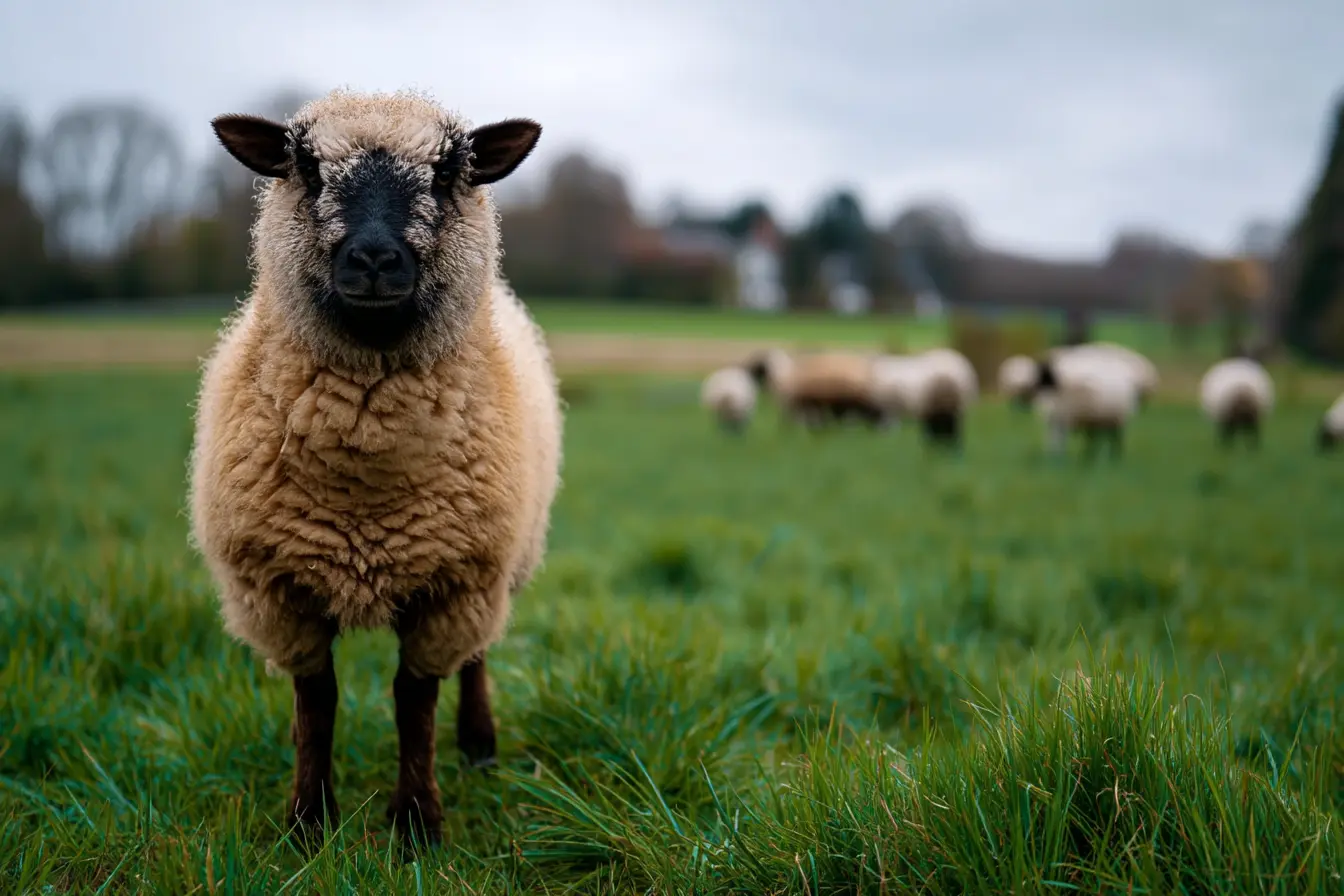
Oxford sheep are one of the largest and most impressive native Down breeds in the UK, renowned for their size, strength, and ability to produce high-quality prime lambs. With their distinctive dark faces, woolly foreheads, and calm temperament, Oxford sheep have long been valued in commercial meat production, pedigree breeding, and agricultural shows.
This guide provides a detailed overview of Oxford sheep, covering their history, key characteristics, housing, feeding, health care, breeding, and general management.
A Brief History of Oxford Sheep
Oxford sheep originated in the early 19th century in Oxfordshire and surrounding counties. The breed was developed by crossing Cotswold sheep with Hampshire Down and Southdown bloodlines, combining size, muscling, and early maturity.
By the late 1800s, Oxford sheep had become one of the most popular meat breeds in Britain and were widely exported overseas. Although their numbers declined with the rise of more specialised terminal sire breeds, Oxford sheep remain an important native breed, valued for their robustness, traditional characteristics, and show-ring presence.
Key Characteristics of Oxford Sheep
Oxford sheep are bred primarily for meat production and size.
Appearance: Very large, powerful sheep with a dark brown to black face, woolly poll, and broad muzzle.
Horns: Naturally polled (hornless) in both rams and ewes.
Size: One of the largest Down breeds. Ewes typically weigh 80–100kg, while rams often exceed 120kg.
Temperament: Calm, docile, and easy to manage.
Hardiness: Hardy and adaptable, particularly suited to lowland and arable systems.
Carcass Quality: Heavy carcasses with good muscling and well-developed loin and gigot.
Growth Rate: Strong growth rates with good finishing potential.
Housing for Oxford Sheep
Oxford sheep are adaptable but benefit from good shelter due to their size and fleece.
Shelter Requirements
Natural Shelter: Hedgerows and trees provide adequate protection.
Field Shelters: Useful in exposed or wet areas.
Winter Housing: Commonly used during lambing or finishing lambs indoors.
Fencing
Strong Fencing: Required due to the breed’s size and strength.
Electric Fencing: Effective for rotational grazing and pasture management.
Handling Facilities: Spacious handling areas are important for safe and stress-free management.
Feeding Oxford Sheep
As a large, productive breed, Oxford sheep require careful nutritional management.
Diet
Pasture: Thrive on good-quality grass and improved pasture.
Winter Forage: Hay or silage is essential when grass growth is limited.
Concentrates: Often used for finishing lambs and supporting pregnant or lactating ewes.
Minerals: Provide a sheep-specific mineral supplement tailored to local deficiencies.
Water
Fresh, clean water must be available at all times.
Breeding Oxford Sheep
Oxford sheep are typically used as a terminal sire breed or within pedigree flocks.
Breeding Characteristics
Age to Breed: Rams can be used from around 12–18 months once mature.
Gestation Period: Approximately 147 days.
Lambing Ease: Generally good, though the size of lambs means supervision is advised.
Crossbreeding: Commonly crossed with medium-sized maternal ewes.
Care of Lambs
Lambs are strong and quick to stand and suckle.
Good milk supply from ewes supports early growth.
Lambs grow well on grass-based systems.
Health Care for Oxford Sheep
Routine health management is essential to maintain performance and welfare.
Vaccinations
Work with your vet to establish a vaccination programme, commonly including:
Clostridial diseases
Pasteurellosis
Parasite Control
Use faecal egg counts to guide worming decisions.
Flystrike prevention is important due to fleece density.
Monitor for liver fluke in wetter grazing areas.
Hoof Care
Foot Trimming: Required periodically, particularly in lowland systems.
Foot Health: Maintain clean, dry ground to reduce lameness risk.
Common Health Issues
Flystrike: Higher risk in warm, humid weather.
Lameness: Can affect growth if not treated promptly.
Condition Management: Large sheep require careful feeding to avoid obesity.
Wool and Fleece Management
Wool is a secondary but useful product of the Oxford breed.
Shearing: Typically once per year.
Fleece Type: Medium, dense fleece.
Wool Uses: Commonly used for general wool products and insulation.
Behaviour and Handling
Oxford sheep are known for their gentle and manageable temperament.
Docile Nature: Easy to handle despite large size.
Handling: Respond well to calm, consistent routines.
Suitability: Well suited to smallholders with adequate facilities and commercial farms alike.
Why Choose Oxford Sheep?
Oxford sheep offer several advantages for meat-focused systems:
Large Frame: Produces heavy, well-muscled carcasses.
Calm Temperament: Easy to manage and handle.
Traditional Breed: Strong heritage and show-ring presence.
Versatility: Suitable for pedigree breeding, showing, and commercial lamb production.
Hardy and Adaptable: Performs well in lowland systems.
Conclusion
Oxford sheep are a powerful and traditional native breed, offering size, strength, and reliable meat production. Their calm temperament and impressive appearance make them equally at home in commercial flocks, pedigree herds, and agricultural shows.
With good nutrition, appropriate housing, and routine health care, Oxford sheep can thrive and deliver consistent results. By choosing Oxford sheep, keepers are supporting a historic British breed that continues to contribute to the diversity and heritage of UK sheep farming.
Quick questions
- What should I know about oxford sheep?
- Oxford sheep are a large native Down breed from Oxfordshire, popular in the UK for meat production, showing and pedigree flocks. They have dark faces, woolly foreheads and calm behaviour. Vet Verified can help you compare UK veterinary practices by location, species, services and opening hours before you call.
- When should I contact a vet about oxford sheep?
- Contact a veterinary practice if your pet seems unwell, symptoms are getting worse, you are unsure what to do, or the situation may be urgent. Vet Verified helps you compare practice details, but a vet should advise on your pet's current care.
- Can Vet Verified help me find a vet?
- Yes. Use Vet Verified to compare UK veterinary practices by location, species, services and opening hours, then call directly to confirm current availability.
Find a vet
Find a veterinary practice
Compare UK veterinary practices related to this topic. Call the practice to confirm its current services and availability.
Find a vet